
 Black Steel Doors
 Woodstock Campers
 Phillips Joinery
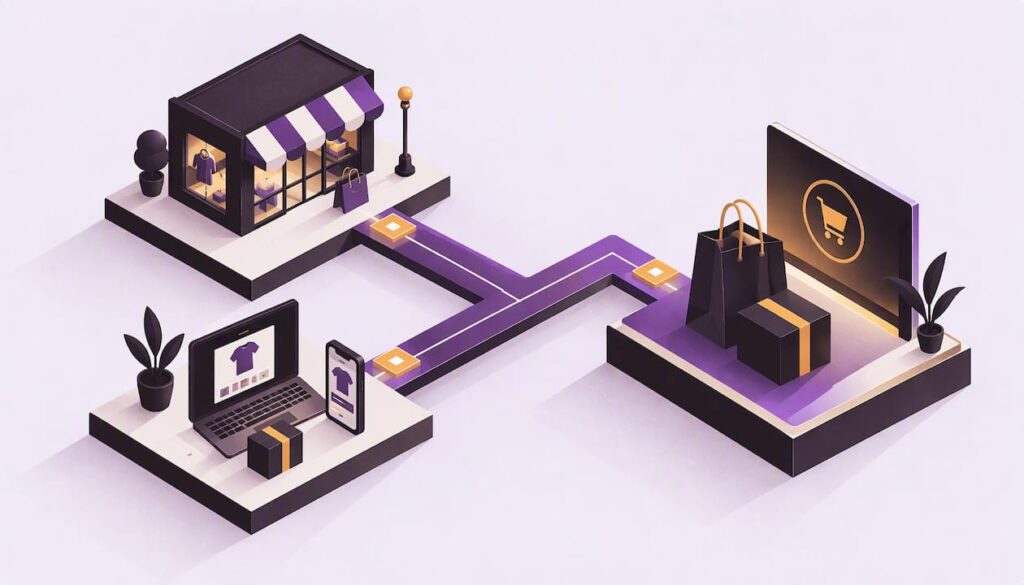
The best omnichannel marketing examples all do the same thing: they stop treating email, social, search, video and the shop as separate jobs, and start treating them as one conversation with one customer. Below you will find real UK campaigns (SMARTY, Specsavers, Danone and the Co-op), what they did, what they reported, and how you can borrow the thinking without a supermarket-sized budget.
A quick warning before we start. Most of the numbers below come from the companies and platforms that ran the campaigns, so treat them as “here is what they reported” rather than gospel. The patterns are still very useful.
TL;DR
- Omnichannel means your channels share data and context, so the customer gets one consistent experience. Multichannel means you are simply present in several places.
- UK examples show the mechanics: shared first-party audiences, sequenced retargeting, and frequency caps that stop you nagging the same person.
- Measurement is what separates the real thing from a nice idea: control groups, store visits and offline sales all need to count.
- You can start small: map the journey, fix your messaging, connect your data, then test one joined-up campaign.
Table of Contents
- What makes a campaign omnichannel (and not just multichannel)?
- Example 1: SMARTY, joining up video, display and audio
- Example 2: Specsavers, from ad to booked appointment
- Example 3: Danone and the head-to-head test
- Example 4: The Co-op, connecting search to the shop floor
- Example 5: Retail, where the shop and the app share a brain
- What the examples have in common
- What does an omnichannel goal look like?
- How to copy this on an SME budget
- B2B omnichannel: yes, it counts too
- Our perspective: start with the plumbing, not the platforms
- Want help joining it all up?
- FAQ
- Sources
What makes a campaign omnichannel (and not just multichannel)?
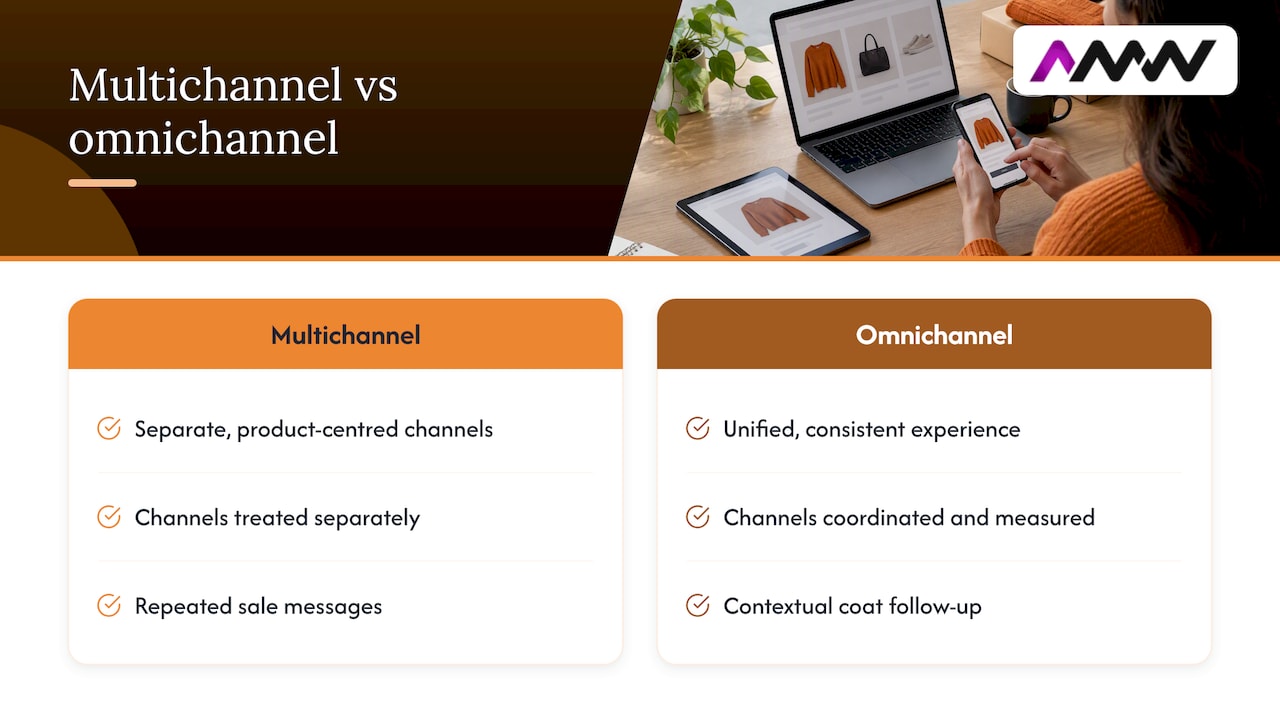
Picture a friend who texts you, emails you and posts about the same sale, each time as though you had never met. That is multichannel. Now picture a friend who notices you looked at a coat, and follows up with the right size and a note about when it is back in stock. That is omnichannel.
McKinsey describes omnichannel marketing as customer-centric integration: channels such as stores, apps and websites give a unified, consistent experience, whereas multichannel activity tends to treat channels as separate and product-centred. Amazon Ads puts it neatly: every omnichannel strategy is multichannel, but not every multichannel strategy is omnichannel, because omnichannel coordinates the channels and their measurement.
If you want the full theory, we have a separate piece on what omnichannel marketing is. This article is the show-and-tell.
A quick multichannel failure to spot
Adobe gives a very relatable example: an abandoned-cart customer can still receive a first-time-buyer email because the email tool has no idea what the website knows. Nobody planned that. It just happens when systems do not talk to each other. Keep that picture in mind, because every good example below is, at heart, a fix for it.
Example 1: SMARTY, joining up video, display and audio
SMARTY is a UK mobile network. According to The Trade Desk’s case study, the campaign connected connected TV, online video, display and audio. Audience data, sequenced retargeting and frequency controls were used to guide people from awareness through to action.
In plain English: someone who saw the video ad was not hit with the same video again and again. They were moved on to the next message in the sequence.
The reported results:
- Checkout conversions rose 67% against an unexposed control group.
- CTV and online video drove 21 times more website visits.
- 9% of the budget saved was reinvested in net-new audiences.
The measurement is the clever bit. A conversion-lift study with a control group asks the honest question: would these people have bought anyway? Most small campaigns never ask it.
Example 2: Specsavers, from ad to booked appointment
Specsavers wants bookings, not just views. In their case study, The Trade Desk reports that Specsavers and Manning Gottlieb OMD connected video, connected TV and display using first-party customer data, video-exposure retargeting and cross-channel frequency control.
The reported outcomes:
- A 43% lower cost per booking than common demand-side-platform benchmarks.
- A 62% lower CPA than planned.
- Time to convert cut from 11 days to 6.
- £17,000 saved through cross-channel frequency control, reinvested into media.
The lesson is not “buy connected TV”. It is that a shared frequency cap is basically free money. If your Meta ads, YouTube ads and display ads each cap exposure separately, the same person may see you far more often than you think. If you run video, our 90-day YouTube ads strategy shows how creative and first-party data fit together.
Example 3: Danone and the head-to-head test
Most case studies say “omnichannel worked”. Danone’s Actimel campaign did something braver. The Trade Desk reports that Danone and Wavemaker ran an A/B test comparing an integrated, audience-first omnichannel approach with a siloed multichannel one.
The omnichannel side reportedly delivered:
| Measure | Omnichannel versus multichannel |
|---|---|
| Brand perception | 6-point lift |
| Purchase intent | 5-point increase |
| Conversion rate | 1.3 times higher |
| Time to purchase | 11% reduction |
| New-to-brand buyers | 9% |
| Incremental reach from frequency-control savings | 7% |
This is the best answer to the “omnichannel vs multichannel examples” question, because the two approaches were tested against each other rather than assumed. Notice the same ingredients as Specsavers: shared audiences and controlled frequency.
Example 4: The Co-op, connecting search to the shop floor
Not every sale happens online, and for a grocer most do not. LiveRamp’s Co-op case study describes connecting Co-op Member programme data to Google’s advertising platform. First-party data was matched to search so that offline transactions and store visits could be measured, with in-store transactions counted in the return on investment.
The reported results were a 77% uplift in store visits, a 134% increase in store sales and a 39:1 return on search investment. That is a big number, and it comes from the company that supplied the technology, so read it as a sign of direction rather than a promise. The principle holds up well, though: if your ads only get credit for online sales, you will under-value them.
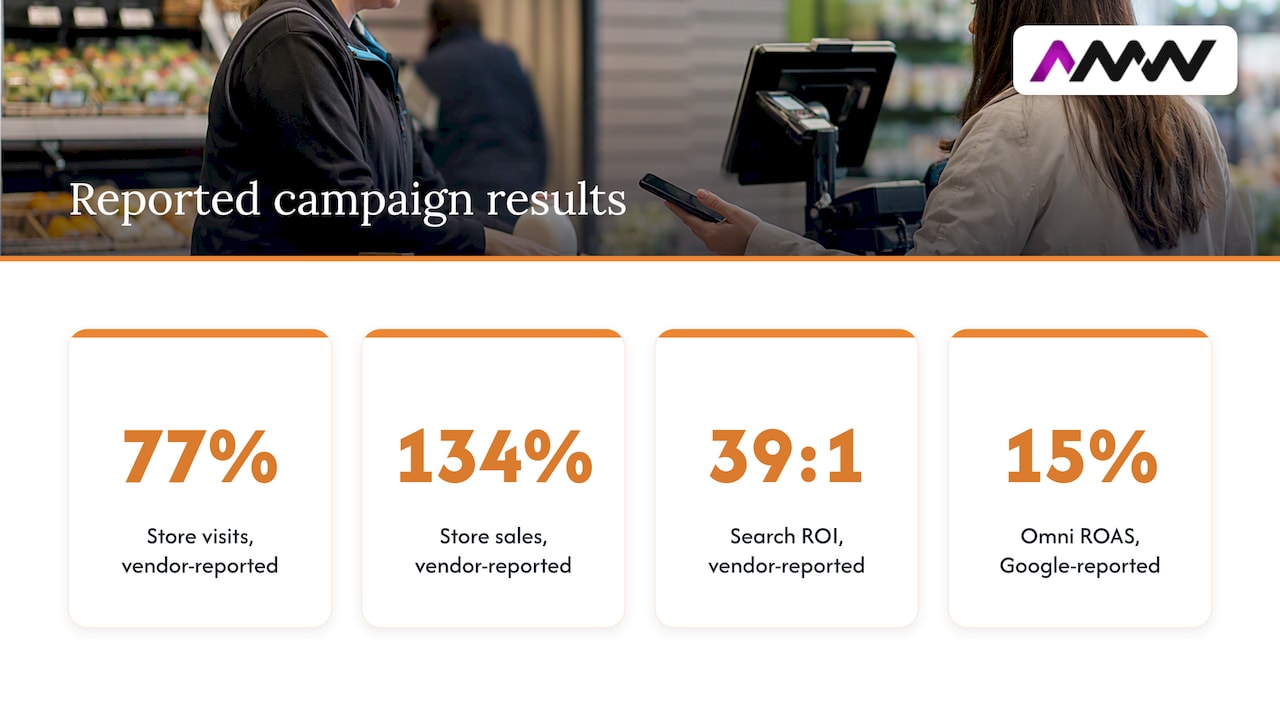
Google makes the same point in its own help documentation. Omnichannel bidding lets a goal combine e-commerce purchases with offline actions such as click-to-call, direction requests, store visits or store sales. Google also reports that advertisers using omnichannel Smart Bidding with store conversions saw an average 15% increase in omni ROAS at a similar cost.
Example 5: Retail, where the shop and the app share a brain
The classic omnichannel retail picture is a customer who browses on a phone, collects in store and returns by post, without the brand losing track. Sephora UK is a handy illustration of the plumbing involved. Its delivery page (checked 27 October 2026) lists standard tracked delivery at £3.95 (free over £20), next-day delivery at £4.95, Evri next-day Click & Collect at £3.95 (free over £20) and a Premier option giving 12 months of free next-day delivery for £9.95. The page notes next-day service is limited to Mainland UK and exclusions apply.
That is not an advertising campaign, but it is the same idea: the customer picks the route, and the brand makes every route feel like the same shop. Prices and terms change, so check the live page before you quote them to anyone.
What the examples have in common
Strip away the brand names and the same four moves keep appearing.
- First-party data at the centre. Specsavers, the Co-op and SMARTY all started from data they owned or could match, not guesswork.
- Sequenced messages. The second ad depends on what the first one did.
- Frequency control across channels. This is where the savings came from in three of the four cases.
- Measurement beyond the click. Control groups, store visits and offline sales.
Salesforce lists consistent messaging, cross-touchpoint data, personalisation and journey mapping as core components, which lines up nicely with the list above.
What does an omnichannel goal look like?
A goal that says “be everywhere” is not omnichannel. A goal that ties channels to one outcome is. Some shapes that work:
- Online plus offline: Google’s example is a combined goal covering online purchases and things like store visits or calls, rather than two separate targets.
- Retail availability: Netcore’s retail example connects inventory, customer preferences and messaging so customers can check stock online or in store and start returns through any channel.
- Loyalty: Klaviyo Academy suggests a SMART goal with a measurable KPI, with an example of raising repeat-purchase rates by 10% within a year through a tiered loyalty programme.
For a service business, a goal might be “increase booked consultations from all channels by a set percentage in six months, counted once per person”. It is dull, specific and measurable, which is exactly what you want.
How to copy this on an SME budget
You do not need connected TV or a customer data platform to start. Here is a sensible order of play.
1. Map the journey you actually have
Write down every way a customer finds you, checks you out and buys. Include the awkward bits: the phone call, the WhatsApp message, the quote that sits in an inbox. Our guide to customer journey mapping walks through it. Salesforce’s advice is the same: use cross-channel customer data to map the journey, set consistent brand guidelines and messaging, then test and adjust.
2. Get your messaging singing from one hymn sheet
Same offer, same tone, same visual identity on the website, emails, social posts and ads. It sounds obvious. It is also the thing most small businesses get wrong, because different people look after different channels.
3. Connect the data you already have
Start small. Link your website analytics, your email platform and your CRM. Make sure a purchase or enquiry suppresses the ads and emails that no longer apply. That one fix would have stopped Adobe’s first-time-buyer email blunder.
4. Build one sequence, not ten campaigns
A simple example: someone watches a short video on social, then sees a testimonial ad, then gets a reminder email if they visit your pricing page. Segment first, then match channel, as in our piece on remarketing strategies that convert. If your video is built for phones, vertical video ads are worth a look too.
5. Cap the frequency and count everything
Set a sensible limit on how often one person sees you across platforms. Then track the outcome you care about, including calls, form fills and in-store visits, not only last-click sales. For online shops, a clean GA4 setup is the foundation, and our ecommerce conversion rate plan covers it.
6. Test against a baseline
Danone did a proper A/B test. You can do a lighter version: run the joined-up sequence for one audience and your usual approach for a comparable one, then compare. If you want the reasoning behind all this, see why integrate marketing channels.
B2B omnichannel: yes, it counts too
Omnichannel is not just for shops and supermarkets. In B2B the journey is longer and the touchpoints are different: a LinkedIn ad, a download, a sales call, a follow-up email, a proposal. The joined-up version has each of those aware of the others, so the person who downloaded a guide is not cold-called as if they had never heard of you. Our write-up on LinkedIn document ads for B2B pipeline shows one way to start that chain. On TikTok, targeting recipes for creative-first ads help you feed the right audiences into the rest of your funnel.
Our perspective: start with the plumbing, not the platforms
We see the same pattern with a lot of UK businesses. They have a decent website, a busy Instagram, an email list and a Google Ads account, and none of them talk to each other. The instinct is to add another channel. We would say do the opposite: fix the joins first.
The unglamorous things pay off fastest. One tracking setup you trust. Suppression lists so customers stop seeing acquisition offers. Creative that looks and sounds like the same brand wherever it appears. We work across content, social, web, SEO, paid media, email and automation, so we tend to see where the seams are. Often the best result comes from tidying what already exists, not from a bigger budget.
And be wary of anyone who promises a 134% anything. The big case studies above come with big data teams and big media budgets. A smaller business should aim for something measurable and repeatable, then grow it. We prefer transparent reporting and no long-term contracts for that reason: if it is working, you will see it, and if it is not, you are not stuck.
Amir Wanas, founder of AMW Media
Want help joining it all up?
If your channels currently live in separate rooms, we can help you connect them. Our team covers video and photography, social media, web design, SEO, paid ads, email and CRM automation, so one team can look after the whole journey rather than one slice of it. You can also browse our recent projects to see how we work.
If you would rather start with one piece, our social media management and SEO services are common entry points. We do not publish prices, so get in touch for a quote that fits what you need.
FAQ
What is the difference between omnichannel and multichannel examples?
A multichannel brand posts on social, sends emails and runs ads, each managed separately. An omnichannel brand links them, so a customer who abandons a basket sees a relevant follow-up rather than a generic welcome offer. Danone’s Actimel test compared the two directly and reported a 1.3 times higher conversion rate for the integrated approach.
Can a small business do omnichannel marketing?
Yes, and you can start with tools you probably already have. Connect your analytics, email and CRM, keep your messaging consistent, and build one simple sequence across two or three channels. Add more channels once you can see the first one working.
What is an example of an omnichannel goal?
Google’s omnichannel bidding combines online purchases with offline actions such as store visits, calls or direction requests under one goal. Klaviyo Academy’s example is a SMART goal of lifting repeat purchases by 10% in a year through a loyalty programme. Whatever you choose, tie it to one measurable outcome.
How do you measure an omnichannel campaign?
Look beyond last-click. SMARTY used a conversion-lift study with an unexposed control group, and the Co-op matched first-party data to count store visits and in-store sales. At a smaller scale, compare a joined-up audience against a similar group getting your usual marketing, and track calls and enquiries as well as online sales.
Sources
- What is omnichannel marketing? | McKinsey
- Omnichannel vs. multichannel | Amazon Ads
- Omnichannel vs. multichannel marketing | Adobe
- The Ultimate Guide to Omni-Channel Marketing | Salesforce
- SMARTY case study | The Trade Desk
- Specsavers case study | The Trade Desk
- Danone case study | The Trade Desk
- Co-op case study | LiveRamp
- About omnichannel bidding | Google Ads Help
- Delivery Information | Sephora UK
- What’s an example of an omnichannel goal? | Netcore
- Set your omnichannel strategy goals | Klaviyo Academy
Recommended
- Best marketing methods for UK businesses in 2026
- Examples of brand engagement tactics that actually work
- What is omnichannel marketing: a 2026 guide
- Examples of email marketing campaigns that actually work
Our free marketing audit looks at your site, your ads and your content, and comes back with a 30 day plan. No pitch deck.
Founded AMW Media in 2024 and runs strategy, paid media and the CRM builds. The reason everything here is in house and measured in revenue. Meet the team.