
 Black Steel Doors
 Woodstock Campers
 Phillips Joinery

Vertical video ads are adverts shot and edited in portrait, usually 9:16, so they fill the whole phone screen instead of sitting in a letterbox. If your customers scroll on their phones (they do), a vertical ad takes up more of their attention than a landscape one, and it looks like it belongs in the feed. The catch is that a good one is not just your TV ad turned on its side. It needs its own planning, framing and edit.
This guide covers what vertical video ads are, where they run, the specs to hand your editor, how vertical compares with horizontal, the UK rules you must follow, and the mistakes we see most often. We’ve tried to write it the way we’d explain it over a coffee, minus the coffee.
TL;DR
- Shoot and edit for 9:16 from the start. Cropping a landscape film is the quickest way to waste a media budget.
- Keep text and logos inside the safe zone, because buttons and captions will cover the edges.
- Vertical wins on mobile feeds, Stories and Reels. Horizontal still has a job on desktop, YouTube and connected TV.
- In the UK, your ad must be obviously labelled as an ad, upfront, under the ASA’s rules.
- Make a few cheap variations rather than one expensive masterpiece, then keep what works.
Table of Contents
- What counts as a vertical video ad
- Why brands are putting money into it
- Vertical vs horizontal video: which should you use?
- Don’t just crop your TV ad
- Specs and safe zones to give your editor
- Where vertical video ads run
- UK rules: label your ads as ads
- Placement and viewability still matter
- How we’d approach it
- A simple workflow for your first vertical campaign
- Formats that work well in vertical
- Common mistakes (and how to avoid them)
- Want a hand making them?
- FAQ
- Sources
What counts as a vertical video ad
A vertical video ad is any video advert designed to be watched with the phone held upright. The standard shape is 9:16, which on screen is 1080 by 1920 pixels. You’ll see it in TikTok, Instagram Reels and Stories, Facebook Reels and Stories, YouTube Shorts and a growing number of publisher and retail placements.
Three things make it different from a normal video ad:
- It’s framed for a thumb, not a cinema. Faces and products sit close to the camera and fill the frame.
- It’s fast. You get a moment, often less than two seconds, before someone swipes on.
- It’s usually watched without much ceremony. No one sits down to watch it. It interrupts a scroll.
That last point shapes everything else in this guide.
Why brands are putting money into it
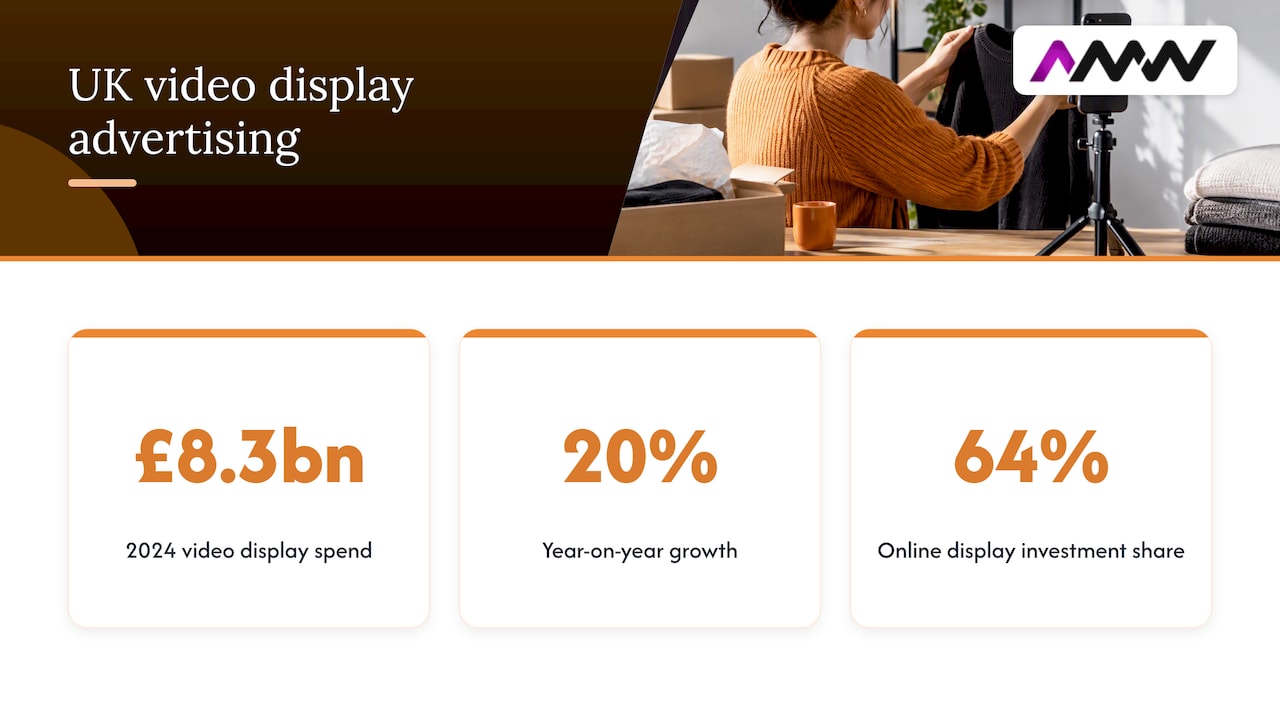
Video is where the UK advertising money is heading. IAB UK reported that spend on video display grew 20% year on year to reach £8.3bn in 2024, with video taking 64% of all online display investment. That’s not a niche any more. It’s the main event.
The audience is there too. Ofcom’s Online Nation 2025 report, as summarised by ISPreview, found that UK adults spend an average of 4 hours 30 minutes a day online, that YouTube leads social platforms for time spent at 51 minutes a day, and that TikTok reaches 56% of online adults, with 18 to 34 year olds averaging 49 minutes a day on it. Different platforms, same habit: a phone in one hand and a lot of short video.
So vertical isn’t a fad, but it isn’t magic either. It works because it fits how people already look at their phones. Use it badly and you’ll simply be ignored in a more modern format.
Vertical vs horizontal video: which should you use?
The honest answer is that it depends on where the ad will be seen. Here’s the quick comparison.
| Vertical (9:16) | Horizontal (16:9) | |
|---|---|---|
| Best for | TikTok, Reels, Stories, Shorts | YouTube in-stream, desktop, connected TV, website heroes |
| Screen use on a phone | Fills the whole screen | A strip across the middle |
| Feels like | Native content from a friend or creator | A mini film or TV spot |
| Typical style | Close-ups, direct to camera, quick cuts | Wider scenes, storytelling, establishing shots |
| Main risk | Edges covered by buttons and captions | Tiny on a phone, wasted space above and below |
A few practical rules of thumb:
- If most of your traffic and sales come from mobile social, lead with vertical.
- If you’re buying YouTube in-stream, connected TV or desktop placements, you’ll want horizontal as well. Plenty of brands run both.
- Square (1:1) and 4:5 are the in-between formats for the main Facebook and Instagram feeds. We’ve put together a handy rundown of exporting 9:16, 4:5 and 1:1 for social video aspect ratios if you want the exact settings.
The smart move is to plan one shoot that gives you all three. Frame the action in the centre, leave breathing room at the sides, and your editor can pull each format without gymnastics. Hence the old filming joke: shoot wide, protect the middle, and be nice to your editor.
Don’t just crop your TV ad
This is the biggest mistake in the category. Someone has a lovely 16:9 film, someone else says “can we just make it vertical?”, and the result is a close crop of a stranger’s elbow.
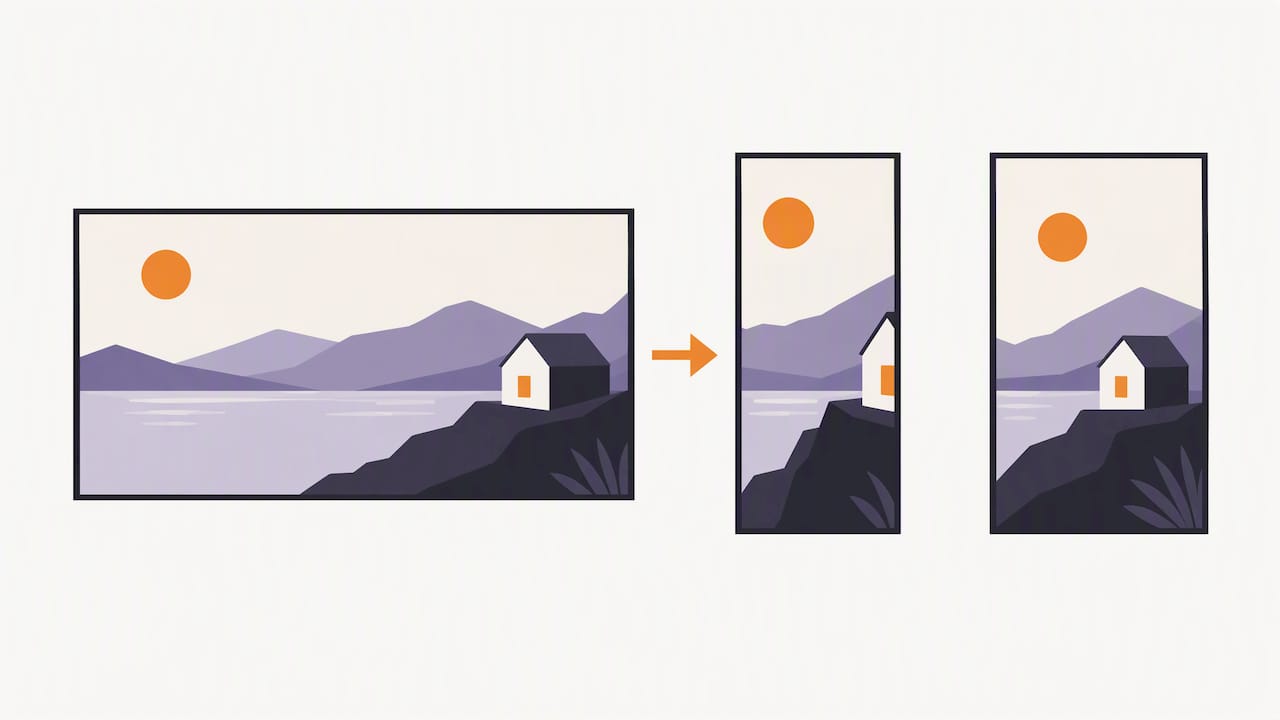
There’s research behind the instinct to do better. A study published by IAB UK on mobile video assets found that feed-proofed video, made specifically for the feed, generates greater breakthrough than repurposed TV adverts. Breakthrough just means the ability to grab attention. It’s worth saying the same research doesn’t call TV ads bad. They’re simply not built for this space.
What “feed-proofed” looks like in practice:
- A hook in the first second or two. A face, a movement, a problem, a result. Not a logo animation.
- Sound off still makes sense. Use captions and clear visuals so the ad works on mute, then reward people who have sound on.
- Branding early, but not stuck on. Show the product or name in the first few seconds, naturally.
- One idea. A 15 second vertical ad that tries to say four things says none of them.
- A clear next step. Say what you want people to do, and make it match the button.
Recycling without the cringe
You can reuse existing footage, with care. If you have a landscape shoot, plan your vertical edit from the best clips, re-frame each shot individually, and add new text and a new opening. If the original has no usable close-ups, reshoot. A morning of filming costs less than a quarter of ineffective spend.
Specs and safe zones to give your editor
Here’s the starting kit. Platform requirements change, so always check the current spec in the ad platform before you export.
- Aspect ratio: 9:16
- Resolution: 1080 by 1920 pixels
- Length: Short. Many successful ads sit between 6 and 30 seconds. Shorter is usually safer.
- Captions: Burn them in, and keep them away from the bottom
- File: MP4 or MOV, with a reasonable file size so it uploads cleanly
Then there’s the safe zone, which is the part nobody tells you about until your call to action is hidden behind a Shop Now button. A guide to TikTok, Facebook and Instagram safe zones suggests keeping text and logos within the central 80 to 90% of the frame on TikTok, and avoiding the right-hand buttons and the lower 20% where captions sit. The exact margins differ by platform, so the cautious approach is to design to the tightest one.
A quick checklist before you approve any edit:
- Watch it on an actual phone, not just a monitor.
- Check that no text sits under the interface icons.
- Watch it on mute.
- Watch the first two seconds on repeat. Would you stop scrolling?
- Confirm the ad label and call to action are visible (more on that below).
Where vertical video ads run
TikTok
Full-screen, sound-on culture, and a strong skew to younger adults. Native-feeling creator style does better than slick brand films. The ASA has a useful guide to responsible advertising on TikTok that’s worth reading before you launch.
Instagram and Facebook
Reels and Stories ads share a creative approach, and the IAB UK research found that strong feed-proofed video tends to perform consistently across both Facebook and Instagram. That’s good news if your budget is tight: one well-made asset can serve two platforms.
YouTube
Shorts is the vertical home, while the wider platform still leans horizontal. YouTube’s own audience is vast and varied, and the ASA notes the platform offers advertisers a huge reach but comes with its own rules. If you want to plan YouTube properly, our 90 day YouTube ads strategy walks through creative and first party data.
Other placements
Retail media and publishers are catching up, and some run vertical formats in their own apps. Check the specs before you assume your Reels file will drop straight in.
UK rules: label your ads as ads
This is the part that gets brands in trouble, so we’ll be blunt. In the UK, ads have to be obviously identifiable as ads, and that applies to a brand’s own vertical video just as much as to a paid influencer post. The ASA’s guidance on making clear that ads are ads says a label has to be clear, prominent, upfront and timely, and suitable for the format (a post, a story, a reel) and for mobile devices.
In practice:
- Put the “Ad” label where people see it first. Not at the end of a long caption, and not halfway through the video.
- Don’t let platform furniture hide it. Captions, “see more” links and buttons can bury a label.
- Don’t rely on vague wording. The ASA’s view on YouTube is that thanks to our sponsor style wording often isn’t enough, and anything commercially motivated should be clearly labelled.
- Remember the same rules apply to claims. Pricing, results and testimonials must be honest and provable, whatever the format.
If you work with creators, brief them on this before they film. Put the label requirement in writing. If you’re unsure about a specific claim in a regulated area such as health, finance or gambling, check the CAP Code and ask the ASA’s Copy Advice team before launching, not after.
Placement and viewability still matter
Vertical doesn’t remove the need to watch where your ad actually appears. Google’s research on video viewability found that position on the page correlates with viewability, and that automated buying can serve ads in less ideal spots. For vertical, that means checking placement reports, excluding poor-performing inventory where the platform allows, and not assuming every impression is equal.
How we’d approach it
Here’s the Perspective section: how we think about vertical video at AMW Media.
We make video, run social channels and buy paid media, so we see the same pattern again and again. Brands treat vertical video as a format problem (“what size do we export?”) when it’s really a thinking problem (“what would make someone stop?”). The export is the easy bit.
Our view is that the best vertical ads come from a small, practical process:
- Start with a hook list. Before anyone picks up a camera, write ten opening lines or visuals. Film the best five.
- Shoot more than you need, in short bursts. Ten minutes of good close-ups beats an hour of wide shots you can’t use.
- Test small. We’d rather make four 15 second cuts and see which one earns its keep than spend the whole budget on a single hero film. Our piece on shipping 3 to 7 day cutdowns for motion graphics ads shows how that rhythm works.
- Report plainly. If an ad isn’t working, you should hear it from us early, with the numbers, rather than at the end of a quarter. That’s why we work without long-term contracts and with transparent reporting.
- Let the production quality match the platform. Polished is fine. Stiff isn’t. A great phone clip with a sharp idea can beat an expensive shoot with a vague one.
Platforms are also making editing easier for everyone. Google’s Think with Google site makes the point that brands are moving beyond high-production commercials toward more agile, remixable content. We agree, with one caveat: easy tools make it easy to make forgettable videos too. Strategy is still the difference.
— Amir
A simple workflow for your first vertical campaign
If you’re starting from scratch, this is the route we’d suggest.
1. Pick one goal
Sales, leads, bookings, app installs, or awareness. Choose one. The goal decides the call to action and the way you measure success.
2. Write a one-line message
If you can’t say it in a sentence, a 15 second video won’t save you.
3. Plan the shoot for every format
Frame for 9:16 first, then check that 4:5 and 16:9 can still be pulled out. If you want deeper reading on planning, our creative content production steps cover the whole process, and effective content production strategies for brand growth covers how to make it repeatable.
4. Make several hooks
Same body, different first three seconds. This is the cheapest way to learn what your audience responds to.
5. Add captions, label and call to action
Check the ad label, check the safe zone, and check the sound-off version.
6. Launch small, review weekly
Give each version enough budget to produce a meaningful result, then pause the weakest and make a fresh variation of the strongest. Look at cost per result, not just views. Views are flattering. Sales are useful.
7. Feed the learning back in
The best-performing hooks become your next creative brief. If you need a steady stream of ideas, our social media content ideas and notes on creating engaging social media content are a good place to start.
Formats that work well in vertical
Not sure what to film? These are reliable starting points. For a broader menu, see our list of 10 types of creative content that drive results.
- Founder or expert to camera. A real person answering one question your customers always ask.
- Product in use. Show it working. No voiceover essay needed.
- Before and after. Great for services, clean-ups, makeovers and software.
- Customer proof. Short testimonial clips, with permission and honest claims.
- Behind the scenes. Makes a business feel real, and is cheap to produce.
- Motion graphics explainer. Useful when the idea is abstract or you don’t have footage.
- Offer or event reminder. Simple, urgent, and clearly labelled.
If you’re after fresh ways to produce this sort of content at pace, this article on content creation tips covers planning and publishing approaches that pair well with a vertical video calendar.
Common mistakes (and how to avoid them)
- Cropping instead of re-making. See above. It shows.
- Slow intros. Nobody needs three seconds of logo.
- Text in the danger zone. Your headline vanishes behind a button.
- Too long. If the point lands at 12 seconds, end it at 15.
- No ad label. The ASA won’t be impressed, and neither will your legal team.
- One creative, forever. Ads tire. Refresh them.
- Judging on views alone. Check what happened after the view.
- Ignoring the landing page. If the ad is slick and the page is slow, you’ve paid for a very polished bounce. A site built for mobile matters, which is where web design comes in.
Want a hand making them?
If you’d like vertical video ads that are planned, shot, edited and reported on by one team, that’s what we do. We handle video and content production, run social media management and manage paid campaigns on Google and Meta, with transparent reporting and no long-term contracts. You can see examples on our projects page or browse everything on our services page. Pricing is scoped to the project, so the simplest route is to tell us what you’re trying to achieve and we’ll say what we’d do.
FAQ
What size should a vertical video ad be?
The standard is 9:16, which means 1080 by 1920 pixels. Keep important text and logos in the central area of the frame so buttons and captions don’t cover them. Always confirm the current spec in your ad platform, as requirements are updated.
Are vertical videos better than horizontal ones?
On phones, in feeds, Stories and Reels, usually yes, because they fill the screen and feel native. On desktop, YouTube in-stream and connected TV, horizontal is still the better fit. Many brands make both from the same shoot.
How do I turn a landscape video into a vertical one?
Don’t simply crop it. Re-frame each shot so the subject stays central, add large captions, rewrite the opening so it hooks in the first couple of seconds, and check the safe zones. If the footage is mostly wide shots, you’ll get a better result filming new close-ups.
Do vertical video ads need an “Ad” label in the UK?
Yes. The ASA expects advertising to be obviously identifiable, with a label that is clear, prominent and upfront. This applies to brand and influencer content. For a specific or regulated claim, check the CAP Code or ask the ASA’s Copy Advice team.
Sources
- IAB UK: UK’s digital ad market hits £35.5bn as video spend jumps 20% YoY
- ISPreview: Ofcom finds UK adults now spend over 4.5 hours online each day
- IAB UK and Metrixlab: Broadening Efficiencies
- House of Marketers: TikTok, Instagram and Facebook safe zones
- ASA: Influencers’ guide to making clear that ads are ads
- ASA: Making responsible ads like clockwork, marketing on TikTok
- ASA: Stream, watch, advertise? Advice for advertising on YouTube
- Think with Google: Are your video ads making an impression?
- Think with Google
Recommended
- 90 Day YouTube Ads Strategy | Creative and First Party Data
- Marketers: Export 9:16, 4:5 & 1:1 for Social Video Aspect Ratios
- Ship 3–7 day cutdowns for motion graphics ads, playbook for marketers
- The role of video content in digital brand engagement
Our free marketing audit looks at your site, your ads and your content, and comes back with a 30 day plan. No pitch deck.

Founded AMW Media in 2024 and runs strategy, paid media and the CRM builds. The reason everything here is in house and measured in revenue. Meet the team.