
 Black Steel Doors
 Woodstock Campers
Social media agency · strategy, content, community, paid The agency that brings the camera
Social media management is mostly finding something worth posting, and most agencies are set up for the easy ten per cent. We have videographers and an editor on the team, so the month’s content comes from a planned shoot rather than from a folder you were asked to fill.
 Live client figure
Ask a social media agency who makes the content
It is the only question that matters and it is the one most proposals answer vaguely.
Social media management is roughly ninety per cent getting hold of something worth posting and ten per cent posting it. Most agencies are set up for the ten per cent. They will write the captions, build the schedule, reply to comments and send you a monthly report, and somewhere in the onboarding document there is a line asking you to share photos and videos to a folder.
Six weeks later the folder has four pictures in it, all taken on a phone in bad light, and the social channels are running on stock graphics and quotes about Monday motivation. Nobody set out for that to happen. It happens because the content was always going to be the hard part and the arrangement was built around the easy part.
We have videographers and a video editor on the team. That is the entire reason this page can promise something different from every other social media marketing agency you are comparing.
What our social media management services cover
- Content creation. Filmed and photographed by us, on your premises, on a planned shoot day. Not sourced, not stock, not asked for.
- Social media strategy. Which social media channels are worth your effort, what each one is for, and what a month of posts is meant to achieve against your business objectives. Most businesses need two channels done properly rather than five kept alive.
- Scheduling and publishing. Planned a month ahead across your social channels so nothing goes out because somebody remembered on a Friday.
- Community management. Replying to comments and messages, which is where most enquiries on social actually start. An unanswered direct message is a lost customer, not a support ticket.
- Paid social. The organic content, put behind budget to reach target audiences who do not follow you yet. This is where social media marketing stops being awareness and starts producing enquiries.
- Reporting. Reach, engagement, follower growth, click through rates, and what the CRM says happened afterwards. Performance data from the platforms and from your own systems, side by side.
User generated content and influencer marketing get discussed when they fit. Influencer campaigns work for some consumer brands and are a waste of money for most trade and service businesses, and we would rather say that than sell you one.
Real results from social, and what they are worth
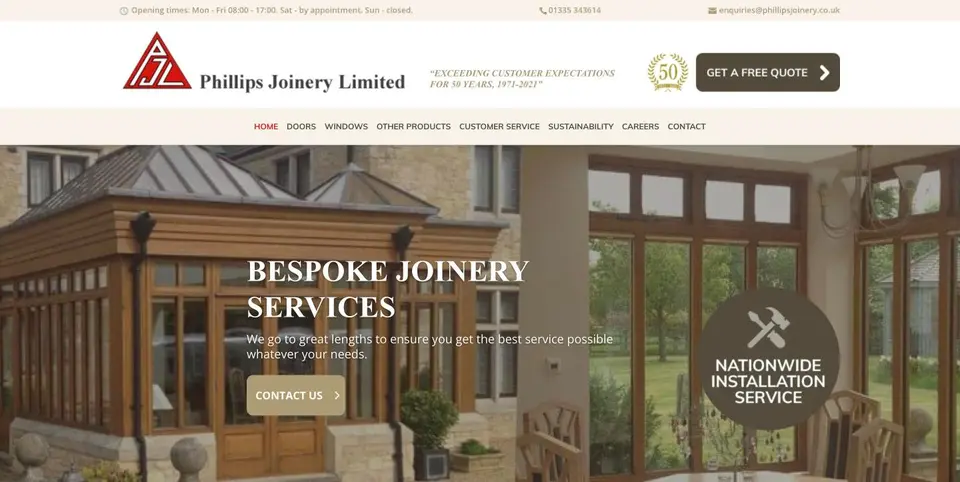
Phillips Joinery went from 341 to 4,914 Facebook followers on workshop content. A joiner making things, filmed properly, posted consistently. Their LinkedIn impressions went from 130 to 3,484 in a month and Instagram reach from 452 to 3,484.
MUK Microcement took LinkedIn impressions from 195 to 670 and profile visits from 104 to 262 in their first planned month, in front of the specifiers who actually commission the work.
Escape Campers produced 4.13 million impressions and 1.75 million video views across the period, and more usefully 1,293 leads with £285,000 closed in their own CRM.
Read those in the right order. Follower growth and engagement are leading indicators, useful for telling whether the content is landing. Leads and revenue are the result. Any agency that reports only the first set is hoping you do not ask about the second.
AM Barber Lounge is the one worth mentioning for a different reason. The shop runs its own social channels now. We set it up, filmed the initial content and showed them how, and they took it in house. That is a legitimate outcome and it is not one an agency paid monthly is usually keen to mention.
What social media actually does for a business
Two honest things and one myth.
A social presence builds brand visibility with people who are not ready to buy, so that when they are, you are the name they already recognise. That is slow, it is real, and it is almost impossible to attribute cleanly.
It gives paid campaigns something to run. Creative content is the biggest lever in paid social by a distance, and an agency producing organic content is producing the raw material for the ads at the same time.
The myth is that posting consistently generates sales on its own. For most businesses it does not. Social produces attention, and attention converts when there is a website worth landing on and somebody answering the messages. Social media services sold as lead generation without either of those attached are being sold on hope.
How the month runs
A shoot day, usually monthly, sometimes fortnightly for clients with a lot to show. A social media strategy set at the start and a content plan agreed in advance so you know what is going out. Publishing across the agreed platforms. Comments and messages handled daily. A report at month end, and a call to decide what changes.
You get a named contact rather than a dedicated account manager who forwards your messages to somebody you never meet. For most clients that contact is the person who also runs the shoot.
Approval works however you want it. Some clients review every post, most review the plan and let us get on with it. What does not work is an approval process with four people in it, because social stops being timely and starts being a committee.
What separates one social media agency from another
A large social media agency brings process, reporting templates and a team that has seen your problem before. It also brings a rate card built for brands with a marketing department, and your account can end up with the newest person on it.
A social first agency lives inside the platforms and will usually beat everybody on format and timing. Ask who makes the video, because the answer is often a freelancer you never meet.
A PR agency running social treats it as owned media for the story it is already telling. That works well when there is a story and poorly when there is not.
We sit somewhere else again. The advantage is not that we manage accounts better than everyone else, it is that we make the material ourselves, so what goes out is ours to fix on the day.
Whoever you choose, judge them on three questions. Do they discover what your customers actually ask before writing a calendar. Can they turn one filming day into a month of posts. Will they tell you when social is the wrong home for the budget.
Success on social is not a follower number. It is whether a conversation started here turns into a customer, and whether consumers who found you through a friend recognise the brand when they meet your advertising later.
A social strategy is mostly a decision about what you are for, followed by the discipline to keep saying it.
Our focus is the work that carries: your people, your product, your culture on camera. Ideas are cheap and the calendar is the easy part. Anybody posting on your behalf without ever visiting the business runs out of material by week six.
In house team or external agency
Worth being straight about, because it is not always us.
An in house team wins when there is enough volume to keep somebody busy and enough happening in the business to film. A shop, a gym, a restaurant with something new every week can often do this better themselves, and AM Barber Lounge is the proof.
An external agency wins when you need six skills part time: someone who can film, edit, write, plan, run ads and reply to messages. Hiring one person who does all six well is difficult and expensive.
The worst arrangement is the middle one, where a director does it at eleven at night. That is where social media goes to be quietly abandoned.
What it costs
A fixed monthly fee set by the number of channels, the volume of content and how often we film. Starting prices for every service are on the pricing page, and the plan builder there totals up whatever you tick. What you actually pay follows the scope.
What is always separate: your paid social budget, which goes to the platform and never touches us. Services run month to month with 30 days’ notice, so there is no long commitment.
Every figure is published: Social media management starts at £299 a month, and the full rate card is on our pricing page, where you can tick what you need and see the total before you speak to anybody.
Where social sits in the digital mix
Social is one part of a digital marketing plan rather than a thing on its own. The content we film for social feeds Google Ads and Meta Ads and fills the gaps on your website. The content production is the same shoot serving all three, which is why buying them together costs less than buying them apart.
We are a Meta Business Partner and a Google Partner, with a 5.0 rating from 30 Google reviews.
Start with what you actually have to show
Tell us what happens in your business that a customer would find interesting. Usually there is far more than the owner thinks: the workshop, the install, the finished job, the person who has been doing it for twenty years.
The free audit will tell you whether social is the right next spend or whether the money would do more elsewhere first. No obligation either way.