
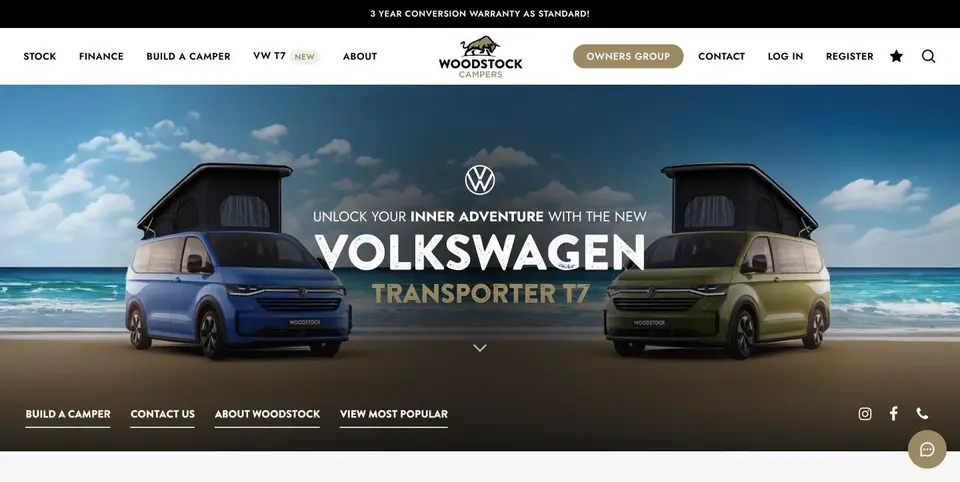
 Woodstock Campers
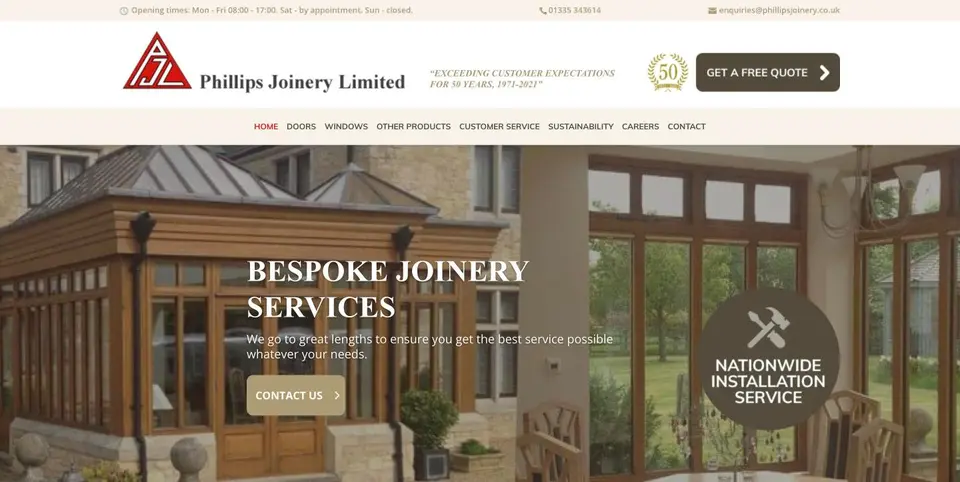 Phillips Joinery
CRM and automation · setup, integrations, custom software Speed to lead in seconds, not days
The job rarely goes to the better company. It goes to the one that replied first. We build the system that answers in seconds, books the appointment, chases the quote and asks for the review while your team gets on with the work.
 Live client figure
Most enquiries are not lost, they are left
The job did not go to a better company. It went to the one that replied first.
Somebody fills in your form at nine on a Friday evening. They wait, hear nothing, and by Monday morning they have spoken to two competitors and made their decision. Your quality never entered into it.
Customer relationship management software was supposed to solve this and mostly has not, because it gets bought, half configured, then left to become an expensive address book. The tool was never the problem. Nobody went on to create automated workflows that make the tool do anything.
The three leaks we fix first
Almost every business we look at leaks enquiries in the same three places, so the first fortnight of work is nearly always the same three fixes.
Reply speed. An enquiry that arrived on Friday night and gets answered on Monday has usually gone. The first automation sends an instant text and email within seconds, at any hour, with a real next step in it. Not “thanks, we will be in touch”. A time to speak, a link to book, or an answer to the question they actually asked.
Quote follow up. Sent, then forgotten by both sides. The second automation chases it politely three times across a fortnight and tells you the moment it gets opened, so your sales team rings the people who are reading rather than working down a list in order.
The review. The customer is delighted the day the job finishes and nobody asks. The third automation asks that afternoon while they still mean it, and quietly routes the unhappy ones to you first.
Those three go live inside a fortnight. What comes after is refinement, and it matters far less than most agencies in this field would like you to believe.
What CRM and marketing automation includes
Every build starts from your business goals rather than from a list of automation tools, because the tools are the easy part.
- CRM setup. On LeadConnector, or on the CRM systems you already own. Pipelines that match how you actually sell rather than how the demo data sells, contact records that fill themselves from your forms and ad accounts, and a calendar that books itself.
- Automated workflows. Instant replies, quote follow ups, appointment reminders, review requests, reactivation of old leads, and the internal alerts that tell somebody a job needs doing today.
- Integrations. Website, ad accounts, accounting software, calendar and stock. This is where data silos get closed, and where most projects quietly stall.
- Sales automation and routing. The right enquiry to the right person, prioritised on what the customer told you rather than on guesswork.
- Business process automation beyond marketing. Customer onboarding, approval workflows, job scheduling, invoice chasing and the administrative tasks nobody has ever enjoyed.
- Dashboards and data analysis. Pipeline, source and revenue visible without asking anyone, so a Monday meeting starts from data driven insights rather than from opinion.
- Custom software when the thing you need does not exist. Built by our developers, owned by you.
Marketing automation sits on top of that and is there to nurture leads who are not ready yet: the enquiry that went quiet, the quote that stalled, the visitor who took something from a landing page and disappeared. Turning leads into customers is mostly a question of still being there in month four.
What we will not automate
This is the part most agencies skip, and it decides whether any of the rest works. A marketing automation agency that opens with a diagram rather than with your Friday night enquiry is solving the wrong problem.
Rule based logic is excellent at predictable, repetitive tasks. Send this when that happens, move that record when the status changes, remind somebody on day three if nothing has come back. Automation helps most exactly there, and those automated systems run for years without anybody touching them.
Human judgement is what everything else needs. A quote for an unusual job. A complaint. A price negotiation. A customer who has clearly had a bad week. Automating those does not save time, it costs you the relationship, and the saving was never large in the first place.
AI agents sit between the two, and the honest position is narrower than the marketing around them. Natural language processing is good at triage: reading an enquiry, working out what it concerns, tagging it and routing it to the right person. It is poor at anything requiring context nobody gave it, which is most of what a good salesperson knows. We use it where it earns its place and we will tell you where it does not.
The other thing we refuse to do is automate a broken process. Apply automation to a bad sequence and you get the same bad outcome, faster, more consistently, with detailed records proving it happened.
Business processes, not just marketing work
Marketing automation gets the attention because it sits closest to the money. The manual processes eating the most hours are usually somewhere else in your business operations.
The onboarding process that takes four emails and two phone calls. The manual data entry between the quoting tool and the accounts package. The weekly report somebody rebuilds by hand every Monday. The routine tasks that collapse the moment one person is on holiday, and the recurring tasks nobody has ever written down.
Business automation of that sort is unglamorous and it pays back fastest, because you are removing manual tasks that were already being paid for. It also cuts human errors, which in some companies is the bigger benefit. A mistyped figure in a quote costs considerably more than the twenty minutes it saved.
We map before we build, because the most time consuming part of any project is understanding the work rather than configuring the software. Where it sits, who touches it, what breaks. Then we streamline workflows first and automate second, since an automated version of a bad process is only a faster mistake. We streamline tasks that cannot be automated at all and automate the ones that can.
Automating routine admin is simple. Entire processes with judgement in the middle are not, and pretending otherwise is how automation efforts stall in month three. Complex processes get broken into stages, each one either automated outright or shortened. That is less satisfying than a diagram of the whole thing running itself, and it is what actually ships.
The key benefits, minus the brochure version
Agencies list ten. Three matter.
Speed. A reply that took two days now takes two seconds, which on its own changes how many enquiries become jobs. Nothing else you do will improve efficiency by as much for as little.
Accuracy. Automated systems do not mistype a figure or forget to copy an address across, so you improve accuracy exactly where a mistake is expensive rather than merely embarrassing.
Visibility. With every enquiry, quote and job in one place you get actionable insights instead of a feeling. Which source produced the revenue. Where in the sales funnel it narrows and by roughly how much. Which follow up is worth doing twice.
Cost savings arrive too, though rarely as redundancies. What we see is the same team absorbing more work, and the strategic activities that always got postponed finally getting an hour. The business value is not the software. It is the enquiry that got answered.
Start with individual tasks rather than whole departments. Simple tasks happening twenty times a week are where automation pays first, because the point is to reduce errors and give hours back, not to rebuild the business. The systems that drive growth are the ones people are still using willingly six months later.
Platforms, and why the choice matters less than you think
LeadConnector is what we build on most often, because it holds the CRM, the messaging, the calendar and the automation in one place, which suits a company that does not want four subscriptions and three things to reconcile. HubSpot, Pipedrive, Salesforce and the CRM already inside your quoting software are all perfectly workable.
The joins run on low code platforms that connect tasks across systems without a developer involved every time. Drag and drop features make a workflow quick to build and slow to debug, so anything load bearing gets documented rather than left in one person’s head. Smart workflows are the ones somebody can still explain a year later.
Platform choice matters far less than the CRM strategy behind it. A well mapped process on a mediocre tool beats a badly mapped one on the best workflow automation software money can buy. If your existing CRM can already do the job, we will say so rather than sell you a migration.
Who this suits
Small and mid sized businesses with more enquiries than a spreadsheet can hold and fewer people than a full time operations manager. Below that, automating tasks by hand is cheaper. Above it, you probably have an in house marketing team and want us on the parts they cannot reach.
It suits service businesses best of all, because service delivery is where the admin hides and where the follow up decides the sale.
Software we have built
MyContentLab is our own reporting platform. It connects to clients’ ad accounts, social accounts, analytics and CRM and reports the lot in one dashboard. Every performance figure on this website comes out of it.
FitConnect is a mobile fitness app we designed and built.
When a client needs a tool that does not exist, our developers build it and the client owns it. Not licensed back, not held over you at renewal.
What it does to the numbers
Black Steel Doors run Google Ads to wealthy postcodes and every enquiry drops into a pipeline that books the appointment and chases the quote. Between April and August 2026 that pipeline booked 328 appointments and closed 112 deals worth £1.13 million. The advertising found the people. The system made sure none of them waited.
Fern Campervans send Meta lead forms straight into the CRM, so every enquiry is called within a working day rather than whenever somebody remembers to export a spreadsheet.
Neither is an automation story by itself. Both are what happens when the advertising and the follow up are built by the same team, which is the argument for keeping paid advertising and the CRM together rather than in two buildings. The same applies to email marketing, which runs off the same contact data.
How a build runs
A mapping session first. How an enquiry moves through your business today, who touches it, and where it leaks. Founders usually know where the problem is and have simply never had a reason to draw it.
Then the build. The pipeline, and the two or three automations that stop the biggest leaks. We start with specific tasks rather than an entire department, because something working in week two buys patience for the rest.
Training comes next, since a system your team works around is worse than no system at all. Then a monthly review of what the numbers now show, which is where automation strategies get adjusted rather than admired.
Most clients feel it inside the first month, for the simple reason that follow up which used to take two days now takes two minutes.
What it costs
Setup is quoted as a project, priced on how many processes we are mapping and building. Ongoing support and optimisation is a fixed monthly fee.
Software licences stay in your name and are paid directly, so you are never renting your own CRM through an agency at a markup. Custom development is quoted separately, and the aim is always to reduce manual effort you are already paying for rather than to add a system you will not use.
Services run month to month with 30 days’ notice.
Every figure is published: A CRM starts at £80 a month, and the full rate card is on our pricing page, where you can tick what you need and see the total before you speak to anybody.
Start with the leak
Tell us what happens to an enquiry that arrives at nine on a Friday night. The answer to that one question usually identifies the first two automations worth building.
The free audit carries no obligation. If your setup is already fine and the real problem is that not enough enquiries arrive, we will say so and point you at SEO instead.