
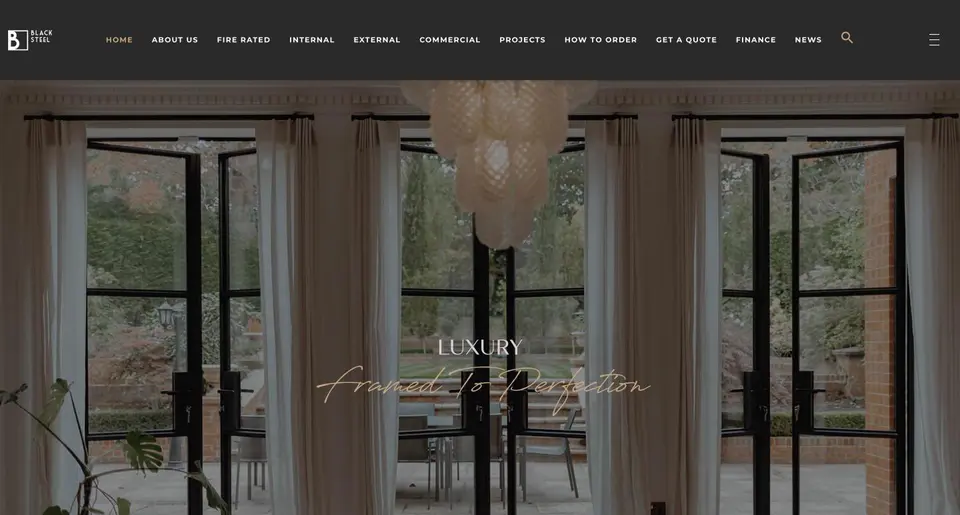
 Black Steel Doors
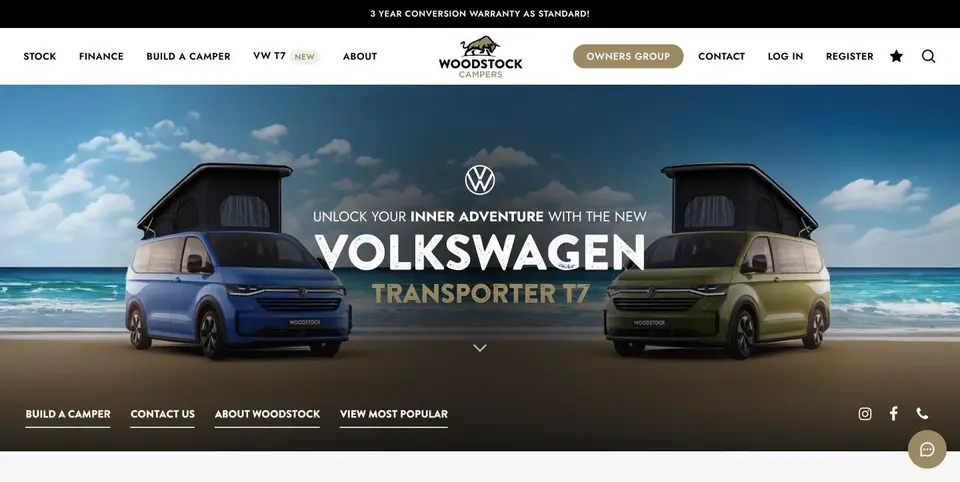 Woodstock Campers
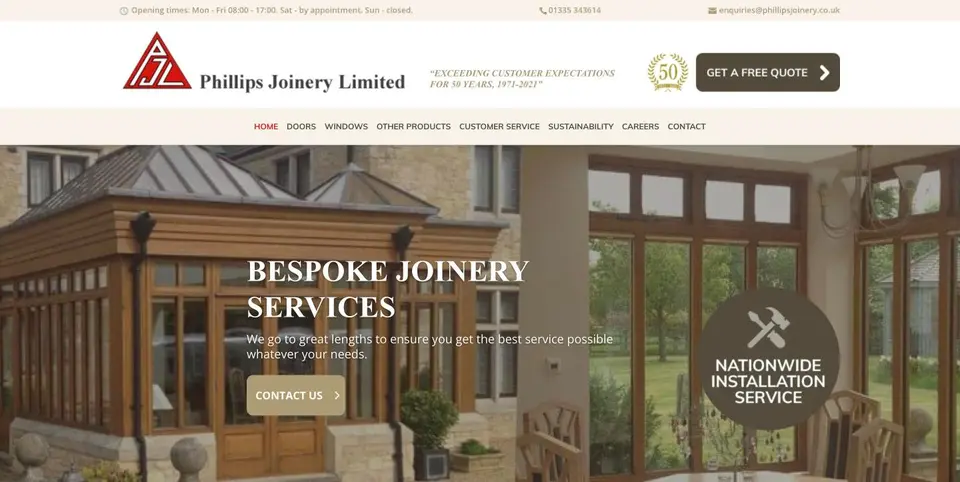 Phillips Joinery
Web design agency · WordPress, Shopify, Framer The brief is the product
Websites rarely fail because the design was wrong. They fail because nobody settled what the site had to make a customer do, so the project ran four months long and launched doing what the old one did in a nicer font. We start there instead.
 Live client figure
Most website projects fail on scope, not on design
Website design is rarely the problem. Projects go wrong because nobody wrote down what the website has to make a customer do, so every decision after that is a matter of taste and the argument runs for four months.
You can see it in the symptoms. The homepage gets redesigned six times while the service pages sit empty. Content arrives in week nine. Somebody asks in week eleven whether the enquiries go into the CRM. The launch slips, everybody blames the web design agency, and the site goes live doing roughly what the old one did in a nicer font.
The brief is the product. Get it specific and the rest is execution.
What a brief has to settle before anyone designs anything
- What a visitor must be able to do. Enquire, book, buy, download, compare. Name the two or three actions that matter and every page can be judged against them.
- Who writes the words. The single most common cause of delay. If it is you, agree deadlines. If it is us, agree the interviews.
- Where the images come from. A shoot, your existing library, or stock. Say now, because a design built for photography and delivered without it looks broken.
- What has to connect. CRM, booking system, payment, stock, accounting, email platform. Integrations discovered late are the ones that blow the schedule.
- What happens to the old site. Which pages move, which are retired, which URLs need redirects. This is a search decision and it belongs at the start.
- Who maintains it afterwards. That answer changes the content management system, the training and the handover.
A web design company that does not ask those six is going to invoice you for the consequences later.
Web design and development, and where the line sits
Design decides what a visitor sees and understands. Development decides whether it works, and increasingly whether the digital products behind it hold together. The two get sold as one thing and they fail in different ways.
Our web design services cover the structure, the wireframes, the visual identity applied across the pages, and the UI UX decisions that determine whether somebody can find what they came for. Responsive web design is assumed rather than sold as a feature: the majority of your visitors are on a phone.
Web development covers the build itself, front end development, the content management system, the integrations, speed and accessibility. Our developers and project managers work in the same team as the designers, so nothing gets drawn that cannot be built. Technical performance is treated as a requirement, not as an optimisation phase that gets cut when the budget tightens.
Conversion rate optimisation runs through both. A website that attracts visitors and converts none of them is the most expensive kind of failure, because you keep paying to send people to it.
WordPress, Shopify or Framer
WordPress websites for content led sites with services, articles and case studies to manage. The most flexible and the one that most needs discipline, because an unmanaged plugin list is how a WordPress site becomes unmaintainable within two years.
Shopify for an online store, where products, orders and the buying journey drive the build. We are a Shopify Partner. E commerce is a different class of project: more moving parts, more to test, and delivery rules that need settling before design rather than at checkout.
Framer for design led sites where visual editing after handover matters. We are a Framer Expert. It suits a marketing team that wants to publish new pages without booking developer time.
The platform is a development decision about what you need and who will run it, not a matter of preference. Any agency that builds everything on one platform is choosing for its own convenience.
How the build actually gets done
Design and build are separate crafts, and the handover between them is where most projects lose their quality. Ours sit in the same team, so what gets drawn is what gets built.
The design specifications come first: page templates, states, breakpoints, and what happens when a heading runs to three lines. Skip that and you get a beautiful homepage attached to a set of pages nobody designed.
Then front end development, where the user interface stops being a picture and starts being something people can use. Good digital design survives a slow connection, a small screen and a thumb. That is what makes user friendly websites, rather than a slider on the homepage.
WordPress development is the usual route for content heavy sites, because the content management system is familiar and your own team can run it. Shopify covers the online store cases. Framer suits marketing sites that need to move quickly and look sharp.
Where a business needs more than a website we build that too. Enterprise websites with real integrations, internal tools, and mobile apps when the job needs one rather than because an app sounds impressive.
Technical expertise matters here in a boring way. Scalable solutions are not about anticipating a million users, they are about whether adding thirty new pages next year means a redesign or an afternoon. Digital innovation gets talked about far more than it gets built: in practice it means picking a newer tool because it does the job better, not because it is newer. That sort of technical proficiency shows two years in, not on launch day.
Our development services cover both ends. We create websites from scratch and we take over the ones somebody else built badly. Building websites well is mostly a discipline problem, not a tooling one. Both start the same way, by reading the code and saying whether it is worth saving.
What we deliver websites for is not the picture. It is functional websites and digital experiences a customer can finish without help, which is a lower bar than the industry pretends and one most sites still fail.
Brand, and how much of it a website project should touch
A lot of web design projects arrive with a brand problem attached: a logo that exists only as a low resolution image, no brand guidelines, and a colour palette that fails on buttons.
We handle logo design, creative design, brand identity and the design systems around them in house, so a rebuild is a sensible moment to fix it. Equally, if your brand is working, we design around it and leave it alone. Brand storytelling is not something every business needs and it is often sold to those who need a working enquiry form far more.
A website is one part of the digital strategy
Web design agencies like to talk about the site as though it exists on its own. It does not. It sits inside a digital marketing plan, and the decisions that matter are usually about how the parts connect.
Where does the traffic come from? Search engine results, paid campaigns, social, email marketing, referrals. Each of those wants something slightly different from a landing page, and building one homepage and pointing everything at it wastes most of the budget.
What is the website supposed to produce? Lead generation for a service business, sales for an online store, applications for a recruiter. Name it, then measure it. Business goals belong in a web design brief every bit as much as a colour palette.
What supports it after launch? Content creation, search visibility, ongoing campaigns. A site that nobody adds to for two years is a site slowly losing ground to competitors who do.
Because we work as a full digital agency rather than a web design studio, that thinking is in the build. It is also why we will tell you when a website is not your problem: business growth stalls for plenty of reasons and a rebuild fixes only some of them.
Websites we have built
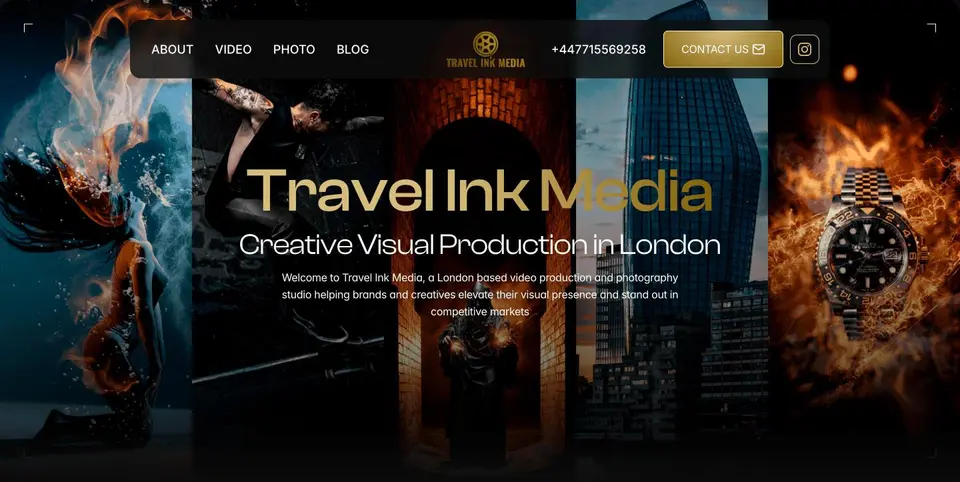
Speeds Campers, Blue Light Services, Travel Ink Media, Wheels VT, Call Mr Fix It, Giant Jiu Jitsu, GoMo Garden Pods, Viking Shop Suple, Turbo Snail and Boyana Brows.
Travel Ink Media reached 98 per cent page speed after its redesign. Speeds Campers started with a website redesign in January 2024, are still clients, and have referred three businesses who became clients too. Client reviews and referrals tell you more than a portfolio does, because a portfolio only ever shows launch day.
We are not an award winning agency and we do not enter awards. What we can show you is finished work, page speed figures and clients who stayed.
What a website costs and what drives the number
No prices here, because the same two words cover a five page site and a shop with stock integration. What decides the figure is the page count, who writes the content, whether photography is included, the integrations, and how much is migrating from the old site.
Compare quotes on scope. Two proposals that differ by thousands are usually describing different jobs, and the cheaper one is often the one that excludes content, images and migration, all of which you will then pay for separately.
You own the website. Domain, hosting, platform account, files. Ongoing support and website support are available and optional, scoped and priced separately so you can see what they cover.
Every figure is published: £2,499 is where a website starts, and the full rate card is on our pricing page, where you can tick what you need and see the total before you speak to anybody.
Where the website sits in the rest of it
A digital presence built on one website and nothing else does very little. It needs people arriving with a reason to be there, which is SEO and Google Ads, and it needs something worth looking at when they get there, which is content production. Bringing more customers to a page that cannot convert them is the most expensive habit in digital.
Because all of that happens in the same team, the site gets built knowing what the campaigns will need from it: the landing pages, the tracking, the CRM connection, the space for real photography. A build handed over without any of that is a brochure with a hosting bill.
We are a Shopify Partner, Framer Expert, Google Partner and Meta Business Partner, with a 5.0 rating from 30 Google reviews. Services run month to month with 30 days’ notice.
What working with a web design firm should feel like
Most UK web design agencies do competent work. The difference shows in the weeks between the kickoff and the launch, and that comes down to communication rather than craft.
Clear communication means you always know what is happening this week and what is waiting on you. Proactive communication means we flag a decision before it becomes urgent, not after it has held everything up for four days.
An agency running multiple projects at once is normal and not a problem by itself. Ask instead how many your specific designer and developer are on, because that is the number deciding how quickly your feedback gets actioned.
Where the work spills into brand we can handle it. Acting as a branding agency and the web team on the same project keeps the logo, the site and the campaign speaking with one voice, and it removes the argument about whose fault an inconsistency is.
The commercial test at the end is simple. Did the site boost visibility in search, does it convert visitors into enquiries, and does it leave a lasting impression on somebody comparing three suppliers. Online success is those three, measured, rather than a design award.
Plenty of UK web design firms will show you a portfolio of launches. Ask any web design firm on your list for a site they built three years ago and what it does today. That answer separates the good ones.
If you are nearby, two pages go further. Our web design High Wycombe page explains why most small business websites fail eighteen months after launch rather than on launch day, and what owning the domain, the hosting and the files changes about that. The web design Milton Keynes page covers the photography and video shoot day we plan into most builds, and the move off the old site.
Start with the brief, not the design
Tell us what the website has to make a customer do and what is stopping the current one doing it. The free audit will say whether a rebuild is the right spend or whether two better pages and a set of proper photographs would do more for less.
No obligation, and no proposal until the brief is settled.