
 Black Steel Doors
 Woodstock Campers
 Phillips Joinery
The single best move for any YouTube ads strategy right now is to treat first-party conversion signals as the priority, run Demand Gen alongside a properly targeted Video campaign, and keep a steady supply of fresh creative flowing. Report click conversions separately from view-through conversions, and run a holdout test before you trust either number. Everything else, from bidding to targeting, works better once that foundation is in place.
TL;DR:
- Prioritise first-party conversion signals and run Demand Generation alongside targeted video campaigns for best results.
- Match ad formats to campaign goals, using bumper and Masthead ads for awareness, in-feed for consideration, and Demand Gen for conversions.
- Focus on creative volume and quality, generating multiple variants per concept with AI tools and reviewing all assets before launch.
- Use Customer Match, custom intent, and remarketing pools to sharpen targeting, avoiding overlap that causes campaign cannibalisation.
- Measure view-through and click conversions separately, and review creative performance weekly to avoid fatigue and scale what is working.
Table of Contents
- Core YouTube ads strategy: the framework behind every good campaign
- How do I choose the right YouTube ad format?
- Creative best practice for 2026: hooks, asset sets and AI throughput
- Which YouTube ads targeting strategies actually work?
- Demand Gen or Video campaigns: which one and when?
- Measurement and attribution: what to trust and what to double-check
- How often should you test and refresh YouTube ad creative?
- A 90-day plan to get your YouTube ads programme moving
- Why creative throughput is the real bottleneck, not targeting
- Get YouTube ads support from AMW Media
- Sources
- FAQ
Core YouTube ads strategy: the framework behind every good campaign
Google’s algorithm needs four things to do its job properly: a workable budget, clean conversion signals, a decent audience seed, and enough creative variety to test against. Skip any one of these and you’ll spend weeks fiddling with settings that were never the real problem.
First-party data matters more than any targeting lever you’ll find in the interface. If your conversion tracking is patchy or your Customer Match lists are stale, no amount of clever audience layering will fix the underlying signal quality Google’s AI needs to optimise properly.
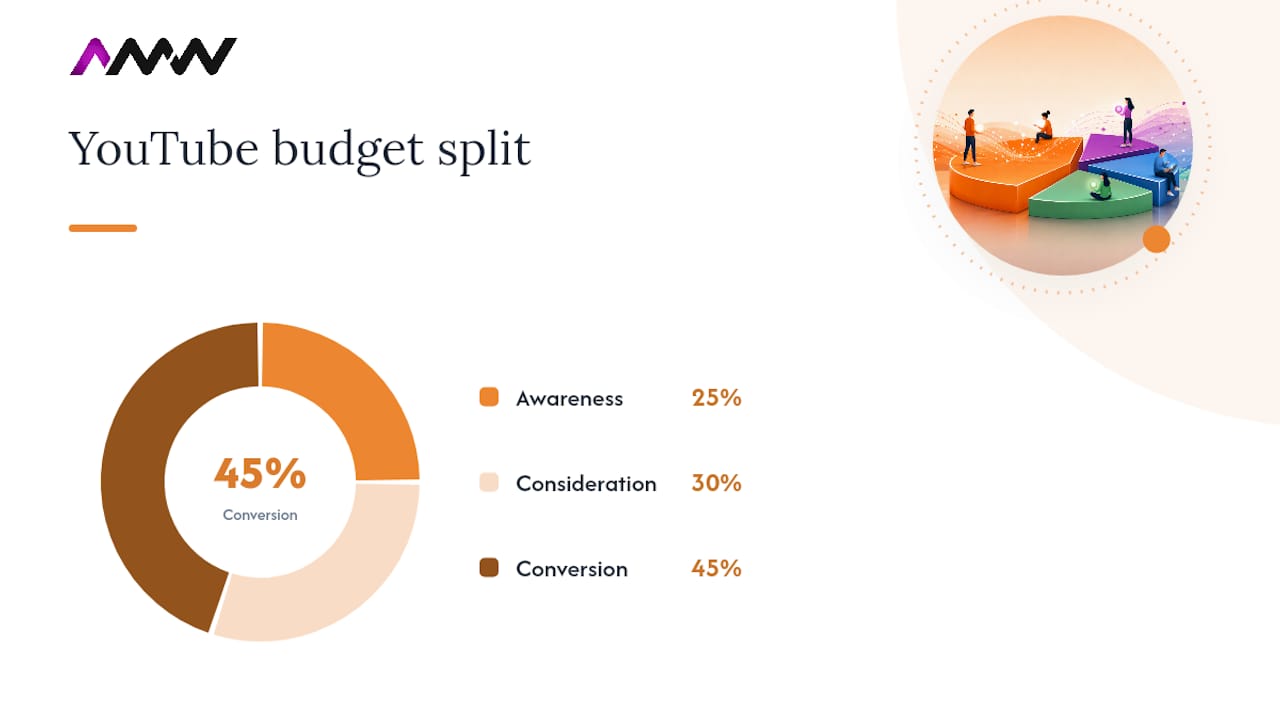
A sensible budget split for most advertisers looks like this:
- Awareness (20-30%): bumper ads and Masthead for reach, priced on impressions
- Consideration (25-35%): in-feed and longer skippable formats that build engagement
- Conversion (40-50%): Demand Gen and targeted Video campaigns chasing action
Google’s own YouTube Formula guidance for 2026 puts AI-assisted optimisation, creator partnerships, and measurement at the centre of what separates strong performers from the rest. Brands feeding the system a wider mix of creative assets tend to see better ROAS, because the AI has more raw material to test and learn from.
How do I choose the right YouTube ad format?
Match the format to the goal, not the other way round. Too many advertisers pick a format because it’s cheap or familiar, then wonder why performance never quite lands.
- Awareness goals call for bumper ads (six seconds, unmissable) or Masthead placements for big reach moments. These format and billing rules are laid out in Google’s YouTube ad formats guidance, including exactly how a TrueView view gets counted.
- Consideration goals suit in-feed ads and longer skippable in-stream formats, giving viewers space to actually understand what you’re offering.
- Conversion goals work best through Demand Gen or skippable in-stream paired with custom intent audiences, both built for direct response.
Shorts deserve a place in the funnel, but treat them as a reach and warm-up tool rather than your conversion engine. Conversion tracking on Shorts can be less consistent, so pair Shorts exposure with a sequential longer asset before you ask for the sale. A small programme might run one concept across bumper and in-feed; a larger one should be splitting budget across all five formats simultaneously.
Creative best practice for 2026: hooks, asset sets and AI throughput
The first 2 to 5 seconds decide whether anyone watches the rest. Google’s own scale data on YouTube users shows just how much competition there is for that attention window, so your hook needs a pattern interrupt and a value statement a viewer understands instantly, not a slow logo reveal.
Build asset sets, not single ads:
- A hook cut, testing different openers against the same core message
- A proof or demo cut, showing the product actually doing something
- A CTA cut, built purely to close
- Vertical masters for Shorts and mobile feeds, horizontal masters for connected TV and desktop
Pro Tip: Generate five to ten variants per concept using an AI tool like AmmarAI’s URL-to-video generator, then have a human review every one against your brand guidelines before it goes live. Volume without oversight is how you end up with ads nobody remembers approving.
Creative throughput beats micro-tweaking targeting settings almost every time. Investing properly in content creation pays off precisely because Google’s AI rewards variety, not perfection on a single hero ad.
Which YouTube ads targeting strategies actually work?
Start with Customer Match. Upload your CRM list, refresh it weekly, and let Google find lookalike behaviour off the back of real customer data rather than guessed interests.
- Customer Match first: weekly refresh cadence keeps signal quality high as your customer base evolves
- Custom intent audiences for direct response, built around search terms and competitor behaviour
- Video remarketing pools built from viewers who’ve already watched 10, 25, or 50 percent of your content
- Layer carefully: combine audiences to sharpen relevance, but add exclusions so Demand Gen and standalone Video campaigns aren’t bidding against each other for the same viewer
Google’s targeting guidance for video campaigns covers affinity, in-market, and placement targeting too, but none of them substitute for a clean first-party base. If you’re already running remarketing across other channels, the same segmentation logic transfers straight into your video remarketing pools.
Demand Gen or Video campaigns: which one and when?
Run Demand Gen when the goal is conversions and you’re happy for Google to optimise across YouTube, Discover, and Gmail simultaneously. It’s become close to the default for performance advertisers because it spans surfaces most competitors ignore, according to 2026 industry analysis. Run a standalone Video campaign when you specifically need to isolate YouTube performance, for reporting clarity or because a client wants YouTube-only numbers.
- Target CPA or Maximise Conversions: viable once you’re generating enough conversion volume weekly for the algorithm to learn from
- Target CPV or tCPM: better suited to reach and awareness goals where cost per view matters more than action
- Watch for cannibalisation: Demand Gen can quietly eat your standalone campaign’s traffic without proper audience exclusions in place
Measurement and attribution: what to trust and what to double-check
View-through conversions and click conversions are not the same signal, and reporting them together muddies everything. Keep them separate in your dashboards, and re-baseline your targets whenever you switch on view-through optimisation, since the conversion volume will jump without a corresponding jump in actual demand.
Google Ads recommends pairing conversion reporting with Brand Lift studies and geographic holdout tests to separate genuine incremental impact from ads simply claiming credit for sales that would have happened anyway.
- Awareness: track reach, frequency, and unique reach
- Consideration: track view rate and cost per view
- Conversion: track CPA and ROAS, split by click versus view-through
Google’s beginners’ guide to video ads walks through setting these up inside Google Ads directly. If your own tracking setup needs a refresh first, this piece on updating conversion tracking is worth reading before you touch attribution settings at all.
How often should you test and refresh YouTube ad creative?
- Test one variable at a time. Changing the hook and the CTA in the same test tells you nothing useful about either.
- Set a minimum threshold, roughly 1,000 impressions or enough conversions to be statistically meaningful, before judging a result.
- Set frequency caps at campaign or Video Campaign Group level rather than per ad, so Google’s delivery system has room to work. Awareness campaigns tend to sit around 3 to 5 impressions per week; consideration campaigns can run a little higher before fatigue sets in.
- Run a weekly check: unique reach, view rate, signs of creative decay, and whether bids or budgets need adjusting.
Refresh the hook cut before you touch anything else.*
Sequencing and frequency discipline separate advertisers who scale smoothly from those fighting rising ad load with the same three ads for six months straight.
A 90-day plan to get your YouTube ads programme moving
- Days 1 to 30: Audit your conversion tracking, upload and schedule your Customer Match list, brief and produce 2 to 3 creative concepts with full asset sets, and set up your Video Campaign Group structure.
- Days 31 to 60: Run Demand Gen and Video campaigns side by side as a genuine experiment. Only switch on view-through optimisation after re-baselining targets, and start a geographic holdout to measure real incrementality.
- Days 61 to 90: Scale whatever’s winning, retire fatigued creative, expand into lookalike and similar audience segments, and feed what you’ve learned back into your search and shopping campaigns.
By day 90 you should have a genuine read on which formats, audiences, and creative concepts are earning their keep. If you’re checking those weekly numbers properly, this guide on analysing marketing results covers the reporting habits worth building alongside it.
Why creative throughput is the real bottleneck, not targeting
Most YouTube advertisers spend their energy on targeting settings when the actual constraint is almost always creative supply. You can have flawless Customer Match lists and a perfectly structured campaign, and still underperform because you’re running the same three ads Google’s already seen a thousand times.
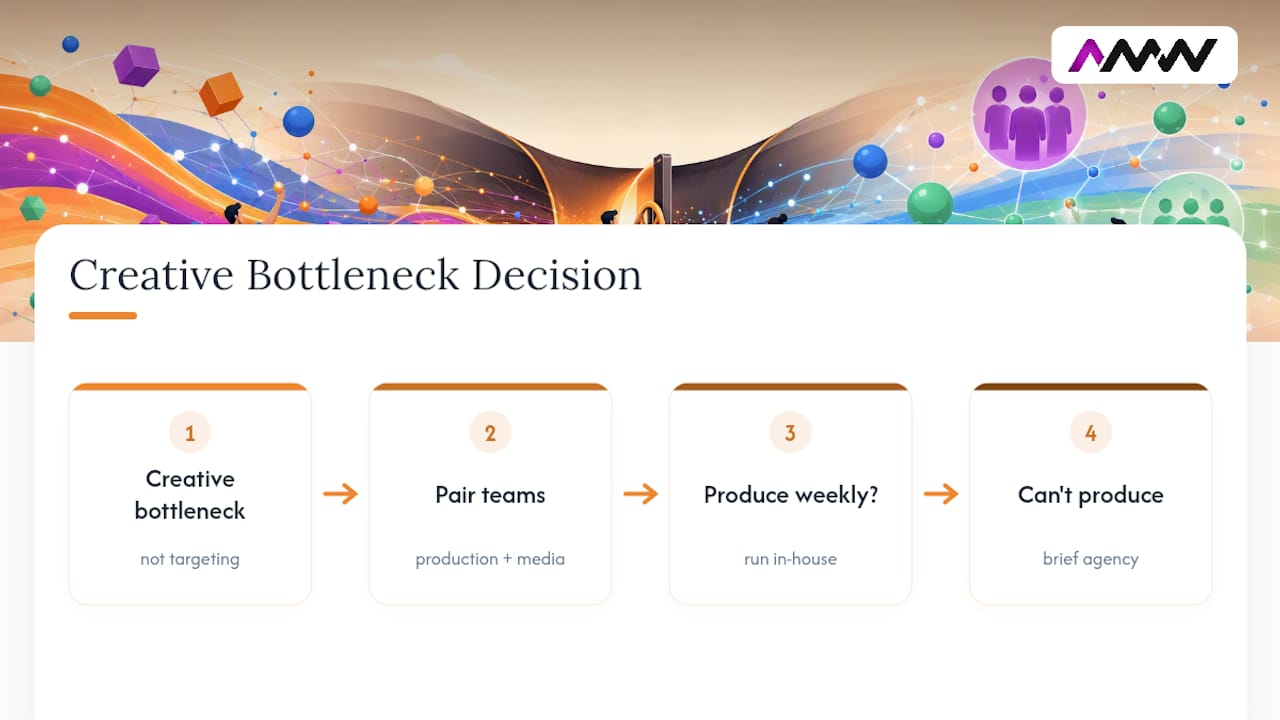
Solving that bottleneck means pairing in-house production with performance media management, so the creative pipeline and the bidding strategy get built together rather than handed off between two separate teams who never talk to each other.
If you’ve got the internal resource to shoot, edit, and test weekly, run it in-house. If creative output is the thing slowing you down, that’s usually the moment to brief an agency rather than another targeting tweak.
Amir
Get YouTube ads support from AMW Media
If your YouTube campaigns are stuck because creative isn’t keeping pace with what the algorithm needs, AMW Media handles both sides at once rather than making you choose between a production team and a media buyer. We produce the video and photography assets your ad sets actually require, then manage the PPC campaign structure, bidding, and measurement setup around them, so nothing gets lost in the handoff between “who made this” and “who’s optimising it”.
We also handle the social side, useful if Shorts and organic content need to work alongside paid video rather than in isolation, through our social media management service. If you are near Milton Keynes, our PPC agency in Milton Keynes page covers the local picture, and we can walk through your current setup in person. Get in touch to talk through where your YouTube programme currently stands and what a properly structured 90-day plan would look like for your budget.
Sources
- YouTube ad formats and details, Google Support
- The YouTube formula for 2026: four ways to unlock your brand’s potential, Google / Think
- YouTube Advertising In 2026: Complete Strategy Guide For High Ad Load Competition, Groas
- YouTube Advertising in 2026: Costs and Formats | MarqOps
FAQ
What is the 7 second rule on YouTube?
It refers to the widely cited idea that viewers decide whether to keep watching or skip within the first few seconds, which is why hook-first creative structure matters so much for skippable formats.
How many YouTube views do I need to make £10,000 a month?
This depends entirely on niche, audience location, and ad formats running against your content, since CPM rates vary hugely by industry and season, so there’s no single view count that guarantees that income.
What is the 8 minute rule on YouTube?
Videos longer than a typical short clip become eligible for mid-roll ad breaks, which is why many organic creators structure content to pass that length, though this rule applies to organic monetisation rather than advertiser-side campaign strategy.
How much do YouTube ads pay per 1,000 views?
Pricing for advertisers is typically calculated as cost per view (CPV) or cost per thousand impressions (CPM) rather than a fixed payout, and the actual rate depends on targeting, format, competition, and season.
Recommended
- 3 TikTok Targeting Recipes Marketers Actually Use for Creative First Ads
- Segment first, then match channel: remarketing strategies that convert
- Types of creative content: 10 formats that drive results
- Examples of branded content: 10 campaigns that actually work
Our free marketing audit looks at your site, your ads and your content, and comes back with a 30 day plan. No pitch deck.

Founded AMW Media in 2024 and runs strategy, paid media and the CRM builds. The reason everything here is in house and measured in revenue. Meet the team.