
 Black Steel Doors
 Woodstock Campers
 Phillips Joinery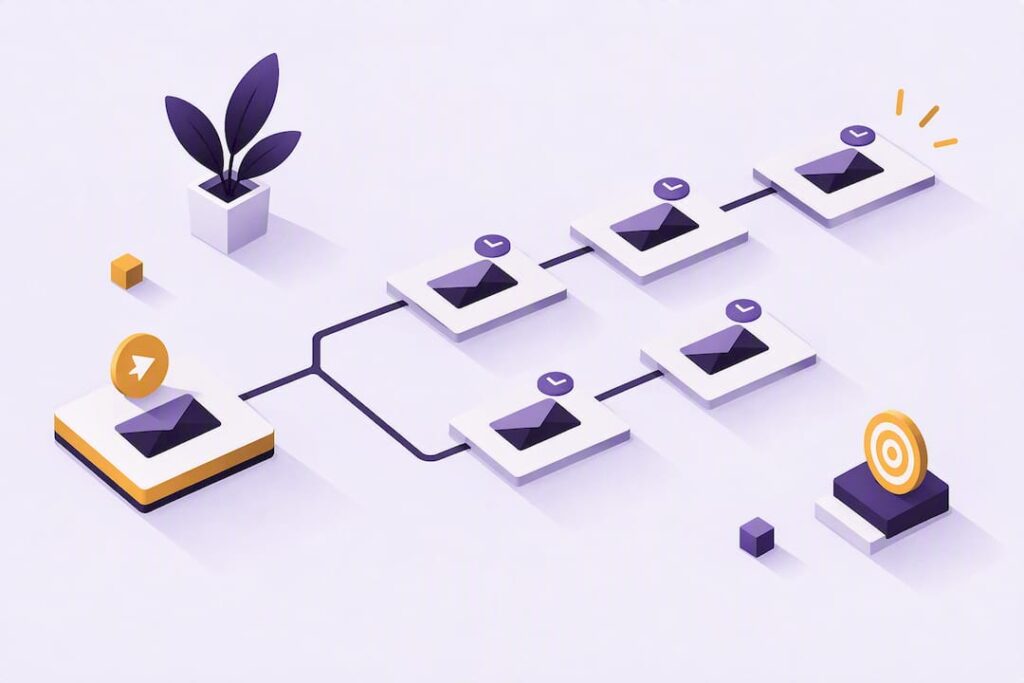
Four sequences do most of the heavy lifting for any business: a welcome series, a lead-nurture track, a trial-to-paid flow, and abandoned-cart or re-engagement emails. If people are opting in but going quiet, build the welcome series first. If trials are leaking before conversion, fix that flow before touching anything else. Every template and checklist below is built to get one of these live within a day.
TL;DR:
- Drip campaigns should focus on solving specific funnel leaks, such as onboarding, lead nurturing, or cart abandonment, rather than using all sequences universally.
- Successful sequences follow a five-beat structure: a hook, problem framing, social proof, objection handling, and a clear call to action or exit.
- Launching a sequence can be done in a single day by carefully planning, writing, testing on a small seed list, and then scaling to the full segment.
- Behavior-triggered emails outperform fixed schedule sends when tracking signals like pricing page visits, feature downloads, or cart abandonment, especially when combined with simple branching rules.
- Constant list hygiene, including validation and deduplication, is essential to maintain deliverability and ensure sequences reach the right contacts.
Table of Contents
- Drip campaign examples: seven sequences and when to run each
- The anatomy of a high-converting sequence, with copy you can steal
- Time-based delays or behaviour triggers: which logic should you use?
- How to get a drip campaign live in a single day
- Measuring performance: the metrics that actually tell you something
- Deliverability and data hygiene: your contact-washing checklist
- How Amwmedia turns drip sequences into pipeline
- When a drip sequence is the right call, and when it isn’t
- Want help building yours? Here’s how Amwmedia can pilot one for you
- Sources
- FAQ
Drip campaign examples: seven sequences and when to run each
Not every business needs every sequence. Match the type to the leak in your funnel, not to what a competitor happens to be running.
Welcome series. New subscribers decide whether to keep opening your emails within the first few days, and welcome sequences consistently post the highest open rates of any automated flow you’ll run. Send 3 to 5 emails across the first 72 hours after opt-in. Scenario: a skincare brand sends a discount code, a founder story, and a bestseller round-up to a new email subscriber. Track open rate first, then click-through on email two or three.
Lead nurture. This is the workhorse for anyone selling something that needs a few touches before a buying decision. B2B nurture tracks typically run 6 to 10 emails over 30 to 60 days, staged by where the lead sits: awareness, consideration, decision. Scenario: a software vendor nurtures a webinar attendee toward a demo booking over six weeks. Success metric: click-through rate into gated content, then demo requests.
Trial-to-paid. Aimed squarely at SaaS. Rather than firing emails on Day 1, Day 5, Day 10 regardless of behaviour, map messages to feature adoption. Someone who has not touched the dashboard by day three needs a different nudge than someone who has already invited teammates. Scenario: a project-management tool sends a “your team hasn’t logged a task yet” email tied to inactivity, not the calendar. Metric: trial-to-paid conversion rate.
Abandoned cart. The classic ecommerce recovery play. Fire the first email within an hour or two of abandonment, a second with social proof around 24 hours later, and a final one with urgency or a discount at 48 to 72 hours. Scenario: an online retailer recovers a checkout by reminding a shopper their basket is about to expire. Metric: cart recovery rate.
Re-engagement. For contacts who’ve gone cold. Three emails over two weeks, each one testing a different angle (new offer, changed content, simple “still interested?”). Scenario: a subscription box brand wins back a lapsed customer with a “we miss you” discount. Metric: reactivation rate, not opens.
Post-purchase onboarding. Underused, and it protects the revenue you already earned. Walk new customers through setup or first use across 4 to 6 emails. Scenario: a furniture retailer sends assembly tips and care instructions after delivery. Metric: repeat purchase rate.
Cold outbound follow-up. For sales-led B2B teams chasing a list rather than inbound leads. Short, 4 to 5 email sequences spaced a few days apart, each with a different hook. Scenario: an agency follows up a LinkedIn connection request with a case study, then a direct ask. Metric: reply rate.
The anatomy of a high-converting sequence, with copy you can steal
Every strong sequence, whatever the use case, follows roughly the same five-beat structure. Miss a beat and the whole thing feels thin, even if the design is polished.
- Email 1, the hook: earn the open, deliver one clear value point, nothing else.
- Email 2, problem framing: name the pain the reader actually has, in their own language.
- Email 3, social proof: a result, a number, or a recognisable name doing the talking.
- Email 4, objection handling: answer the “yes, but…” that’s stopping the click.
- Email 5, the direct ask (or breakup): a clear CTA, or a graceful exit if they’ve gone cold.
Here’s a copy-ready starter sequence you can adapt for a lead-nurture or trial flow.
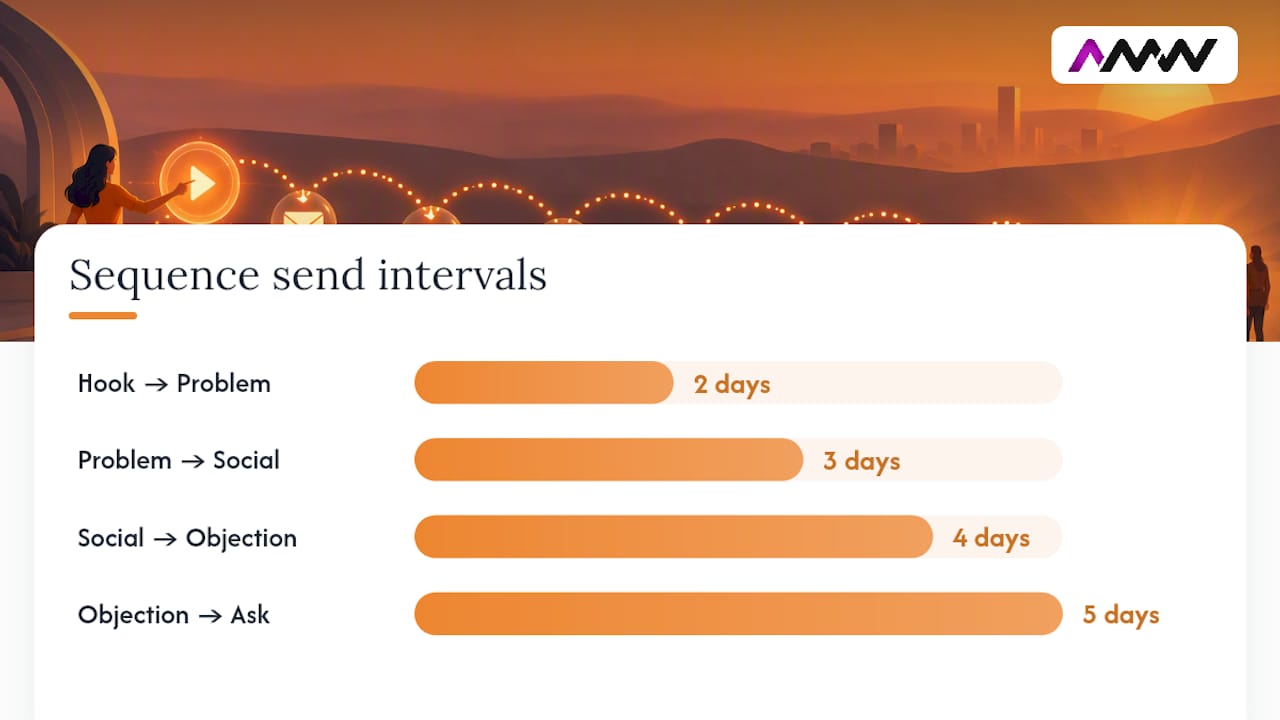
- Day 0, the hook. Subject: “The one thing most [industry] teams get wrong.” Body opens with a single insight, no pitch: “Most teams lose leads at the follow-up stage, not the first contact. Here’s the fix.” CTA: read a short guide, low commitment.
- Day 2, problem framing. Subject: “Why [common approach] stops working at scale.” Name the specific frustration: “You’ve probably noticed responses slow down after the third touch. That’s not a coincidence.” CTA: reply with a one-word answer (keeps engagement cheap).
- Day 5, social proof. Subject: “How [type of business] fixed this in six weeks.” Lead with a concrete result rather than a generic claim: “A mid-size agency cut their follow-up time by half after changing one step.” CTA: view a short case study or example.
- Day 9, objection handling. Subject: “‘We don’t have time for this’ (and why that’s the wrong worry).” Address the real hesitation directly: “This isn’t another tool to learn. It runs in the background once it’s set up.” CTA: book a 15-minute call.
- Day 14, the direct ask or breakup. Subject: “Last one from me on this.” Give a clean close: “I’ll stop emailing about this after today. If the timing’s off, no worries. If not, here’s the link.” CTA: book now, or unsubscribe from this specific track.
Pro Tip: Write the entire five-email sequence in a plain document before you touch your automation platform. Drafting inside the tool almost always breaks the narrative arc, because you end up thinking in fields and triggers instead of in the story you’re trying to tell.
For more sample copy across onboarding and welcome flows, AMW Media’s examples of email marketing campaigns that actually work is worth a look before you start building.
Time-based delays or behaviour triggers: which logic should you use?
Time-based sequences fire on a fixed schedule (Day 1, Day 3, Day 7, Day 14) regardless of what the recipient does. They’re simple to build and predictable to test, which makes them the right starting point for a welcome series or a first nurture track. Behaviour-triggered emails fire based on an action the person takes and tend to outperform fixed schedules once you’ve got the basics working, because they hit people at the moment they’re actually paying attention.
High-value triggers worth setting up early:
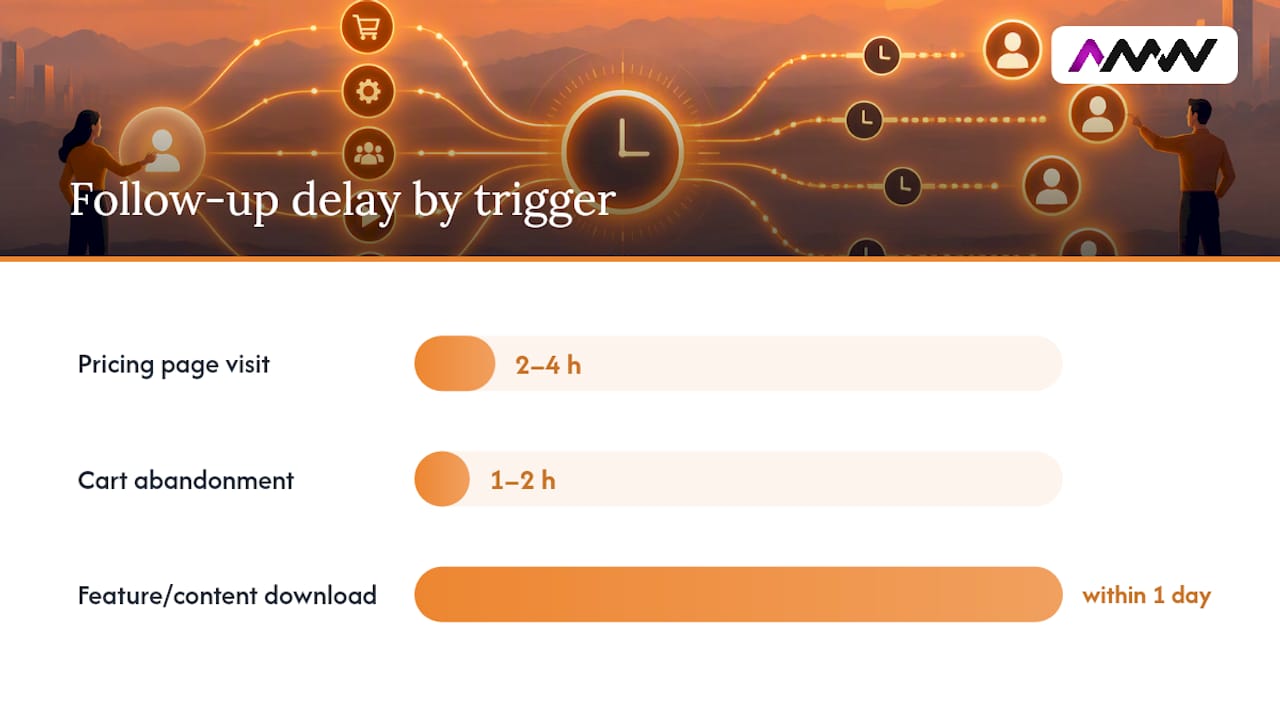
- Pricing page visit: fire a follow-up within 2 to 4 hours to catch genuine buying intent before it cools off.
- Repeated email opens without a click: signals interest without commitment; try a different CTA or format.
- Feature or content download: trigger a related follow-up within a day, while the topic is fresh.
- Cart abandonment: fire the first reminder within one to two hours, not the next morning.
Build simple branching rules so a lead who shows high intent (say, three pricing page visits) jumps out of the slow nurture track and into a faster, sales-focused sequence. A hybrid approach, default time-based cadence with behaviour-based acceleration layered on top, gives you the reliability of a schedule and the relevance of real-time triggers without needing a complex build from day one.
How to get a drip campaign live in a single day
You don’t need a quarter of planning to launch something that works. Here’s a realistic hour-by-hour plan for one sequence.
- Morning: pick one sequence and one metric. Choose the leak that’s costing you most right now, welcome, nurture, or cart recovery, and decide the single metric that proves it’s working.
- Late morning: write the full sequence in a document. All five emails, subject lines included, before opening your email platform.
- Midday: pull and clean your seed list. Validate addresses, dedupe, and pull a small test group of 20 to 50 contacts.
- Early afternoon: segment the live audience. Split by the signal that matters (opt-in source, trial status, cart value) rather than sending one blanket list.
- Mid-afternoon: build the automation. Set delays or triggers, load your copy, and check every link works before moving on.
- Late afternoon: send to your seed group first. Check rendering, timing, and that the CTA actually lands where it should.
- End of day: go live to the full segment, then check open rates the next morning and note anything that looks off.
Pro Tip: Don’t skip the seed send. A broken link or a typo in the subject line is embarrassing on 40 test contacts. It’s a genuine problem on 4,000 real leads.
Measuring performance: the metrics that actually tell you something
Open rate and click-through rate matter, but only as leading indicators. The number that decides whether a sequence stays live is the conversion metric it was built for: demo bookings for nurture, recovered carts for abandoned-cart flows, activated trials for SaaS onboarding.
Watch these alongside conversion:
- Deliverability rate: falling inbox placement quietly kills every other metric.
- Unsubscribe rate: a spike after a specific email tells you exactly where you lost people.
- Spam complaint rate: even a small rise here needs immediate attention, not a shrug.
- Click-to-open rate: separates “good subject line” from “good email content”.
Run subject-line and CTA-placement tests on your highest-volume sequence first, since that’s where a small lift compounds fastest. Personalised subject lines and content tend to outperform generic blasts, a pattern borne out across the wider personalised marketing data Statista tracks. Give a test at least one full cohort cycle before you judge it, and pause a sequence rather than let it limp along once conversion drops for two cycles running.
Deliverability and data hygiene: your contact-washing checklist
Contact washing, validating, normalising, and deduplicating your list, protects your sender reputation and stops good emails landing in front of the wrong people. Skip it and even a great sequence underperforms because half your list can’t actually receive it.
- Validate every new import before it touches a live sequence, not after.
- Run a short win-back attempt on inactive contacts, then archive anyone unresponsive after 90 days.
- Remove hard bounces immediately, don’t let them sit on the list “just in case”.
- Schedule a weekly check for duplicate entries and malformed addresses.
UK senders should follow the ICO’s guidance on electronic mail marketing closely, since consent and record-keeping requirements sit alongside the deliverability argument for keeping lists clean.
How Amwmedia turns drip sequences into pipeline
Amwmedia builds nurture and lifecycle sequences the same way most solid agencies do: map the customer’s actual buying stages first, then write the emails, then automate. That order matters more than the platform you pick.
A sequence that skips straight to automation before the story is written almost always reads like five disconnected emails rather than one argument building towards a decision.
For a pilot sequence, expect a build phase measured in days rather than weeks, followed by a short measurement window before scaling to the full list. Clients typically want to see one clear metric move, recovered carts, booked demos, activated trials, before expanding the programme further.
When a drip sequence is the right call, and when it isn’t
Drip sequences win when you’ve got scale: a steady stream of new leads, trial sign-ups, or abandoned carts that a human simply can’t chase one by one. They’re the wrong tool for a tiny list of ten high-value prospects, where a direct, personal email beats anything automated, or for genuinely urgent outreach that can’t wait for a scheduled trigger.
The mistake I see most often isn’t bad copy, it’s businesses building the automation before they’ve written the story. Fix the sequence on paper first.
— Amir
Want help building yours? Here’s how Amwmedia can pilot one for you
Writing a solid sequence is one thing. Getting it built, tested, and actually improving conversion is another, and that’s the part most in-house teams run out of time for. This approach provides an alternative to hiring a full in-house automation team, featuring no long-term contracts, transparent reporting, and a focus on one measurable result before committing further budget.
If your welcome series has never been touched, or your trial-to-paid flow is losing people at the same point every month, that’s usually a sign the sequence needs a proper rebuild rather than another subject-line tweak. Amwmedia’s email marketing services cover exactly this: mapping the sequence, writing the copy, and setting up the automation logic behind it. Browse the full range of services or get in touch to scope a pilot sequence and see what a properly built drip campaign can do for your pipeline.
Sources
- Drip campaign marketing: The complete guide
- Guide to electronic mail marketing — ICO
- Personalized marketing — Statista
FAQ
How do I start a drip campaign?
Pick one sequence tied to a specific business problem, welcome, nurture, or cart recovery, then write the full copy before touching your automation tool. Clean your contact list, test with a small seed group, and only then push it live to the full segment.
How long should a drip campaign be?
It depends on the type: welcome series run best at 3 to 5 emails across the first 72 hours, while B2B nurture tracks typically run 6 to 10 emails over 30 to 60 days. Trial-to-paid and cart-recovery flows are usually shorter, built around behaviour rather than a fixed number of days.
What are some good examples of drip campaigns?
Welcome series, lead nurture, trial-to-paid, abandoned cart, re-engagement, post-purchase onboarding, and cold outbound follow-up cover most business needs. Each targets a different point in the customer journey, from a brand-new subscriber to a lapsed customer you’re trying to win back.
Why is it called a “drip campaign”?
The name comes from the idea of releasing content in small, timed doses rather than one large send, like water dripping steadily rather than pouring all at once. Each email “drips” a little more information or persuasion, building towards a decision over several touches.
Can Amwmedia build a drip sequence for my business?
Yes, Amwmedia offers email marketing services that cover sequence mapping, copywriting, and automation setup for a pilot or full programme. Current pricing details are available directly on the site rather than published as a flat rate.
Recommended
- Examples of email marketing campaigns that actually work
- Creative campaign process: Step-by-step guide for growth
- Examples of branded content: 10 campaigns that actually work
- Examples of brand engagement tactics that actually work
Our free marketing audit looks at your site, your ads and your content, and comes back with a 30 day plan. No pitch deck.

Founded AMW Media in 2024 and runs strategy, paid media and the CRM builds. The reason everything here is in house and measured in revenue. Meet the team.