
 Black Steel Doors
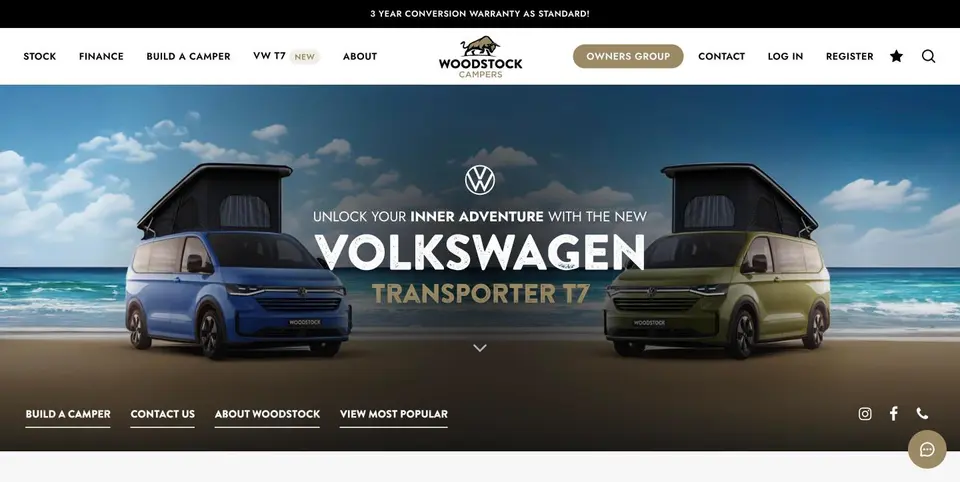 Woodstock Campers
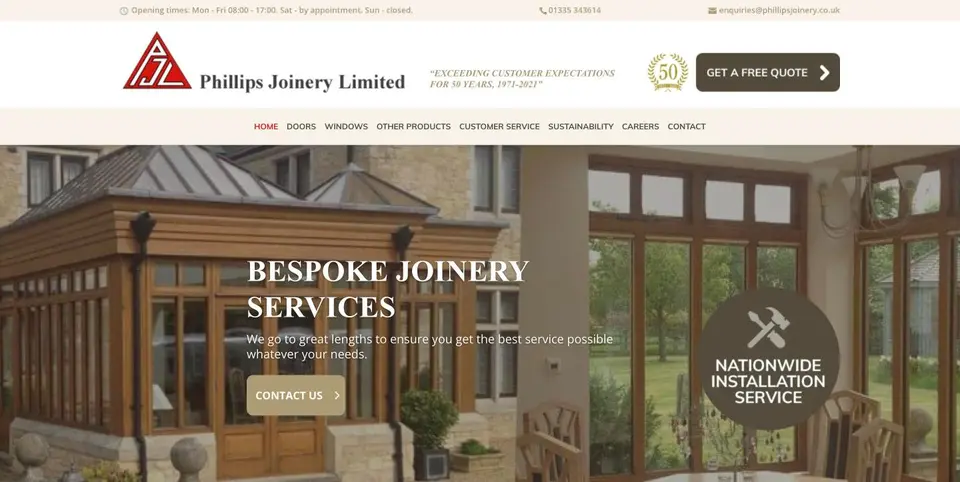 Phillips Joinery
The most effective marketing methods for business growth are SEO, content marketing, email, PPC/paid search, social and short-form video, PR and events, partnerships and affiliate marketing, CRM-led direct marketing, referral and loyalty programmes, and influencer marketing. Pick two or three based on your goal and budget, execute them consistently, and measure what moves.
Here is the shortlist at a glance:
- SEO, best for long-term organic visibility and inbound leads
- Content marketing, best for building authority and nurturing prospects
- Email marketing, best for retention, upsells, and low-cost conversions
- PPC/paid search, best for fast lead generation and predictable volume
- Social and short-form video, best for brand awareness and community growth
- PR and events, best for credibility, partnerships, and warm audiences
- Partnerships and affiliate marketing, best for extending reach without upfront ad spend
- CRM-led direct marketing, best for re-engaging existing contacts and reducing churn
- Referral and loyalty programmes, best for lowering customer acquisition cost
- Influencer marketing, best for reaching new, trust-primed audiences quickly
When to pick which:
- Fast leads now: PPC, email to existing list, referral programme
- Long-term growth: SEO, content marketing, CRM nurture
- Local discovery: Local SEO, Google Business Profile, PR and events
- Brand building on a budget: Short-form video, partnerships, influencer micro-campaigns
The best marketing methods explained: what each one does and how to start
The American Marketing Association’s taxonomy of marketing types is a useful reference point here. Each method below maps to a specific goal, funnel stage, and first action you can take this week.
SEO
Organic search is the channel that compounds. Once a page ranks, it generates traffic without ongoing spend. The catch is patience: meaningful results typically take three to six months.
When to use it: You have a twelve-month horizon and want inbound leads without paying per click. One action this week: Claim and fully complete your Google Business Profile, it is the single fastest local SEO win for most UK service businesses. KPIs: Organic sessions, keyword ranking positions, leads from organic.
Content marketing
Blog posts, guides, videos, and case studies that answer the questions your buyers are already asking. Content marketing works best when it is tied to SEO so the content actually gets found, not just published.
When to use it: You want to build authority in your sector and shorten the sales cycle by educating prospects before they speak to you. One action this week: Write one 800-word answer to the most common question your sales team hears. KPIs: Organic traffic to content pages, time on page, leads attributed to content.
Email marketing
Still the highest-return channel for most businesses. The list you own is the asset; rented audiences on social platforms can disappear overnight.
When to use it: You have an existing customer base or lead list and want to drive repeat purchases, upsells, or re-engagement. One action this week: Set up a three-email welcome sequence for new subscribers with a clear offer in email three. KPIs: Open rate, click-through rate, revenue per email sent.
PPC and paid search
Effective digital marketing strategies consistently highlight PPC as the fastest route to qualified traffic. You pay per click, so the cost is predictable and the volume is controllable.
When to use it: You need leads quickly, you know your cost-per-acquisition target, and you have a landing page that converts. One action this week: Run a search-term report on any existing campaigns and pause the irrelevant ones, most accounts waste 20 to 30% of budget on poor-match queries. KPIs: Cost per click, conversion rate, cost per lead or sale.
Social media and short-form video
Short-form video (Reels, TikTok, YouTube Shorts) is where organic reach still exists on social platforms. It rewards consistency and personality over production budget.
When to use it: You want to grow brand awareness, build a community, or reach a younger demographic without a large ad budget. One action this week: Film one 60-second answer to a common customer question on your phone and post it. KPIs: Reach, follower growth rate, engagement rate, click-throughs to website.

PR and events
Press coverage and in-person events build credibility that paid ads cannot replicate. A single piece of coverage in a relevant trade publication can generate warm inbound enquiries for months.
When to use it: You are launching something new, entering a new market, or need to build trust with a sceptical audience. One action this week: Write a one-paragraph press release about something newsworthy in your business and send it to three relevant journalists. KPIs: Media mentions, referral traffic from press, event attendance and leads generated.
Partnerships and affiliate marketing
Co-marketing with a complementary business lets you reach their audience without paying for it directly. Affiliate programmes extend this by paying a commission only on results.
When to use it: You want to grow reach without upfront ad spend, or you sell a product with a clear referral value. One action this week: Identify two businesses that serve the same customer as you but do not compete, and propose a joint piece of content or a shared offer. KPIs: Referral traffic, affiliate-driven revenue, partner conversion rate.
CRM-led direct marketing
Your CRM is a goldmine most businesses underuse. Segmented, personalised outreach to existing contacts consistently outperforms cold acquisition on cost per conversion. Marketing automation makes this scalable without a large team.
When to use it: You have a database of past customers or warm leads and want to re-engage them with relevant offers. One action this week: Segment your list by last purchase date and send a re-engagement email to anyone who has not bought in six months. KPIs: Re-engagement rate, pipeline value from CRM campaigns, customer lifetime value.
Referral and loyalty programmes
Word-of-mouth is the oldest marketing method and still one of the most cost-effective. A structured referral programme turns happy customers into a sales channel.
When to use it: Your customer satisfaction scores are strong and your acquisition cost is high. One action this week: Ask your five best customers directly if they know anyone who would benefit from your service, and offer a simple incentive. KPIs: Referral conversion rate, customer acquisition cost from referrals, repeat purchase rate.
Influencer marketing
Micro-influencers (typically 10,000 to 100,000 followers) in a specific niche often deliver better engagement and conversion than mega-influencers with millions of followers. The key is relevance, not reach.
When to use it: You want to reach a specific audience that trusts peer recommendations more than brand advertising. One action this week: Search your own customer base for anyone with a relevant following and offer them a free product or service in exchange for an honest review. KPIs: Reach, engagement rate, tracked referral traffic or discount code usage.
How to build a coherent marketing strategy from your shortlist
A marketing strategy is not a list of channels. It is a decision about where to focus, what to say, and how to measure whether it is working. Here is a practical eight-step process:
- Choose your channel mix. Pick one primary channel (the one most likely to hit your goal fastest) and one support channel. Resist the urge to be everywhere. Understanding digital marketing strategy in depth helps here.
90-day sample workplan:
Minimum resourcing for launch: one person owning strategy and reporting, one person (or agency) executing the primary channel, and a clear brief for any creative production needed.
How to measure performance and optimise across your chosen methods
Measurement is where most businesses lose the thread. They track vanity metrics (followers, impressions) and miss the numbers that actually predict revenue.
Track these first, in this order:
- Leads or sales generated (the outcome)
- Cost per lead or cost per acquisition (the efficiency)
- Conversion rate at each stage of the funnel (where you are losing people)
- Channel attribution (which source drove the lead)
Attribution basics: Last-click attribution gives all credit to the final touchpoint before conversion. Multi-touch attribution spreads credit across every interaction. For most small businesses, last-click is fine to start with. Move to multi-touch when you are running three or more channels simultaneously and need to understand the full journey. Marketing analytics tools like GA4 support both models.
| Method | Primary metric | What it tells you | Review frequency |
|---|---|---|---|
| SEO | Organic sessions, ranking positions | Visibility and traffic trend | Monthly |
| Content marketing | Organic traffic, leads from content | Authority and pipeline contribution | Monthly |
| Open rate, click rate, revenue per send | List health and offer relevance | Per campaign | |
| PPC | Cost per click, cost per lead | Efficiency and targeting accuracy | Weekly |
| Social/video | Reach, engagement rate, link clicks | Audience growth and content resonance | Weekly |
| PR and events | Referral traffic, media mentions | Credibility and reach | Per campaign |
| CRM/direct | Re-engagement rate, pipeline value | Database health and offer fit | Monthly |
| Referral/loyalty | Referral conversion rate, repeat rate | Programme effectiveness | Monthly |
Three quick testing priorities:
- A/B test your email subject line before anything else, it affects every other metric downstream.
- Test your landing page headline, a single word change can shift conversion rate significantly.
- Test your ad creative, rotate two versions of every paid ad and pause the weaker one after 200 clicks.
What marketing actually costs in the UK, and when to expect results
Budget is where plans meet reality. These ranges reflect typical UK market rates in 2026 and are intended as planning benchmarks, not fixed quotes.
SEO
- Low (DIY with tools): £50 to £150/month in tool costs
- Typical agency retainer: £800 to £2,500/month
- Time to meaningful results: 3 to 6 months for competitive terms; faster for local or niche
Content marketing
- Low (in-house): time cost only
- Freelance writer: £200 to £600 per article
- Agency content programme: £1,500 to £4,000/month
- Time to results: 4 to 8 months for organic traction
Email marketing
- Platform cost: £20 to £200/month depending on list size
- Setup and strategy (agency): £500 to £2,000 one-off
- Time to results: first campaign results visible within days
PPC/paid search
- Minimum viable ad spend: £500 to £1,000/month
- Agency management fee: £500 to £1,500/month on top of spend
- Time to results: first data within 2 to 4 weeks; optimised performance at 8 to 12 weeks
Social media management
- DIY: time cost only
- Freelancer: £400 to £1,200/month
- Agency: £1,000 to £3,500/month
- Time to results: community growth visible at 60 to 90 days; leads typically 90 to 180 days
PR and events
- Press release distribution: £100 to £500 per release
- Event sponsorship: highly variable (£500 to £50,000+)
- Time to results: coverage can appear within days; pipeline impact takes longer
Influencer marketing
- Micro-influencer (10k, 100k): £150 to £1,500 per post
- Time to results: traffic and sales spikes within 48 to 72 hours of posting
What drives cost up: creative production quality, audience targeting complexity, platform competition, and the speed at which you need results. Rushing a channel with a small budget rarely works; patience and consistency do.
What UK market data tells you to prioritise in 2026
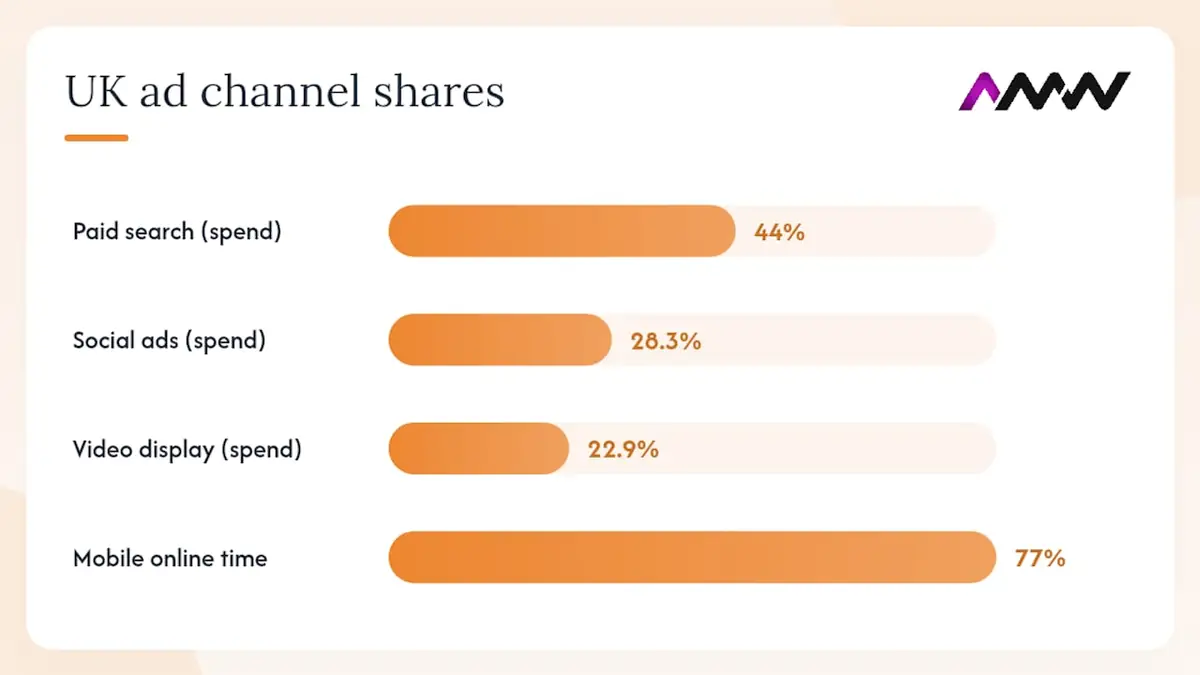
The numbers are fairly clear about where UK marketing budgets are moving. Search advertising accounted for £17.9 billion (44%) of UK digital ad spend, with social advertising at £11.5 billion and growing fastest year-on-year. Video display reached £9.3 billion. Mobile accounts for 77% of UK online time, which means every channel you run needs to work on a small screen first.
The IPA Bellwether Q2 2026 report shows events recording a net balance of +11.0% for increased investment, and video at a seven-quarter high of +8.2%. UK marketers are not abandoning brand-building for pure activation; they are doing both, with events and video leading the charge.
| UK channel | , | Practical implication |
|---|---|---|
| Paid search | £17.9bn spend, 44% of digital | Non-negotiable for lead-gen businesses |
| Social advertising | £11.5bn spend, fastest YoY growth | Prioritise video formats |
| Video (display) | £9.3bn, +20% YoY | Short-form video is the organic play |
| Events | Bellwether net balance +11.0% | In-person credibility still converts |
| Direct marketing | Rising investment | CRM and email remain high-ROI |
Experian’s 2026 digital marketing trends make a point worth taking seriously: AI is only as good as the data it runs on. Household-level targeting and first-party data governance are now genuine competitive advantages, not technical nice-to-haves. If your CRM data is messy, clean it before you invest in AI-driven personalisation.
“Most small UK businesses still succeed by doing fundamentals well: local SEO, email, and conversion basics. The businesses that struggle are usually the ones chasing every new platform rather than executing one or two channels with real consistency.”, The State of UK Marketing 2026
For UK businesses in 2026, the practical prioritisation list looks like this:
- Fix your Google Business Profile and local SEO signals
- Build or clean your email list and set up basic automation
- Run paid search if you need leads now and have a converting landing page
- Add short-form video to social for organic reach
- Invest in events or PR when you need credibility in a new market
- Use case studies and testimonials as trust assets across every channel
Key takeaways
The most effective marketing methods for UK businesses in 2026 are a short, focused list of channels chosen by goal and budget, executed consistently, and measured against revenue outcomes.
| Point | Details |
|---|---|
| Focus beats volume | One channel executed well outperforms three run inconsistently; pick a primary and a support channel. |
| Search and video lead UK spend | Paid search accounted for £17.9bn (44%) of UK digital ad spend in 2025, and video (display) reached £9.3bn. These are clear signals of where UK audiences are; prioritise both. |
| Fix fundamentals first | Local SEO, email, and conversion basics deliver more for most UK SMEs than any new platform. |
| Measure outcomes, not vanity | Track leads, cost per acquisition, and conversion rate before follower counts or impressions. |
| AMW Media for execution | AMW Media delivers SEO, PPC, social media, content, and automation for UK businesses that want measurable results without building an in-house team. |
The honest truth about marketing that most guides skip
Most marketing advice is written as though budget and time are unlimited. They are not, and the advice suffers for it.
The businesses I see grow consistently are not the ones running the most channels. They are the ones who picked one or two methods that fit their audience and their capacity, then ran them long enough to learn something. That sounds obvious, but the pressure to “be on every platform” is real, and it kills more marketing programmes than any algorithm change ever has.
The other thing worth saying: the gap between knowing what to do and actually doing it is almost always an execution problem, not a strategy problem. Most business owners already know they should be doing email marketing or improving their SEO. The question is who is going to do it, when, and to what standard. That is where the plan either holds together or falls apart.
If you want to go deeper on how B2B case studies can become a genuine revenue tool rather than a portfolio afterthought, that is one of the most underused assets in UK business marketing right now.
How AMW Media can help you put this into practice
If you have read this far and your honest reaction is “I know what I should be doing, but I do not have the time or team to do it properly,” that is exactly the situation AMW Media was built for.
AMW Media is a UK digital marketing and creative agency that handles the full execution stack: SEO, PPC campaigns, social media management, content production, email marketing, and automation. The difference from a traditional agency is that every engagement is built around measurable outcomes, not activity reports. You get a team with Google, Meta, and Shopify certifications, without the overhead of hiring one in-house.
Engagements run as project-based work, monthly retainers, or one-off strategy workshops, depending on what your business actually needs. Whether you want someone to run your paid search from day one or you need a strategy session to decide which two channels to focus on, there is a format that fits. Woodstock Campers, thirteen months and 2,215 leads at £12.50 each, is the case study on our Banbury marketing page.
Get in touch with AMW Media to book a free discovery call and find out which methods are most likely to shift the numbers for your business right now.
Useful sources
These are the reports and guides that informed this article. Worth bookmarking if you want to go deeper.
- Digital Marketing 2026: Six trends shaping the year ahead, Experian UK
- IPA | UK companies revise marketing budgets up in Q2 2026 despite tough economic conditions
- UK Digital Marketing Statistics 2026 | Wolfstone Digital
- Guide to Types of Marketing: Strategies, Techniques, and …
- What Are the Most Effective Digital Marketing Strategies?
- 🇬🇧 2026 Marketing Uncertainty: A UK Small Biz Playbook, United Kingdom | 3L3C
- The State of UK Marketing 2026
- The half‑truth of first‑mover advantage | HBR
FAQ
What are the top five marketing strategies for UK businesses?
SEO, email marketing, PPC/paid search, short-form social video, and content marketing are consistently the top five for UK businesses. The right combination depends on your goal, budget, and how quickly you need results.
What are the four main methods of marketing?
The four broad categories are product marketing (positioning and messaging), digital marketing (SEO, PPC, email, social), direct marketing (CRM, outreach, referrals), and brand marketing (PR, events, partnerships). Most businesses use a mix of all four.
What is the 3-3-3 rule in marketing?
Definitions vary, but a common version is: three seconds to capture attention, three reasons to stay engaged, and three calls to action across a campaign. It is a useful creative heuristic rather than a formal industry standard.
What are the seven marketing tactics?
Common frameworks list product, price, place, promotion, people, process, and physical evidence (the 7 Ps). In practice, these translate to decisions about what you sell, how you price it, where you sell it, and how you communicate its value.
How long before marketing methods produce results?
PPC and email can show results within two to four weeks. SEO and content marketing typically take three to six months for meaningful organic traction. Social media community growth usually becomes visible at 60 to 90 days with consistent posting.
Recommended
- SEO trends in 2026: what UK marketers need to know | AMW Media
- Graphic design ideas for marketing: 2026 guide | AMW Media
- How to master your digital marketing process for 2026
- Online marketing package for UK SMEs: how to choose | AMW Media
Our free marketing audit looks at your site, your ads and your content, and comes back with a 30 day plan. No pitch deck.

Runs the content calendars and the community side of every social account, and keeps clients posted on what is going out and when. Meet the team.