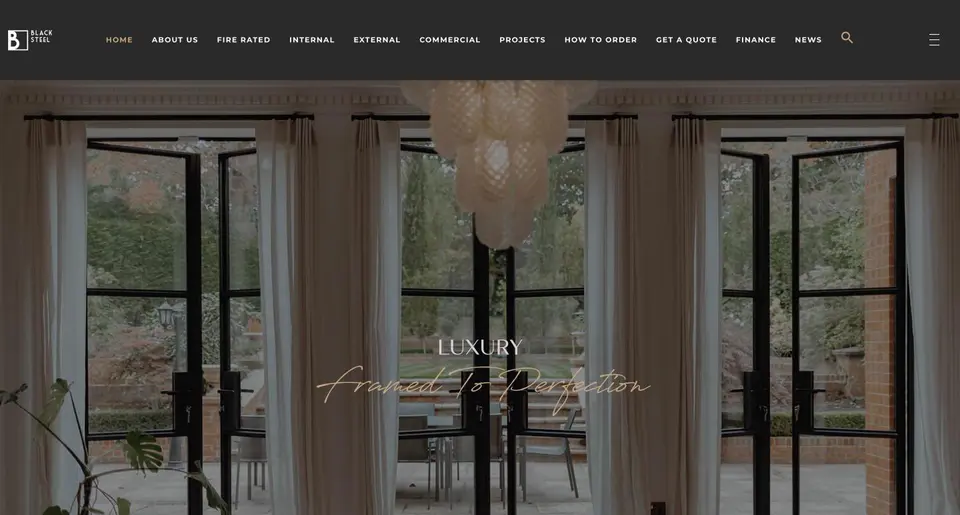
 Black Steel Doors
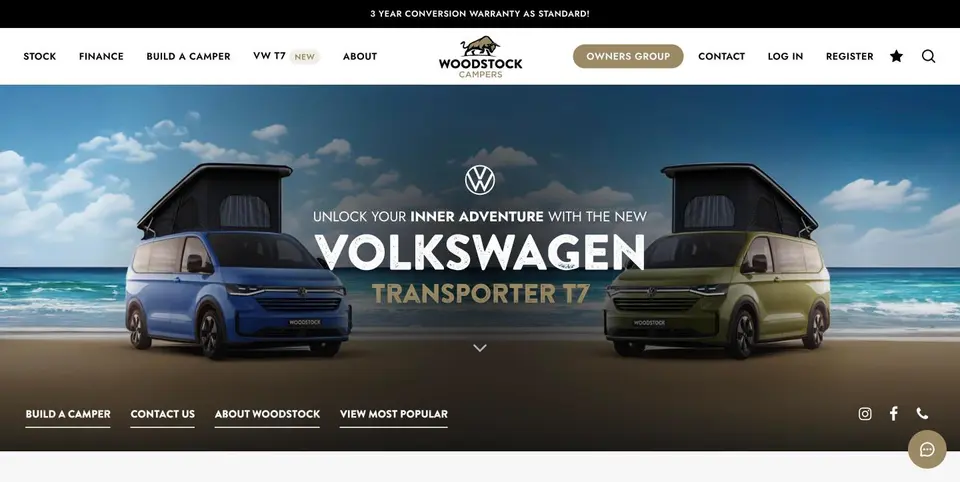 Woodstock Campers
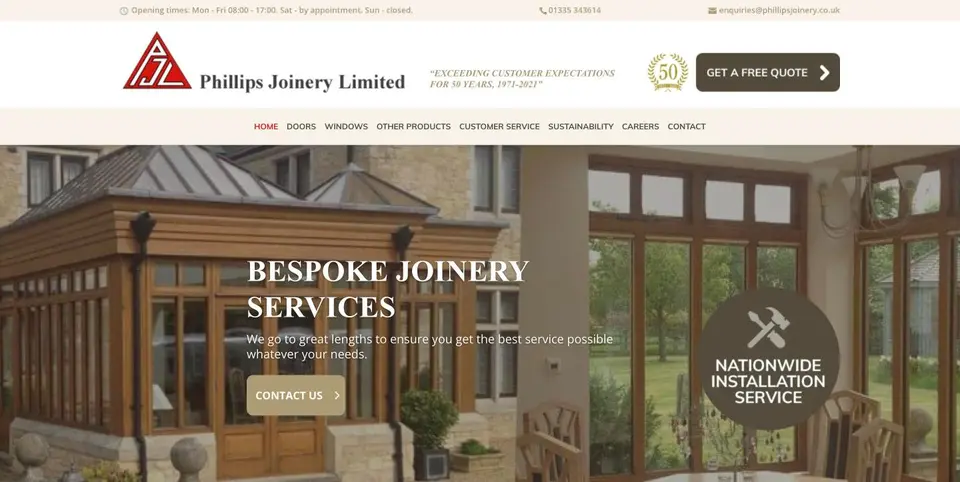 Phillips Joinery
TL;DR:
- Regularly updating website design improves conversions, SEO, and legal compliance, all of which increase revenue. Signs such as slow loading times, poor mobile experience, or falling inquiries indicate a need for a redesign or refresh. Planning an update carefully, including audits and redirect strategies, ensures measurable results and avoids wasted budget.
Your website design is the single biggest factor shaping whether a visitor stays, enquires, or clicks away within seconds. Business owners who treat their site as a one-off project rather than a living asset consistently lose ground to competitors who refresh theirs regularly. The question of why update website design is not just aesthetic. It directly affects revenue, search rankings, legal compliance, and how much your brand is trusted. This guide covers the real business case, the clearest warning signs, and exactly how to approach an update without wasting budget.
What are the key business benefits of updating your website design?
A website redesign is one of the highest-return investments a business can make. Design-led companies grow revenue 32% faster and deliver 56% higher shareholder returns, with every £1 invested in UX yielding up to £90 in return. That figure alone reframes the conversation. Updating your site is not a cost. It is a financial decision with a measurable payback.
Better conversions start with better design
Conversion rate is the most direct measure of whether your website is working. Poor navigation, confusing layouts, and slow load times all push visitors away before they enquire. One documented case shows conversion increases reaching 163% in five months following navigation improvements alone. That kind of result does not come from a new logo. It comes from fixing how people actually move through your site.
SEO rewards modern, well-structured sites
Google’s ranking signals now include Core Web Vitals, which measure page speed, visual stability, and interactivity. A site built five years ago almost certainly fails several of these benchmarks. Updating your site structure, compressing images, and moving to a faster hosting setup all feed directly into SEO performance. Higher rankings mean more organic traffic without paying for every click.
Accessibility is both a legal requirement and a growth lever
Accessible design under WCAG 2.2 AA standards reduces legal risk under the Equality Act 2010 and improves usability for the 20% of UK adults who report a disability. That is one in five potential customers. Meeting accessibility standards also improves SEO, since search engines favour sites that are structured clearly and load efficiently.
The benefits of website redesign compound over time. A faster, more accessible, better-structured site attracts more traffic, converts more visitors, and builds more trust with every interaction.
- Revenue growth: Design-led businesses outperform financially, with UX investment delivering returns up to 90 times the spend.
- Conversion uplift: Navigation and layout improvements can more than double enquiry rates within months.
- SEO gains: Modern site architecture and speed improvements feed directly into search rankings.
- Legal protection: WCAG 2.2 AA compliance reduces Equality Act 2010 exposure.
- Brand trust: A current, professional design signals credibility before a visitor reads a single word.
Pro Tip: Before commissioning any design work, pull your Google Analytics data for the past 12 months. Identify the three pages with the highest exit rates. Those are your starting points, not your homepage.
Which common triggers signal it’s time to update your website design?
Knowing when to act is as important as knowing why. These are the clearest, most measurable signs that your site needs attention.
1. Your site does not work properly on mobile
Over 60% of UK web traffic is now mobile. If your site was built before 2018 and has never been updated, there is a strong chance it delivers a poor experience on phones and tablets. Text that requires pinching to read, buttons too small to tap, and layouts that break on smaller screens all push mobile visitors away immediately.

2. Pages load too slowly
Page load times above 2.5 to 3 seconds cause a significant rise in bounce rates. Visitors do not wait. They leave and find a competitor whose site loads faster. Slow load times also suppress your Google rankings, compounding the damage. Check your site speed using Google PageSpeed Insights and treat anything below a score of 70 as urgent. Our web design High Wycombe page explains why most websites fail in month eighteen rather than at launch, and how owning the site and being trained on it prevents that.
3. You are failing accessibility standards
The Equality Act 2010 requires UK businesses to make reasonable adjustments so that disabled users can access services. A site that fails WCAG 2.2 AA standards is not just a poor experience. It is a legal liability. Screen reader compatibility, sufficient colour contrast, and keyboard navigation are not optional extras.
4. Enquiries are falling without an obvious cause
Falling enquiries not explained by seasonal patterns or market changes are a strong signal that your website is underperforming. If your paid advertising spend is steady and your rankings have not dropped, but leads are declining, the site itself is the most likely culprit. Visitors are arriving and leaving without converting.
5. Your brand has changed but your site has not
A rebrand, new product line, or shift in target market all demand a corresponding update to your website. Misalignment between your current brand identity and your online presence creates confusion. Visitors who find a site that looks out of step with your other marketing materials will question whether they have found the right business.
6. Your content management system is holding you back
Technical debt accumulates quietly. If your team cannot update content without calling a developer, or if your CMS no longer receives security updates, you are running on borrowed time. An outdated platform creates security vulnerabilities and limits your ability to respond quickly to market changes.
Pro Tip: Run a quick audit using Google’s free tools: PageSpeed Insights for load time, Lighthouse for accessibility, and Search Console for crawl errors. You will have a clear picture of your site’s health in under an hour.
Refresh or full redesign: which does your site actually need?
Business owners often confuse a simple visual refresh with the need for a full redesign. That confusion leads to ineffective spending and continued performance issues. The distinction matters enormously for budget and outcomes.
What a website refresh covers
A visual refresh updates the surface layer of your site. This includes updating colours, fonts, imagery, and layout tweaks without changing the underlying structure or platform. Visual refreshes typically cost £1,000 to £3,000 and are appropriate when your site’s architecture is sound, your CMS is current, and your core user journeys work well. Think of it as repainting a house that has solid foundations.
A refresh works well when:
- Your brand has evolved but your site structure is still logical.
- Load times are acceptable and mobile performance is good.
- Your CMS is up to date and your team can manage content without developer support.
- Conversion rates are reasonable but the visual presentation feels dated.
What a full redesign addresses
A full redesign rebuilds the site from the ground up. It addresses structural problems, replaces outdated platforms, rewrites user journeys, and integrates modern performance standards. Full redesigns can exceed £30,000 for complex sites, though most small and medium-sized businesses fall well below that figure. The investment is justified when surface-level changes cannot fix the underlying problems.
A full redesign is necessary when:
- Your CMS is end-of-life or cannot support modern functionality.
- Your site architecture makes it impossible to add new sections or products cleanly.
- Core Web Vitals scores are critically low and cannot be improved without rebuilding.
- Your site was built on a custom platform that no longer has developer support.
- You are rebranding entirely and need a site that reflects a fundamentally different business.
The risk of choosing a refresh when a redesign is needed is that you spend money on aesthetics while the structural problems remain. Conversely, commissioning a full rebuild when a refresh would suffice wastes significant budget. A proper audit of your site’s architecture, performance data, and content before making this decision is the only reliable way to choose correctly. Learning how to design a website from the ground up can help you understand what is actually involved in each approach.
How to plan a website update that actually delivers results
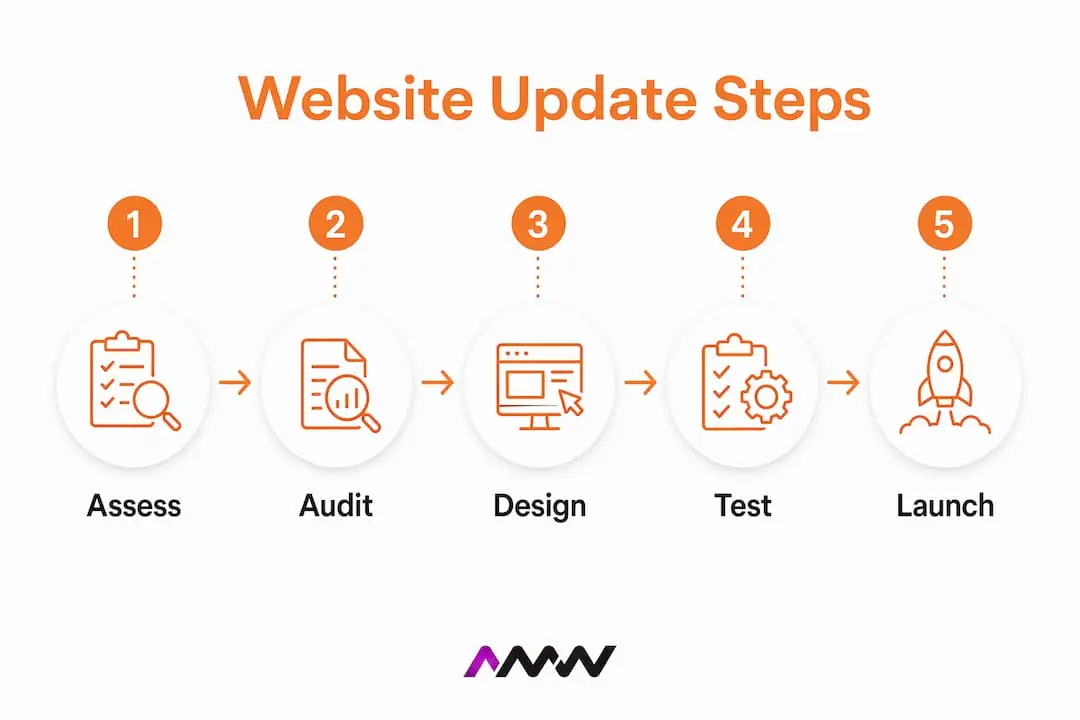
A website update without a clear plan is one of the most reliable ways to waste money. The planning phase determines whether the project delivers measurable results or simply produces a new-looking site with the same old problems.
Set your baseline before touching anything
Measure everything before you start. Record your current conversion rates, bounce rates, average session duration, and organic traffic volumes. Without a baseline, you cannot prove the update worked. Set specific targets: for example, a 20% increase in enquiry form completions within 90 days of launch.
Audit your content and site structure first
A comprehensive audit of site structure, content, and conversion data before any development work is critical. Identify pages that perform well and must be preserved. Flag pages with thin content, duplicate information, or broken links. Map your top-performing URLs so they are protected during the build. This audit shapes the entire project and prevents costly decisions being made on instinct rather than data.
Integrate WCAG 2.2 AA accessibility from day one
Accessibility cannot be retrofitted cheaply. Build it in from the start. This means structuring headings correctly, writing descriptive alt text for images, ensuring sufficient colour contrast, and testing with screen readers before launch. Fixing usability issues during design costs 100 times less than fixing them after development. That is not a figure to ignore.
Plan your 301 redirects before launch
This is the step most businesses skip and then regret. A well-mapped 301 redirect plan prevents more than 75% of post-redesign organic traffic losses. Proper redirects recover 90 to 95% of organic traffic within 30 days of launch. Every URL that changes during the redesign needs a redirect from its old address to its new one. Without this, you hand your search rankings back to Google and start from scratch.
Time your ROI expectations correctly
High-traffic pages on established sites typically see UX redesign ROI payback within 30 to 90 days. Lower-traffic sites or those in competitive markets may take longer. Build your timeline around realistic traffic volumes and set expectations with stakeholders accordingly. A new site that launches to 500 monthly visitors will not show the same speed of return as one receiving 50,000.
Pro Tip: Schedule a post-launch review at 30, 60, and 90 days. Compare each metric against your baseline. If conversion rates have not improved by day 60, investigate your user journeys before assuming the design is the problem.
The graphic design principles that underpin strong visual communication apply directly to web design. Consistency, hierarchy, and clarity in your visual language are not decorative choices. They are functional ones that guide visitors towards the actions you want them to take.
Key takeaways
Updating your website design is a measurable business investment, not a cosmetic exercise, and the financial, legal, and competitive case for acting is stronger in 2026 than it has ever been.
| Point | Details |
|---|---|
| Design investment delivers real returns | Every £1 spent on UX can return up to £90, with design-led companies growing revenue 32% faster. |
| Mobile and speed are non-negotiable | Over 60% of UK traffic is mobile; pages loading above 3 seconds lose visitors and rankings. |
| Accessibility is a legal requirement | WCAG 2.2 AA compliance is required under the Equality Act 2010 and reaches 20% of UK adults. |
| Refresh versus redesign is a strategic choice | Misidentifying the scope wastes budget; always audit structure and performance data first. |
| Redirect planning protects your SEO | A proper 301 redirect plan retains 90 to 95% of organic traffic within 30 days of launch. |
Why I think most businesses update their websites too late
By Amir
The pattern I see most often is this: a business owner notices that enquiries have been quietly declining for six months, then spends another three months convincing themselves it is a market problem rather than a website problem. By the time they commission an update, they have lost nearly a year of potential revenue.
Most websites have a useful life of around three years before they start actively working against the business. Design conventions shift, user expectations rise, and the technical standards that Google rewards change faster than most people realise. A site that looked professional in 2022 can look dated and untrustworthy in 2026 without a single pixel changing.
What I find most interesting is that the businesses most resistant to updating their sites are often the ones with the most to gain. They built their original site when they were smaller, and it reflects an older version of the business. Their current offer, their current clients, and their current ambitions are all more impressive than what the site communicates. That gap between reality and online presence is costing them every day.
My honest recommendation is to treat your website the way you treat your financial accounts. Review it annually with proper data, not just a visual glance. Ask whether it reflects where the business is now, not where it was when you last updated it. And when the data tells you something is wrong, act on it rather than waiting for the problem to become undeniable.
Amir
How AMW Media helps businesses get website updates right
Getting a website update wrong is expensive. Getting it right is one of the best investments a business can make. AMW Media works with ambitious businesses across the UK to plan and deliver custom web design that is built around measurable goals rather than aesthetic preferences. The team handles everything from initial audits and accessibility compliance through to build, redirect planning, and post-launch performance tracking. If you are unsure whether your site needs a refresh or a full rebuild, AMW Media offers consultations to assess your current site and recommend the right approach for your budget and goals. Get in touch to find out what a properly planned update could deliver for your business.
FAQ
Why update website design if the site still looks fine?
Appearance is only one factor. A site can look acceptable while failing on speed, mobile responsiveness, accessibility, and SEO, all of which directly affect enquiries and revenue.
How often should a business update its website design?
A full structural review every two to three years is a sensible baseline. Visual refreshes can be done more frequently to keep the brand current without a full rebuild.
What is the difference between a website refresh and a redesign?
A refresh updates visual elements like colours, fonts, and imagery without changing site structure, typically costing £1,000 to £3,000. A redesign rebuilds the site architecture and can exceed £30,000 for complex projects.
Will a website redesign hurt my Google rankings?
A poorly planned redesign can cause significant ranking drops. A proper 301 redirect plan retains 90 to 95% of organic traffic within 30 days, making redirect mapping one of the most critical steps in any redesign project.
How long does it take to see ROI from a website update?
High-traffic pages on established sites typically show ROI within 30 to 90 days. Lower-traffic sites may take longer, depending on the volume of visitors and the scale of conversion improvements made.
Recommended
- how to design a website a practical guide for 2026 | AMW Media
- Graphic design ideas for marketing: 2026 guide | AMW Media
- How to boost website SEO: your 2026 guide | AMW Media
- Web design process guide: steps, tools, and tips | AMW Media
Our free marketing audit looks at your site, your ads and your content, and comes back with a 30 day plan. No pitch deck.

Owns how everything looks and feels, from a brand identity to the grade on a reel, and makes the animated films such as Blue Light Services' Journey to Net Zero. Meet the team.