
 Black Steel Doors
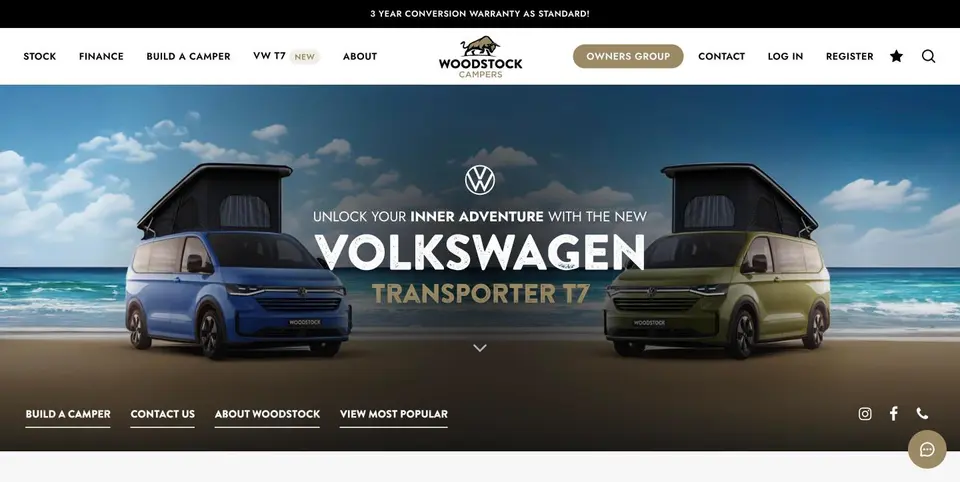 Woodstock Campers
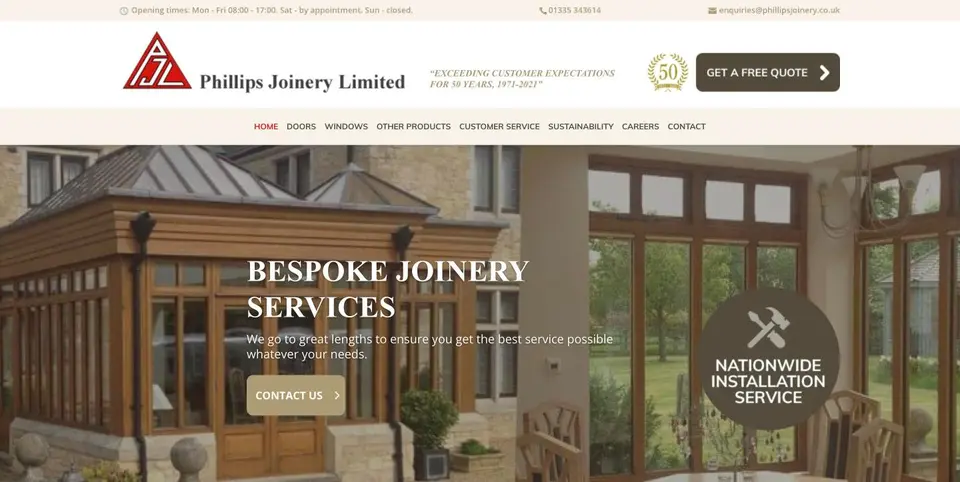 Phillips Joinery
TL;DR:
- Web development services involve specialised disciplines used to create and maintain websites and applications, with the UK market projected to grow significantly. Businesses should understand foundational layers like front-end, back-end, and full-stack, as well as specialised services such as CMS, e-commerce, and API development, to make informed choices. Selecting the right service depends on project goals, budget, internal capabilities, and compliance needs, with long-term considerations including post-launch maintenance and growth plans.
Web development services are defined as the distinct technical disciplines and specialisations used to plan, build, and maintain websites and web applications. Businesses that understand the types of web development services available make sharper investment decisions, avoid costly scope creep, and choose partners whose skills actually match the job. The UK software development market is projected to grow at 9.86% CAGR from 2026 to 2034. That growth reflects genuine demand, not hype. Launching a new site or rebuilding an ageing one: knowing which service category you need is the first step to getting it right.
What are the types of web development services?
Web development splits into three foundational disciplines: front-end, back-end, and full-stack development. Every other service category builds on top of these three. Understanding them prevents the classic mistake of hiring a designer when you actually need a developer, or briefing a front-end specialist on a database problem.
Front-end development
Front-end development covers everything a visitor sees and interacts with in their browser. It uses HTML for structure, CSS for visual styling, and JavaScript for interactive behaviour. Modern front-end work often involves frameworks like React or Angular, which power dynamic interfaces without full page reloads. A front-end developer is the right hire when your brief is about layout, animations, navigation, or mobile responsiveness.

Back-end development
Back-end development handles the logic, data, and server processes that run behind the scenes. Languages like Node.js, PHP, and Python process requests, query databases, and return the right content to the browser. When a user submits a contact form or places an order, the back-end does the work. You need a back-end specialist when your project involves user accounts, data storage, payment processing, or any business logic that cannot live in the browser.
Full-stack development
Full-stack developers work across both front-end and back-end layers. They are generalists by design, which makes them well suited to early-stage projects where a single developer needs to move fast across the whole codebase. The trade-off is depth. A dedicated front-end or back-end specialist will almost always outperform a full-stack developer in their specific domain on complex projects.
Pro Tip: When briefing an agency or freelancer, ask them to specify which layer of the stack they own. “We do everything” is not an answer. A clear split of responsibilities prevents gaps in delivery.
Specialised web development services businesses use today
Beyond the foundational three, modern frameworks like React, Angular, and Node.js power a wide range of specialised services that address specific business needs. These are the categories most UK businesses actually buy.
CMS development
A content management system (CMS) lets non-technical staff publish and update web content without touching code. WordPress remains practical for its plugin ecosystem and suits content-heavy sites like blogs, news platforms, and service directories. Webflow gains traction for marketing-led organisations that want design control without developer dependency. Headless CMS approaches decouple the content layer from the front-end entirely, enabling multi-channel publishing across websites, apps, and digital displays from a single source. That flexibility matters when your content needs to appear in more than one place simultaneously.
E-commerce development
E-commerce development builds the infrastructure for selling online. This includes product catalogues, shopping carts, payment gateway integration, inventory management, and order processing. Platforms like Shopify handle much of this out of the box, while custom e-commerce builds give businesses full control over checkout flows, pricing logic, and customer data. The right choice depends on catalogue size, transaction volume, and how much the buying experience needs to differ from a standard template. Our web design Milton Keynes page covers the photography and video shoot day we plan into every build, so nobody ends up hunting for stock images the week before launch.
Custom web application development
Custom web applications are purpose-built tools that solve a specific business workflow. Examples include client portals, booking systems, internal dashboards, and SaaS products. These are not websites in the traditional sense. They are software that happens to run in a browser. Custom web app development is the most expensive category but delivers the highest return when the workflow it replaces is inefficient or when no off-the-shelf product fits the need.
API development and integration
APIs (application programming interfaces) allow different software systems to communicate. API development builds these connection points from scratch. API integration connects existing systems, such as linking a CRM to a website contact form, or connecting an e-commerce platform to a third-party logistics provider. Most modern web projects involve at least some API work, even if it is not the headline deliverable.
Cloud hosting, maintenance, and DevOps
Web development does not end at launch. Cloud hosting, server configuration, security patching, performance monitoring, and deployment pipelines all fall under the DevOps umbrella. Businesses that treat these as afterthoughts typically face downtime, slow load speeds, and security vulnerabilities within months of going live. Retaining an agency or specialist for ongoing maintenance is a running cost, but it protects the investment made in the build.
How to choose the right web development service for your business
Choosing between web development options comes down to four factors: budget, project complexity, your internal technical capability, and compliance requirements. Getting this analysis right before you brief anyone saves weeks of wasted conversation.
Define what the site or application must do. A brochure site, a lead generation funnel, and a customer portal are three entirely different briefs. Write down the core user actions the finished product must support before you speak to any agency.
Assess your internal technical leadership. If you have no one in-house who can review code, manage a developer relationship, or write a technical specification, you need a full-service agency rather than a freelancer or offshore team. UK businesses without internal technical leadership face significantly higher coordination costs when working with offshore providers.
Weigh template against custom development. Template-based websites launch faster but custom development delivers better long-term return by avoiding plugin bloat and building for conversion from the ground up. The decision hinges on whether your website is central to sales enquiries and conversion. If it is, custom is almost always the right call.
Consider your delivery model. UK-based agencies cost more day-to-day but offer lower coordination overhead, better GDPR compliance assurance, and faster communication. Nearshore providers in Poland or the Baltics offer genuine savings of 30 to 40% over UK delivery rates. Offshore providers in India or Asia appear cheaper at 50 to 70% below UK rates, but effective savings drop to 10 to 25% once management overhead is factored in.
Factor in post-launch costs. Hosting, maintenance, security updates, and content changes are recurring costs. A cheap build with no maintenance plan often costs more over two years than a well-supported agency relationship from the start.
Check for compliance requirements. Projects involving personal data, financial transactions, or regulated industries need a provider who understands GDPR and relevant FCA regulations. UK agencies provide better compliance assurance for projects with these requirements, particularly for businesses without a legal or technical team to manage the gap.
Ask about the web design process. A credible agency will walk you through discovery, wireframing, design, development, and testing as distinct phases. Understanding the web design process before you sign a contract tells you a great deal about how organised the delivery will be.
Pro Tip: Ask any agency to show you a project that went wrong and how they handled it. The answer tells you more about working with them than any case study they choose to show you.
Comparing web development service categories
The table below compares the main web development service categories by typical technology, project duration, cost range, scalability, and business suitability. Use it as a starting point, not a fixed rule.
| Service type | Typical technologies | Project duration | Indicative cost | Scalability | Best suited to |
|---|---|---|---|---|---|
| Front-end development | HTML, CSS, JavaScript, React, Angular | 2 to 8 weeks | £2,000 to £20,000 | Medium | All business sizes |
| Back-end development | Node.js, PHP, Python, SQL | 4 to 12 weeks | £5,000 to £40,000 | High | Mid to large businesses |
| Full-stack development | React + Node.js, PHP stacks | 4 to 16 weeks | £8,000 to £50,000 | High | Start-ups, MVPs |
| CMS development | WordPress, Webflow, headless CMS | 2 to 6 weeks | £1,500 to £15,000 | Medium | SMEs, content teams |
| E-commerce development | Shopify, WooCommerce, custom builds | 4 to 12 weeks | £3,000 to £60,000 | High | Retailers, D2C brands |
| Custom web applications | React, Python, APIs, cloud services | 8 to 14 weeks | £15,000 to £100,000+ | Very high | Mid to enterprise |
| API development and integration | REST, GraphQL, third-party APIs | 2 to 8 weeks | £2,000 to £25,000 | High | All business sizes |
Custom web development projects typically require 8 to 14 weeks to complete across discovery, design, development, and testing phases. That timeline is longer than most clients expect, which is why scoping conversations matter before any contract is signed.
Pro Tip: Scalability should be a day-one conversation, not a year-two problem. If your business model depends on growth, brief your agency on where you expect to be in three years, not just where you are now.
Key takeaways
Choosing the right web development service requires matching the service category to your business goal, not simply picking the most popular platform or the cheapest quote.
| Point | Details |
|---|---|
| Know the three foundations | Front-end, back-end, and full-stack development underpin every other web service category. |
| CMS suits most SMEs | WordPress and Webflow cover the majority of content and marketing site needs for small to mid-sized businesses. |
| Custom beats templates long-term | Custom development delivers better SEO, security, and conversion performance than template sites over time. |
| Delivery model affects real cost | Offshore savings of 50 to 70% shrink to 10 to 25% after management overhead; nearshore offers a better balance. |
| Post-launch costs are real | Maintenance, hosting, and compliance are ongoing costs that belong in every project budget from the start. |
Why I think most businesses get their web development brief wrong
Most businesses I speak with come to a web development conversation with a solution already in mind rather than a problem to solve. They say “we need a new website” when what they actually mean is “our current site is not generating enough enquiries.” Those are different briefs, and they lead to different service choices.
The businesses that get the best results treat their website as a sales and marketing asset, not a digital brochure. Marketing-led businesses increasingly prioritise mobile-first builds and Core Web Vitals performance because those factors directly affect organic search rankings and paid media quality scores. A slow, poorly structured site costs money in every channel, not just SEO.
My honest view on the offshore versus UK debate is that the maths rarely works out the way people hope. The 50 to 70% headline saving looks compelling until you account for briefing time, revision cycles, time zone delays, and the occasional complete restart. For businesses without a technical project manager in-house, a UK-based agency with a clear process is almost always the better investment over a two-year horizon.
The trend I find most interesting right now is the hybrid model. Pairing UK-based product management with nearshore feature delivery gives you the communication quality of a local team and a meaningful cost reduction on the build itself. It is not right for every project, but for mid-sized builds in the £30,000 to £80,000 range, it is worth exploring seriously. The key is finding an agency that has actually done it before, not one that is proposing it for the first time on your project.
If you are an entrepreneur or business owner reading this, the single most valuable thing you can do before briefing anyone is to write down what a successful website looks like in measurable terms. Traffic targets, lead volumes, conversion rates. That document will sharpen every conversation you have with every agency, and it will make the final result far more likely to match what you actually needed.
Amir
How AMW Media helps businesses get web development right
AMW Media builds custom web design and development solutions for ambitious UK businesses that need more than a template. The team covers the full range of web development solutions discussed here, from CMS builds on WordPress and Webflow to custom web applications, e-commerce development, and API integrations.
AMW Media holds certifications with Google, Meta, Shopify, WordPress, and Framer, which means the technical and marketing sides of a project are handled by the same team. That matters because a site built without a marketing perspective often needs rebuilding within two years. If you want a web presence that performs commercially, not just one that looks good at launch, get in touch to discuss your project.
FAQ
What are web development services?
Web development services are the technical disciplines used to build and maintain websites and web applications, including front-end, back-end, CMS, e-commerce, and custom application development.
How long does custom web development take?
Custom web development projects typically take 8 to 14 weeks, covering discovery, design, development, and testing phases.
Is a template website good enough for my business?
Template sites launch faster but custom development delivers better ROI over time through superior SEO, security, and conversion performance. If your website drives sales enquiries, custom is the stronger choice.
What is the difference between front-end and back-end development?
Front-end development builds the visual interface users interact with in their browser. Back-end development handles server logic, databases, and data processing that runs behind the scenes.
Should I use a UK agency or an offshore provider?
UK agencies offer lower coordination overhead and stronger GDPR compliance assurance. Offshore providers appear 50 to 70% cheaper upfront, but effective savings drop to 10 to 25% once management costs are included.
Recommended
- Why use SaaS solutions: a practical guide for 2026 | AMW Media
- Web Development and Design That Elevates Your Brand | AMW Media
- how to design a website a practical guide for 2026 | AMW Media
- Examples of SaaS tools every business should know in 2026 | AMW Media
Our free marketing audit looks at your site, your ads and your content, and comes back with a 30 day plan. No pitch deck.

Builds and maintains client sites with Mateusz: templates, speed, accessibility and the small fixes that keep a site converting. Meet the team.