
 Black Steel Doors
 Woodstock Campers
 Phillips Joinery
TL;DR:
- The graphic design process follows four stages: Discover, Define, Develop, and Deliver, to ensure projects meet objectives on time and within budget. Proper preparation, including a detailed brief and asset collection, reduces delays and scope creep, while structured feedback keeps revisions efficient. Most project failures result from inadequate groundwork rather than creative talent, highlighting the importance of early-stage planning.
The graphic design process is a defined sequence of stages, from initial briefing through to final delivery, that turns a vague idea into purposeful visual communication. Skip any stage and you risk wasted budget, missed deadlines, and designs that miss the point entirely. The Design Council’s Double Diamond framework, adopted after studying companies including LEGO, Microsoft, and Sony, gives this process its most widely recognised structure. Understanding each phase, and what can go wrong within it, is the difference between a design project that lands and one that drags on for months.
What are the main stages of the graphic design process?
The graphic design process follows four core stages: Discover, Define, Develop, and Deliver. These map directly onto the Double Diamond framework, which the Design Council introduced in 2005 as the gold standard for user-centred design. Each stage alternates between divergent thinking (opening up possibilities) and convergent thinking (narrowing down to the best solution).
Stage 1: Discover
The Discover stage is about gathering information before touching any design tool. Designers research the audience, study competitors, review brand guidelines, and understand the business context. This is where assumptions get challenged and real insights surface. A brand that assumes its audience skews young, for example, might find through research that its actual buyers are 35 to 55 year olds with very different visual preferences.
Stage 2: Define
Define is where raw research becomes a clear problem statement. The team identifies the core challenge the design must solve, the audience it must speak to, and the constraints it must work within. Skipping discovery and definition before moving to execution is the primary cause of design project failures. Teams that jump straight to solutions end up solving the wrong problem beautifully.
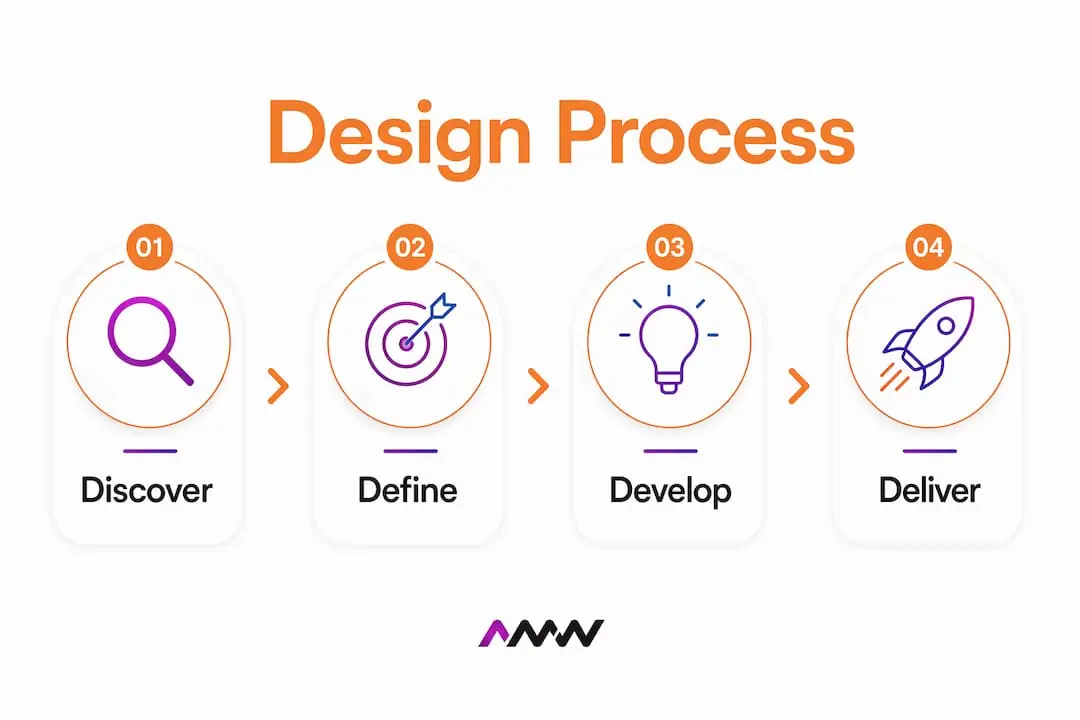
Stage 3: Develop
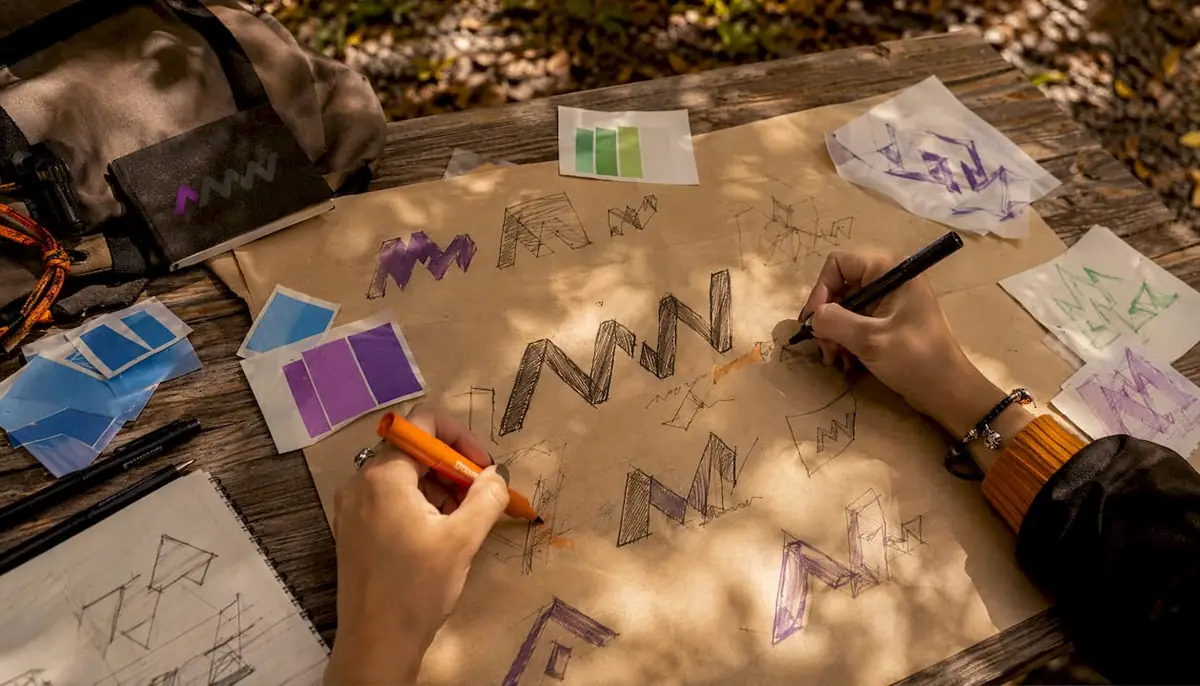
The Develop stage is where ideas take visual form. Designers create initial concepts, explore multiple directions, and test options against the brief. Tools like Figma support prototyping and collaboration during this phase, and research, prototyping, and testing together shorten the feedback loop significantly. This stage is deliberately messy. Multiple concepts exist at once, and that is the point.
Stage 4: Deliver
Deliver is the convergent phase where one direction gets refined, approved, and prepared for production. Files are exported in the correct formats, brand assets are packaged, and the final design goes live. This stage also includes any final amends agreed within the project scope.
Pro Tip: Map each stage to a specific deadline before the project starts. Knowing that Define ends on a set date stops the team from endlessly expanding the research phase and never moving forward.
The Double Diamond is not a rigid checklist. It is a thinking structure. Some projects move through all four stages in a week. Others spend a month in Define alone. The stage length depends on project complexity, not on convention.
How to prepare for and start a graphic design project
Preparation is the most undervalued part of the creative design process. Most delays and budget overruns trace back to a weak start, not to poor execution later.
Write a detailed design brief
A detailed design brief is the single most critical document in any design project. It defines the goal, the audience, the tone, the constraints, and the measures of success. Without it, every decision becomes a guess. A strong brief answers these questions before any design work begins:
- What is the purpose of this design? (Brand awareness, conversion, event promotion?)
- Who is the audience, and what do they care about?
- What formats and sizes are needed?
- Are there existing brand guidelines to follow?
- What does success look like, and how will it be measured?
- What is the deadline, and are there any hard constraints?
Many clients underestimate how long a thorough brief takes to write. Rushing it costs far more time later when the designer has to stop mid-project to ask questions that should have been answered on day one.
Collect brand assets before work begins
Requesting all brand assets at the brief stage, including licensed fonts, vector logos, and approved colour palettes, prevents avoidable interruptions mid-project. A locked brand font or a low-resolution logo discovered halfway through a project can stall work for days while the client tracks down the correct files.
The assets to collect upfront include:
- Vector logo files (AI, EPS, or SVG formats)
- Licensed font files or confirmed font names with licence details
- Brand colour codes (Pantone, CMYK, RGB, and hex values)
- Photography or illustration libraries already in use
- Any existing design templates or style guides
Pro Tip: Create a shared folder at the project start and ask the client to upload all assets before the first design session. This single habit removes one of the most common mid-project blockers.
Start with a discovery call
A free discovery call at the outset establishes project scope and client-designer fit before any commitment is made. This is not a sales call. It is a diagnostic session where both parties confirm they understand the project, the timeline, and the budget. A good discovery call surfaces mismatched expectations early, when they are cheap to resolve.
Set a structured proposal
Structured proposals that outline deliverables, fees, and timelines set clear expectations and form the foundation for the entire project workflow. A proposal is not just a price list. It is a shared agreement on what success looks like and what falls outside scope.
| Proposal element | Why it matters |
|---|---|
| Deliverables list | Prevents scope creep by defining exactly what is included |
| Revision rounds | Sets expectations on how many amends are covered |
| Timeline with milestones | Gives both parties accountability checkpoints |
| Asset requirements | Flags what the client must supply before work starts |
| Payment schedule | Ties payments to milestones, not just completion |
Understanding creative direction from the start also helps align marketing objectives with the visual output before a single pixel is placed.
How does the creative execution and review cycle work?
The execution phase is where most people think the design process lives. In reality, it is only one part of a much longer cycle. Good execution depends entirely on the quality of the preparation that came before it.
Creating initial concepts
Designers begin with the brief and research as their foundation. The first concepts are intentionally exploratory. A designer working on a brand identity might produce three or four distinct visual directions, each representing a different interpretation of the brief. This is not indecision. It is structured exploration that gives the client genuine choice rather than a single take-it-or-leave-it option.
Managing the feedback and revision cycle
Standard projects include 1 to 3 revision rounds, with feedback returned within two days to maintain momentum. That two-day window matters. When feedback takes a week, the designer has moved on mentally, context is lost, and the project loses pace. Clear revision limits also protect both parties. The client knows what is included, and the designer knows when additional work falls outside the original scope.
The most productive feedback is specific and tied to the brief. “This does not feel premium enough for our audience” is useful. “I just don’t like it” is not. Teaching clients to give brief-referenced feedback is one of the most valuable things a designer can do early in a project.
Handling direction changes after first proofs
Creative direction often shifts after the first proof as clients understand their needs better once they see something tangible. This is normal and expected. Clients often refine their understanding of what they want only after seeing a first attempt. The solution is to budget for this “discovery through doing” phase rather than treating it as a failure. A project that changes direction after the first proof is not a broken project. It is a project where the client is engaged.
The following table shows how different types of feedback affect project scope:
| Feedback type | Impact on scope | How to handle |
|---|---|---|
| Minor amends (copy, colour tweaks) | Within standard revision rounds | Address in next revision pass |
| Layout restructure | May require additional round | Flag to client before proceeding |
| Full direction change | Outside original scope | Issue a change order with revised cost |
| New deliverable added | Separate project or add-on | Agree new fee and timeline |
Integrating UX principles into the review cycle also improves outcomes, particularly for digital assets where user behaviour shapes design decisions.
What causes delays in the graphic design workflow?
Client decision time and slow feedback are the top causes of project schedule slips, not the design work itself. This is the insight most clients find surprising. The designer is rarely the bottleneck.
The most common delay triggers
- Slow feedback turnaround. When clients take more than two or three days to review proofs, momentum breaks and timelines shift.
- Missing assets. A logo that arrives as a JPEG instead of a vector file, or a font that is locked behind a licence the client cannot locate, stops work cold.
- Unclear decision-making. When multiple stakeholders review designs without a single point of approval, conflicting feedback creates circular revisions.
- Scope changes without a change order. Adding deliverables mid-project without adjusting the timeline or budget creates pressure that degrades quality.
- Delayed content. Waiting for copy, photography, or product information that should have been supplied at the brief stage is one of the most common and avoidable delays.
How to keep projects on track
Scheduled check-in calls, even brief ones, keep both parties aligned without relying on email chains that lose context. A fifteen-minute call at the midpoint of each stage resolves questions that would otherwise sit in an inbox for three days.
“The brief is the contract between the client’s vision and the designer’s execution. Every hour spent on it at the start saves three hours of revision later. Treat it as the most important document in the project, not an administrative formality.”
Visual storytelling principles also help frame feedback conversations. When clients understand how visual choices communicate meaning, they give more useful direction and fewer arbitrary preferences.
Content briefs follow the same logic. A well-structured brief, whether for copy or design, reduces back-and-forth and keeps the project moving in the right direction.
Key takeaways
A structured graphic design process, anchored in the Double Diamond’s four stages, is the most reliable way to deliver designs that solve the right problem on time and within budget.
| Point | Details |
|---|---|
| Follow the Double Diamond | Use Discover, Define, Develop, and Deliver as your four core stages for every project. |
| Brief first, design second | A detailed brief prevents scope creep and aligns goals before any creative work begins. |
| Collect assets upfront | Request vector logos, licensed fonts, and colour codes at the brief stage to avoid mid-project stalls. |
| Limit and time revisions | Cap revision rounds at 1 to 3 and set a two-day feedback window to maintain project momentum. |
| Budget for direction changes | First proofs often shift client thinking, so build flexibility into timelines and costs from the start. |
Why I think most design projects fail before they start
After working on design and marketing projects across a wide range of industries, the pattern is almost always the same. Projects that struggle do not fail because of poor design talent. They fail because the groundwork was not laid properly. The brief was vague, the assets were missing, or the client had not yet decided what they actually wanted.
The Double Diamond framework changed how I think about this. The insight that skipping the Discover and Define phases causes project failure is not just a theoretical observation. It is something you feel acutely when a client comes back after the first proof and says, “Actually, we want something completely different.” That moment is not a creative failure. It is a briefing failure.
The most successful projects I have seen treat the early stages as an investment, not a delay. A client who spends two hours in a proper discovery session saves ten hours of revision later. The designers who deliver the best work are not always the most talented. They are the ones who ask the most questions before picking up a tool.
My honest advice: resist the urge to rush to concepts. The brief, the research, and the alignment conversation are where the real design work happens. Everything after that is execution. Woodstock Campers, thirteen months and 2,215 leads at £12.50 each, is the case study on our Banbury marketing page.
Amir
How AMW Media supports your graphic design projects
Knowing the process is one thing. Having the right team to execute it is another.
AMW Media’s graphic design services are built around the same structured approach covered in this guide, from discovery and briefing through to final delivery. The team works with brands to define clear goals, gather the right assets, and produce designs that serve a real communication purpose. For brands that need their visual identity to work across digital channels, AMW Media’s web design services ensure that graphic design and online presence stay aligned. If you want a conversation about your next project, a discovery call is the right place to start.
FAQ
What is the graphic design process?
The graphic design process is a structured sequence of stages, typically Discover, Define, Develop, and Deliver, that guides a design project from initial brief to final output. Following this sequence ensures designs solve the right problem rather than just looking good.
How many revision rounds should a design project include?
Standard projects include 1 to 3 revision rounds, with feedback returned within two days to keep momentum. Additional rounds beyond the agreed limit typically fall outside the original scope and may incur extra cost.
Why is the design brief so important?
The design brief is the most critical document in any project because it defines goals, audience, constraints, and success measures before creative work begins. A weak brief is the leading cause of scope creep and misaligned outcomes.
What is the Double Diamond framework?
The Double Diamond is a design framework introduced by the Design Council in 2005, structured around four phases: Discover, Define, Develop, and Deliver. It alternates between divergent thinking (exploring possibilities) and convergent thinking (narrowing to the best solution).
What causes most delays in graphic design projects?
Client decision time and slow feedback turnaround are the top causes of project delays, not the design execution itself. Missing assets such as unlicensed fonts or low-resolution logos are the second most common avoidable blocker.
Recommended
- Creative campaign process: Step-by-step guide for growth | AMW Media
- Graphic design guide: master visual communication | AMW Media
- Graphic design ideas for marketing: 2026 guide | AMW Media
- Web design process guide: steps, tools, and tips | AMW Media
Our free marketing audit looks at your site, your ads and your content, and comes back with a 30 day plan. No pitch deck.

Owns how everything looks and feels, from a brand identity to the grade on a reel, and makes the animated films such as Blue Light Services' Journey to Net Zero. Meet the team.