
 Black Steel Doors
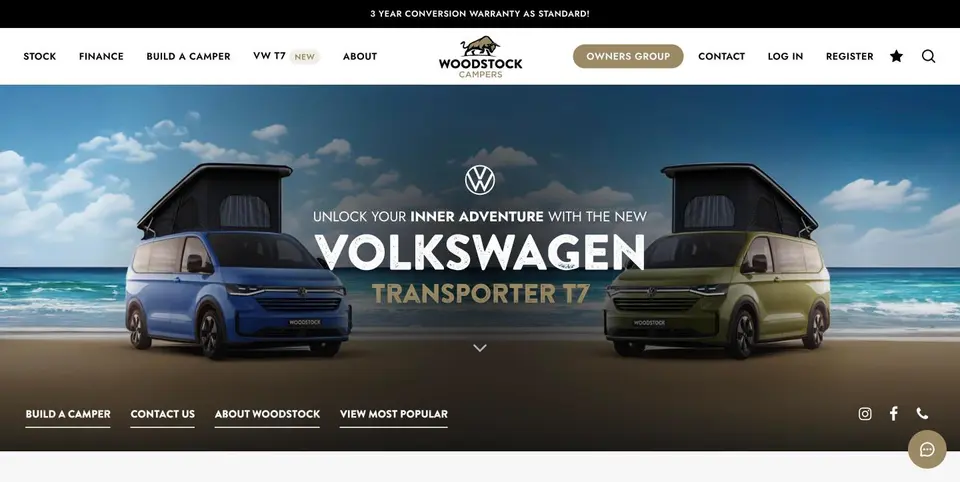 Woodstock Campers
 Phillips Joinery
TL;DR:
- Measuring digital branding benefits requires solid, multidimensional frameworks that connect brand impact to sales outcomes.
- Building trust and clarity through consistent, authentic messaging enhances long-term growth and search performance.
- Embedding measurement into every activity ensures brand investments are justified with financial rigor, driving smarter growth decisions.
Measuring the benefits of digital branding has never been more demanding. Customer journeys span dozens of touchpoints, AI-generated content floods every channel, and finance teams want numbers that go beyond reach and impressions. Yet the brands that treat branding as a measurable growth driver, not a creative luxury, consistently outperform those that don’t. This article breaks down the real advantages of online branding, the evidence behind them, and the practical frameworks that help you prove value, build trust, and make smarter investment decisions.
Key Takeaways
| Point | Details |
|---|---|
| Trust drives growth | Building authentic trust is the most powerful digital branding benefit influencing consumer choice. |
| Brand clarity boosts SEO | Clear and consistent branding improves search click-through rates by increasing user trust signals. |
| Measure rigorously | Use multi-method financial measurement and incrementality tests to prove true value from branding spend. |
| Sustained investment matters | Digital branding compounds over time and requires steady funding for lasting competitive advantage. |
| Expertise accelerates success | Partnering with skilled agencies ensures strategic digital branding delivers measurable business results. |
Criteria for evaluating digital branding benefits
Before you can act on the benefits, you need a way to judge them. Too many marketing managers assess digital branding on the wrong metrics: follower counts, brand lift surveys that measure awareness but not intent, or last-click attribution that ignores all the brand exposure that made the click possible.
Here is a more rigorous framework for analysing marketing results that actually holds up in a board-level conversation.
Four criteria worth applying to every branding benefit:
- Financial linkage. Can the brand metric be connected to a sales or revenue outcome? If not, it’s a leading indicator at best.
- Brand clarity and trust. Does your digital presence reduce confusion and build confidence at every touchpoint? Clarity is a prerequisite for trust.
- Incrementality. Would this result have happened anyway? Incrementality testing separates brand-driven growth from organic behaviour.
- Triangulated measurement. No single method gives the full picture. Combining survey data, search analytics, and financial modelling produces far more credible conclusions.
Understanding the broader digital marketing benefits for your brand is a useful starting point, but the criteria above are what turn those benefits into defensible budget decisions.
A practical approach looks like this:
- Identify which brand metrics (awareness, trust, top-of-mind recall) connect most directly to your category’s purchase drivers.
- Design a measurement plan that includes both a short-term predictive metric and a long-term financial outcome.
- Build in a control group from the start, so you can isolate true brand lift.
- Report results as a triangulated view, not a single number.
This framework matters because digital branding’s impact is often diffuse. The customer who saw your social content three weeks ago, searched your brand name last week, and converted on a paid ad yesterday represents a brand-driven journey that last-click attribution entirely misses.
Building trust and top-of-mind recall with digital branding
Trust is not a soft outcome. 68% of consumers cite it as the top purchase driver, and it correlates with an 8-percentage-point boost in predictive brand metrics like First-Fast Response (FFR). FFR is a research method that captures the first brand that comes to mind under time pressure. It predicts future sales more reliably than traditional unaided awareness, because speed of recall reflects how deeply a brand is embedded in consumer memory.
This is one of the most compelling reasons why digital branding matters for long-term growth. Every consistent touchpoint, a social post, a website visit, an email, adds to a mental structure that makes your brand the instinctive choice when purchase intent arises.
How digital branding builds trust in practice:
- Consistent visual identity across platforms reduces cognitive friction. When a customer sees the same colours, tone, and style everywhere, recognition becomes effortless.
- Authentic messaging that reflects real customer values creates emotional alignment. Performative brand values, on the other hand, actively erode trust.
- Repeated, non-intrusive exposure compounds over time. Think of brand consistency less like a single campaign and more like compound interest.
- Strong brand recall reduces price sensitivity, because trust lowers the perceived risk of buying.
Understanding why branding matters goes well beyond aesthetics. It affects shareholder value, customer lifetime value, and pricing power simultaneously.
Pro Tip: Audit your last three campaigns for authentic alignment. Does each one reflect something your customers care about, or does it reflect what you wish they cared about? The gap between those two is where trust gets lost.
Enhancing brand clarity to boost search performance
Most marketers think about SEO in terms of rankings. Digital branding teaches you to think about it in terms of confidence. When a user sees your brand in a search result, do they instantly know who you are and why they should click? That clarity has a measurable commercial impact.

Improving brand clarity increased Bing traffic clicks by 26.5% and raised click-through rate from 4.7% to 6% without changing search impressions. The pages didn’t move in rankings. The number of people who saw them didn’t change. What changed was how clearly those results communicated a trustworthy, recognisable brand, and users responded by clicking more.
This is one of the most underused advantages of online branding in SEO strategy. You don’t have to fight for position 1. You have to be the result that users trust most at whatever position you occupy.
| Metric | Before brand clarity work | After brand clarity work | Change |
|---|---|---|---|
| Search impressions (Bing) | Stable | Stable | 0% |
| Click-through rate | 4.7% | 6.0% | +27.7% |
| Traffic clicks | Baseline | +26.5% above baseline | +26.5% |
| Rankings | No change | No change | N/A |
What brand clarity in search actually involves:
- Consistent metadata: page titles and descriptions that match your brand’s tone and promise, not just stuffed with keywords.
- Matching visuals: favicons, structured data, and rich snippets that reinforce brand recognition.
- Clear value proposition in the snippet itself: the user should know exactly what they’re getting before they click.
- A digital presence strategy that treats search results as a branding surface, not just a traffic lever.
Understanding how SEO builds brand awareness changes the way you think about both disciplines. They are not separate workstreams. Brand clarity in search is where they converge most directly.
Pro Tip: Run a brand hygiene audit on your top 20 organic search results. Check that the meta titles, descriptions, and structured data all carry consistent brand signals. Small inconsistencies at this level are invisible to most teams but measurable in CTR.
Measuring digital branding benefits with financial rigour
Vanity metrics are the enemy of sustained brand investment. When marketing managers present brand spend to a CFO using reach figures and brand lift percentages alone, the budget is always vulnerable. The importance of digital branding becomes undeniable only when it’s expressed in financial language.
High-maturity marketers use more than 70% multi-method measurement to link short- and long-term brand effects to financial outcomes. That’s not an accident. It’s the result of deliberately building measurement infrastructure alongside brand activity.
A practical measurement sequence:
- Define short-term predictive metrics. FFR and branded search volume are useful here. They move faster than sales and can signal whether a campaign is working before the revenue data arrives.
- Design an incrementality test. Split your audience into exposed and unexposed groups. Incrementality testing isolates true brand lift by comparing exposed groups to control groups, preventing the common mistake of giving brand campaigns credit for organic behaviour that would have happened anyway.
- Run a Media Mix Model (MMM) annually. MMM attributes long-term revenue contributions to brand investment across channels, giving you a financial figure you can defend.
- Triangulate across sources. Survey data, branded search trends, and sales data rarely tell the same story. When they converge, you have genuine confidence. When they diverge, you have a hypothesis worth investigating.
Comparison of measurement methods:
| Method | Strengths | Weaknesses | Best for |
|---|---|---|---|
| FFR survey | Fast, predictive, links to future sales | Requires panel access and budget | Short-term campaign evaluation |
| Incrementality testing | Isolates true brand lift from organic | Needs control group planning upfront | Proving causal brand impact |
| Media Mix Modelling | Captures long-term financial effects | Slow, requires significant data history | Annual budget justification |
| Branded search volume | Low cost, real-time | Confounded by PR and news events | Trend monitoring and triangulation |
For analysing marketing impact at this level, the measurement plan needs to be designed before the campaign launches, not retrofitted afterward. The control group needs to exist from day one.
The case for data-driven marketing is not just about efficiency. It’s about making brand investment as defensible as any other line in the budget.
Pro Tip: Before your next brand campaign, agree with finance on exactly which metric will constitute proof of success. Getting that alignment early is worth more than any methodology refinement later.
Comparing key benefits of digital branding
With the evidence laid out, it helps to see the primary benefits side by side. The digital branding impact varies significantly depending on where your organisation sits in terms of marketing maturity, available budget, and internal measurement capability.
The three benefits that matter most for ambitious brands:
- Trust and top-of-mind recall. This is the highest-value benefit long term, but it requires sustained, consistent activity across multiple channels. You cannot manufacture trust with a single campaign.
- Search performance through brand clarity. This is arguably the quickest win. It requires relatively minor changes to metadata and brand presentation in search results, yet the impact on click-through rates can be substantial within months.
- Measurement credibility. The ability to prove brand ROI to finance and leadership is itself a competitive advantage. Brands that can defend their branding investment confidently attract more of it.
| Benefit | Business impact | Investment required | Measurement complexity | Typical timeline |
|---|---|---|---|---|
| Trust and brand recall | High (long-term revenue, loyalty) | High (sustained content and presence) | Medium (FFR surveys, sales correlation) | 12 to 24 months |
| Brand clarity in search | Medium to high (CTR uplift, traffic) | Low to medium (metadata, brand hygiene) | Low (analytics, CTR tracking) | 3 to 6 months |
| Financial measurement rigour | High (budget defensibility) | Medium (research tools, MMM) | High (multi-method triangulation) | Ongoing |
| Social brand presence | Medium (awareness, engagement) | Medium (content production) | Medium (engagement and reach tracking) | 6 to 12 months |
Understanding how to harness social media branding effectively feeds directly into the trust and recall column of that table. Consistent social presence is often the most visible expression of digital brand identity for consumers.
The key takeaway is this: these benefits are not mutually exclusive. The brands that win are those that pursue trust, clarity, and measurement simultaneously, rather than treating them as sequential phases.
Rethinking digital branding: why trust and measurement must lead
Here’s what most digital branding articles won’t say directly: many brands invest heavily in making their brand look good while giving almost no thought to whether it’s being understood correctly or trusted consistently. The result is creative that wins awards and campaigns that struggle to justify their budgets.
The conventional view is that branding is a creative problem. Get the visuals right, nail the tone of voice, produce beautiful content. These things matter. But they’re downstream of a more fundamental question: does your audience trust you enough to choose you when the moment arrives?
The obsession with short-term ROI compounds this problem. When every campaign is evaluated on immediate conversion, brand budgets get squeezed in favour of performance spend. Yet brand investment is a measurable strategic asset, and ignoring that leads to undervalued benefits and wasted budget. The compound effect of sustained brand presence is real, documented, and commercially significant. It just doesn’t show up in a 30-day attribution window.
The brands most at risk are those that think they are doing digital branding because they have a social presence and a style guide. What they’re missing is the measurement infrastructure to know whether any of it is working. Without control experiments, without incrementality testing, without triangulated data, they’re flying blind with a beautiful cockpit.
The practical wisdom here is simple. Build measurement into every brand activity from the start. Design control strategies before campaigns launch. Treat authentic messaging not as a values exercise but as a direct trust-building mechanism with measurable commercial outcomes. And resist the pressure to judge brand investment on the same short timeline you’d use for a paid search campaign.
An optimised digital strategy is one where brand and performance work as a system, each reinforcing the other, both measured with the same financial rigour you’d apply to any capital allocation decision.
How AMW Media helps maximise your digital branding impact
The benefits outlined in this article are real, but they require consistent execution across creative, technical, and analytical workstreams simultaneously. That’s precisely where most in-house teams hit constraints. Woodstock Campers, thirteen months and 2,215 leads at £12.50 each, is the case study on our Banbury marketing page.
At AMW Media, we work with ambitious brands to build digital branding programmes that are both creatively compelling and measurably effective. Our social media management services build authentic brand presence through consistent, audience-relevant content that compounds trust over time. Our web design services ensure your brand communicates with clarity at every digital touchpoint, from first impression to conversion. And our SEO services treat search performance as an extension of brand trust, improving the signals that drive users to click with confidence. If you’re ready to turn digital branding from a discretionary line into a defensible growth investment, we’re the team to make it happen.
Frequently asked questions
What is First-Fast Response (FFR) in digital branding measurement?
FFR is a research method capturing immediate consumer associations with a brand, predicting future sales more accurately than traditional awareness metrics. It is 2.6 times more responsive and four times more predictive of future sales than unaided awareness.
How does digital branding improve SEO performance?
Improving brand clarity and consistency increases user trust, leading to higher click-through rates in search results even when rankings stay the same. In one documented case, brand clarity work improved Bing CTR from 4.7% to 6% and increased clicks by 26.5% without changing impressions.
What is brand incrementality and why is it important?
Brand incrementality measures the true lift in brand outcomes caused by advertising, compared to what would have happened without it. Incrementality testing isolates actual brand-driven growth from natural organic behaviour, preventing budget misallocation.
Why is financial rigour crucial in measuring digital branding benefits?
Applying rigorous financial methods helps link branding activities to tangible sales outcomes and justifies sustained investment to leadership and finance teams. High-maturity marketers triangulate three or more methods to measure short- and long-term brand effects with full financial credibility.
How can businesses build trust through digital branding?
Delivering authentic, consistent messaging repeatedly across channels builds the recognition that fosters consumer confidence and loyalty. 68% of consumers cite trust as the top purchase driver, and it grows with sustained, authentic brand exposure over time.
Recommended
- Key benefits of digital marketing for brand growth | AMW Media
- Digital presence strategy guide for brand growth in 2026 | AMW Media
- Essential digital marketing guide: strategies for brand growth
- Understanding digital marketing: strategies for business growth
Our free marketing audit looks at your site, your ads and your content, and comes back with a 30 day plan. No pitch deck.

Owns how everything looks and feels, from a brand identity to the grade on a reel, and makes the animated films such as Blue Light Services' Journey to Net Zero. Meet the team.