
 Black Steel Doors
 Woodstock Campers
 Phillips Joinery
Over 71% of consumers now distrust brand advertising on digital channels, forcing marketers to rethink how they build brand presence. Social media remains vital for reaching audiences, but success demands authenticity, platform-specific strategies, and data-driven personalisation. This guide reveals how ambitious brands can navigate rising scepticism and use social media for sustained branding growth in 2026.
Key takeaways
| Point | Details |
|---|---|
| Consumer scepticism | Over 71% distrust digital brand advertising, demanding genuine engagement over promotional tactics. |
| Personalised content | Platform-specific, emotionally resonant content drives brand loyalty and strengthens customer relationships. |
| AI and semiotics | Combining artificial intelligence with symbolic messaging optimises brand image across diverse platforms. |
| Platform specificity | Instagram, TikTok, LinkedIn each require unique branding approaches for maximum impact. |
Understanding the changing landscape of social media branding
The digital branding climate has shifted dramatically. Rising consumer scepticism challenges the traditional playbook of paid campaigns and influencer partnerships. Marketing managers face declining returns on sponsored content as audiences grow weary of overtly promotional messaging.
This transformation affects every industry. Our health and wellness marketing agency clients report that consumers increasingly favour authentic storytelling over polished advertisements. Brands must pivot towards value-driven approaches that prioritise education and genuine connection.
What’s driving this change? Audiences have developed sophisticated filters for inauthentic content. They recognise sponsored posts instantly and scroll past promotional messages that feel disconnected from their needs. Influencer marketing effectiveness declines when partnerships appear transactional rather than organic.
Successful brands in 2026 adopt several key principles:
- Transparency in all communications and partnerships
- Educational content that solves real audience problems
- Community building over direct selling
- Data-backed personalisation that respects privacy
“Brands that prioritise authentic engagement over promotional messaging will capture the loyalty that sceptical consumers withhold from traditional advertising.”
Understanding these shifts forms the foundation for modern social media branding. Marketing managers must recognise that the old playbook no longer works. Audiences demand substance, relevance, and genuine value in every interaction.
How social media content shapes brand identity and loyalty
Your content strategy directly influences how customers perceive and connect with your brand. Research proves that content personal relevance and Reels engagement predict loyalty more powerfully than follower counts or posting frequency. This insight transforms how ambitious brands approach content creation.
Personalisation drives deeper connections. When content speaks directly to audience challenges, interests, and aspirations, engagement soars. Marketing managers should analyse audience data to identify specific pain points, then craft content addressing those needs with precision.
Consistency builds recognition and trust. Message consistency enhances brand awareness and strengthens perceived quality across all touchpoints. Your visual identity, tone of voice, and core messaging should remain coherent whether audiences encounter your brand on Instagram, LinkedIn, or TikTok.

Short-form video dominates the current landscape. Platforms prioritise Reels, TikToks, and YouTube Shorts because these formats align with audience consumption habits. Our content production services focus on creating emotionally engaging short-form content that stops scrolling and sparks conversation.
Effective content follows these principles:
- Start with audience research to identify genuine interests and challenges
- Create educational content that delivers immediate, actionable value
- Use storytelling to make complex concepts accessible and memorable
- Incorporate user-generated content to amplify authenticity
- Test different formats and analyse performance data rigorously
- Adapt quickly based on engagement metrics and audience feedback
Pro Tip: Analyse your top-performing posts quarterly to identify patterns in topics, formats, and emotional tones that resonate most. Double down on what works rather than chasing every new trend.
Platform-targeted content maximises impact. What works on LinkedIn rarely succeeds on TikTok. Marketing managers must understand each platform’s unique culture, content formats, and audience expectations to craft messages that feel native rather than imported.
Tailoring strategies for diverse social media platforms
Each platform demands distinct branding approaches. Instagram rewards visual storytelling and lifestyle content. TikTok prioritises entertainment and trend participation. LinkedIn values thought leadership and industry insights. Twitter favours concise commentary and real-time engagement.
Different platforms require specific semiotic strategies because user behaviours and content expectations vary dramatically. Semiotics, the study of signs and symbols, helps brands communicate values and identity through visual and linguistic choices that resonate with platform-specific audiences.
| Platform | Content Focus | Optimal Format | Brand Tone |
|---|---|---|---|
| Visual lifestyle | Reels, carousel posts | Aspirational, polished | |
| TikTok | Entertainment, trends | Short-form video | Playful, authentic |
| Professional insights | Articles, thought leadership | Authoritative, educational | |
| Real-time commentary | Concise text, threads | Conversational, timely |
Artificial intelligence transforms platform optimisation. AI tools develop semiotic strategies by analysing millions of data points to identify which visual elements, messaging approaches, and content formats perform best for specific audiences on each platform.
Our social media management services use AI to personalise content at scale. Machine learning algorithms predict which content types will resonate with different audience segments, enabling brands to deliver personal experiences without manual effort.
Successful brands customise their approach strategically. A fitness brand might post motivational transformation stories on Instagram, participate in workout challenges on TikTok, share evidence-based training advice on LinkedIn, and engage in real-time fitness conversations on Twitter.
Pro Tip: Develop platform-specific content calendars rather than cross-posting identical content everywhere. This approach requires more effort but delivers significantly higher engagement and brand loyalty.
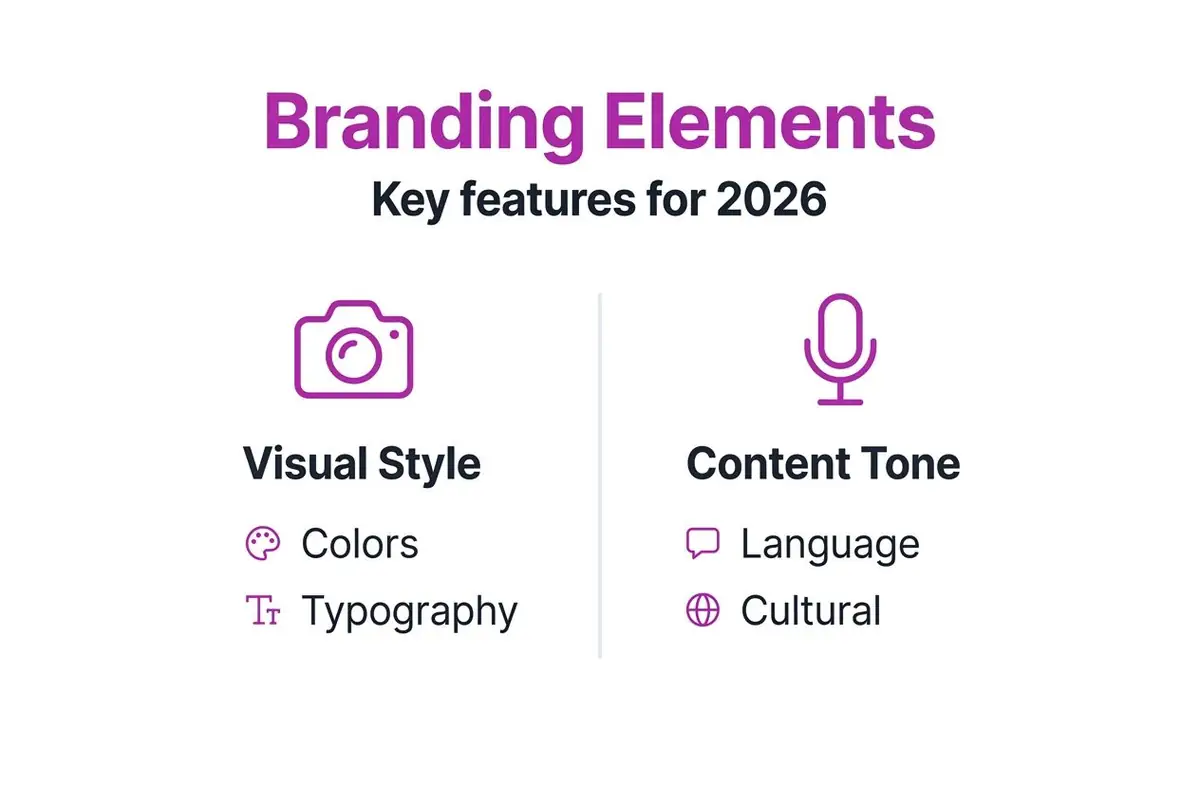
Semiotic elements include colour psychology, typography choices, image composition, language patterns, and cultural references. When these elements align with platform norms and audience expectations, brand messages land with greater impact and memorability.
Case study: Gymshark’s AI-driven social media branding success
Gymshark demonstrates how AI-driven personalisation transforms social media branding. The fitness apparel brand faced intense competition and needed differentiation beyond product quality. They implemented artificial intelligence to tailor content and engagement strategies across platforms.
The results proved remarkable. Gymshark’s AI-driven personalisation achieved 18% follower retention growth by delivering content aligned with individual preferences and behaviours. This case illustrates practical applications of research principles discussed earlier.
| Metric | Before AI | After AI | Growth |
|---|---|---|---|
| Follower retention | Baseline | +18% | Significant |
| Content engagement | Standard | +32% | Substantial |
| Conversion rate | 2.1% | 3.4% | +62% |
| Customer lifetime value | £180 | £247 | +37% |
Gymshark’s strategy combined several elements:
- Audience segmentation based on fitness goals, experience levels, and content preferences
- Dynamic content delivery matching individual engagement patterns
- Predictive analytics identifying optimal posting times for different segments
- Automated A/B testing of visual elements and messaging approaches
- Continuous learning algorithms improving personalisation over time
The brand’s success stems from treating social media as a two-way conversation rather than a broadcast channel. They analysed comments, shares, and saves to understand what resonated, then refined their approach continuously.
Our technology and SaaS marketing agency applies similar principles for clients seeking competitive advantages. AI tools democratise sophisticated personalisation previously available only to enterprise brands with massive budgets.
Marketing managers should note that Gymshark didn’t abandon human creativity. AI handled data analysis and optimisation while creative teams focused on storytelling, brand voice, and community building. This human-AI collaboration produced results neither could achieve alone.
Open up your brand’s potential with expert social media management
Navigating the complexities of modern social media branding requires expertise, resources, and continuous adaptation. Whilst the principles outlined here provide a foundation, successful implementation demands strategic planning and skilled execution.
Professional social media management services deliver platform-specific strategies that maximise engagement and build lasting brand loyalty. Expert teams combine creative storytelling with data-driven optimisation, ensuring every post contributes to your branding objectives.
Our comprehensive digital marketing services integrate social media with broader marketing initiatives, creating cohesive brand experiences across all customer touchpoints. From content production to community management, we handle the complexity so you can focus on business growth. Explore our digital marketing projects to see how we’ve helped ambitious brands stand out in competitive markets.
Frequently asked questions about social media branding
What are the primary benefits of social media for branding in 2026?
Social media enables direct audience engagement, builds authentic relationships, and provides real-time feedback on brand messaging. Platforms offer unparalleled reach and targeting capabilities whilst allowing brands to showcase personality and values through diverse content formats.
How can brands overcome consumer scepticism on social media?
Prioritise educational content over promotional messaging, maintain transparency in all partnerships, and engage genuinely with community questions and feedback. Authenticity, consistency, and value delivery build trust that overcomes scepticism more effectively than polished advertising.
Which social media platforms are most effective for B2B branding?
LinkedIn dominates B2B branding through thought leadership content and professional networking. Twitter serves real-time industry commentary and conversations. YouTube excels for in-depth educational content and product demonstrations that showcase expertise.
How often should brands post on social media for optimal branding impact?
Quality trumps frequency in modern algorithms. Post when you have valuable content rather than adhering to arbitrary schedules. Most successful brands post 3-5 times weekly on primary platforms, focusing on relevance and engagement over volume.
What role does video content play in social media branding?
Video dominates platform algorithms and audience preferences. Short-form video drives highest engagement rates whilst long-form content establishes authority. Brands incorporating video into their social media management services strategy see significantly higher brand recall and emotional connection.
How can small businesses compete with larger brands on social media?
Small businesses use agility, authentic storytelling, and niche audience focus. Larger brands struggle with bureaucracy and often sound corporate. Small businesses can respond quickly, showcase personality, and build tight-knit communities that value genuine connections over production budgets.
Recommended
- Social Media Management Services | AMW Media | AMW Media
- AMW Media, Digital Marketing Agency London
- Health & Wellness Marketing Agency | AMW Media
- Marketing for Professional Services | AMW Media
Our free marketing audit looks at your site, your ads and your content, and comes back with a 30 day plan. No pitch deck.

Founded AMW Media in 2024 and runs strategy, paid media and the CRM builds. The reason everything here is in house and measured in revenue. Meet the team.