
 Black Steel Doors
 Woodstock Campers
 Phillips Joinery
Most business owners know branding exists, yet 93% of leaders agree it is essential for growth and long-term success. That gap between knowing and doing is where competitors gain ground. Branding is not a luxury reserved for corporations with enormous budgets. It is the single most powerful lever an SME can pull to build trust, attract the right customers, and create a business that outlasts market turbulence. This guide cuts through the noise, explains what branding actually means in practice, and gives you a clear framework to apply it to your own business.
Table of Contents
- What branding really is (and isn’t)
- Branding and business growth: the hard evidence
- Core components of successful branding
- Balancing short-term marketing with long-term brand building
- Branding in the digital era: how SMEs can stand out
- Common branding mistakes SMEs make (and how to avoid them)
- Action plan: getting started with branding for your SME
- Drive your brand forward with expert support
- Frequently asked questions
Key Takeaways
| Point | Details |
|---|---|
| Branding fuels growth | A well-developed brand boosts sales, resilience, and market position for SMEs. |
| Go beyond visuals | Branding is about trust, reputation, and consistent experience, not just logos and colours. |
| Balance tactics | Combine short-term marketing actions with long-term brand building for best results. |
| Digital know-how is vital | Modern branding leverages online tools and platforms to engage and expand your audience. |
| Branding is a journey | SMEs should approach branding as a continuous process, not a one-off task. |
What branding really is (and isn’t)
Before you can benefit from branding, you need to understand what it actually covers. Most people picture a logo or a colour palette. Those elements matter, but they are only the surface layer of something far deeper.
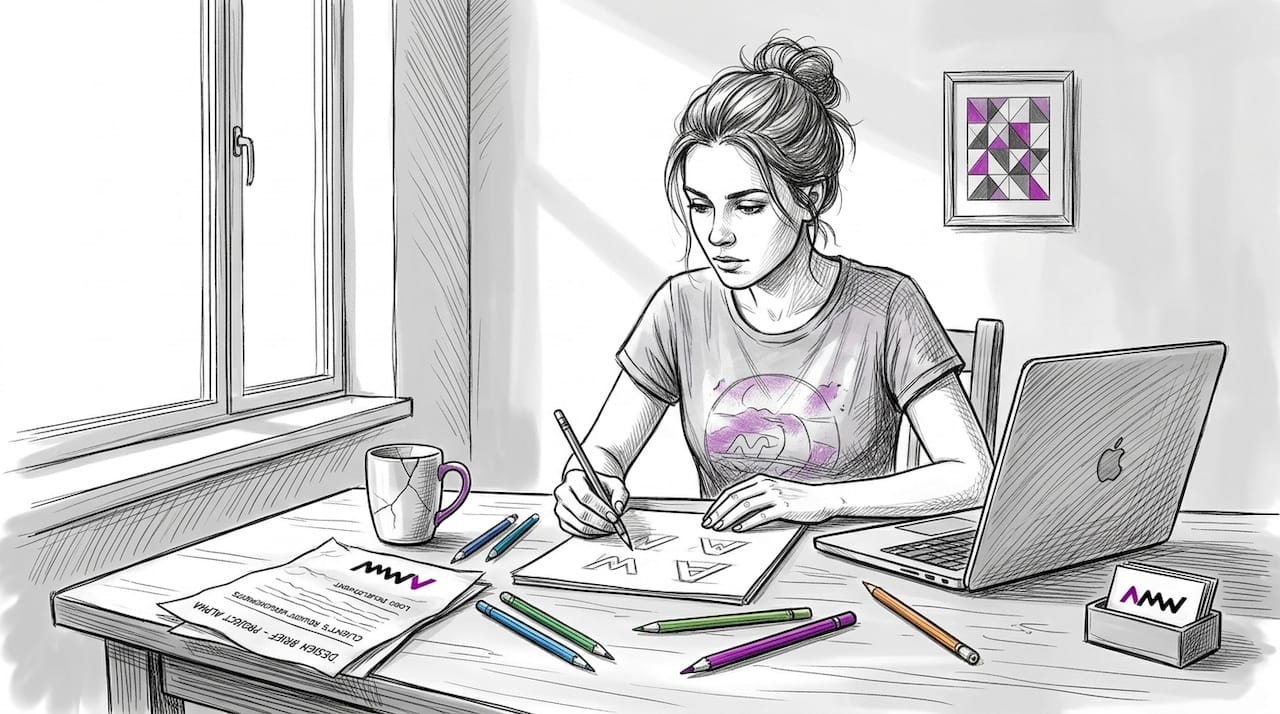
Branding encompasses values, perception, and experience across every touchpoint a customer has with your business. It is the promise you make and whether you keep it. It is the tone of your emails, the way your team answers the phone, and the feeling someone gets when they land on your website.
Here are the core elements that make up a brand:
- Promise: What you commit to delivering, every single time
- Values: The principles that guide every business decision
- Voice: How you communicate, whether formal, friendly, or bold
- Visuals: Logos, colours, typography, and imagery that signal who you are
- Customer experience: Every interaction from first click to post-sale support
Two common myths hold SMEs back. The first is that branding is only for large businesses. The second is that it costs too much. Neither is true. A small business with a clear, consistent identity will always outperform a larger competitor that sends mixed signals. As the role of digital content in brand engagement grows, the tools available to SMEs have never been more accessible or affordable.
“Your brand is what people say about you when you’re not in the room.” This idea, often attributed to Jeff Bezos, captures why intentional branding matters so much. If you do not shape the narrative, your market will shape it for you.
Branding and business growth: the hard evidence
Sceptics often ask whether branding actually moves the needle on revenue. The evidence is clear. 91% of leaders agree that long-term brand building is critical for sustained success, and businesses that invest in it consistently outperform those that do not.
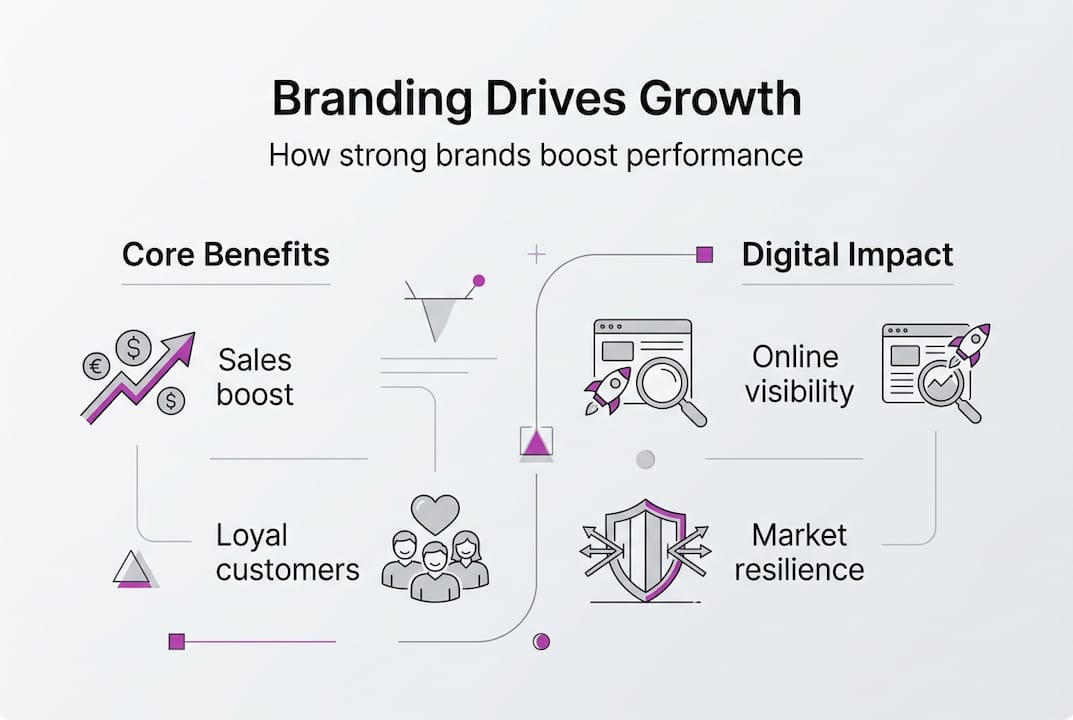
The data points to three specific growth drivers:
| Growth driver | Impact of strong branding |
|---|---|
| Sales performance | Higher conversion rates and average order values |
| Market position | Greater pricing power and reduced price sensitivity |
| Employee engagement | Stronger recruitment and lower staff turnover |
Branding also acts as a buffer during economic downturns. Businesses with strong brand equity retain customer loyalty when budgets tighten, because customers trust them. Those without it compete purely on price, which is a race nobody wins.
Digital growth is particularly tied to brand strength. A recognisable, consistent brand performs better in branding for growth campaigns because audiences already have a positive association. Social proof, online reviews, and content marketing all amplify faster when there is a clear identity behind them.
Core components of successful branding
Building a brand is a systematic process. SME branding success hinges on orientation, identity, marketing, and performance, with digital tools playing a central role at every stage.
Here is how the process breaks down:
- Brand orientation: Define your mission, values, and the position you want to own in your market. This is your strategic foundation.
- Identity design: Translate your orientation into visuals and tone. Your logo, colour palette, typography, and messaging style should all reflect your values.
- Marketing activation: Bring the brand to life through campaigns, content, and community. Well-executed social media branding campaigns are one of the most cost-effective ways to build recognition.
- Performance measurement: Track brand awareness, sentiment, and conversion metrics. A solid SEO strategy for branding ensures your brand is discoverable when customers are actively searching.
A comparison of businesses at different stages of this process shows a clear pattern:
| Branding maturity | Typical outcome |
|---|---|
| No defined brand | Competes on price, high churn, low loyalty |
| Partial brand identity | Inconsistent customer experience, mixed results |
| Fully integrated brand | Premium positioning, loyal customers, stronger growth |
Pro Tip: Do not skip the orientation phase. Many SMEs jump straight to designing a logo without first agreeing on what the business stands for. That shortcut creates inconsistency that is expensive to fix later.
Balancing short-term marketing with long-term brand building
One of the most common strategic tensions for SMEs is deciding how much effort to put into immediate marketing returns versus building brand equity over time. Both matter. Neither alone is sufficient.
Businesses must balance performance marketing and long-term branding to build genuine resilience. Short-term tactics like paid ads, seasonal promotions, and email campaigns generate revenue now. Long-term brand building, through consistent values, positioning, and reputation, creates the conditions for that revenue to keep growing.
Here is how to think about the balance:
- Short-term marketing delivers measurable results quickly but rarely builds loyalty on its own
- Long-term brand building takes longer to show returns but compounds over time
- The sweet spot is sustained investment in both, adjusted based on your growth stage
- Digital analytics make it possible to measure both streams and optimise your digital strategy in real time
Pro Tip: Allocate at least 40% of your marketing budget to brand-building activities, even when short-term targets feel urgent. Businesses that cut brand investment during slow periods often find recovery takes far longer than expected.
Branding in the digital era: how SMEs can stand out
Digital channels have fundamentally changed what is possible for SME branding. Digital branding enables SMEs to reach new customers, reinforce identity, and monitor performance with a level of precision that was previously only available to large enterprises.
Here are five practical steps to build a stronger digital brand:
- Define a distinct visual identity and apply it consistently across every platform, from your website to your social profiles
- Develop an authentic brand voice that reflects your values and resonates with your specific audience
- Invest in a digital content strategy that educates, entertains, and builds trust over time
- Engage actively on social media using the social media marketing tips that align with your audience’s preferred platforms
- Collect and showcase social proof through reviews, testimonials, and case studies that reinforce your brand promise
Pro Tip: Set up Google Alerts and monitor your brand mentions across review platforms monthly. Customer feedback is one of the most valuable and underused sources of brand intelligence available to SMEs.
Common branding mistakes SMEs make (and how to avoid them)
Even well-intentioned branding efforts can fall flat. Branding missteps can limit SME performance, but understanding where things go wrong makes them far easier to avoid.
The most frequent mistakes include:
- Treating branding as a one-off project: A brand is a living thing. It needs consistent attention, not a single redesign every five years.
- Copying competitors: Imitation signals that you have nothing original to offer. Study your competitors to differentiate, not to replicate.
- Neglecting internal buy-in: Your team is your brand in action. If employees do not understand or believe in your values, customers will notice.
- Inconsistent messaging across channels: A polished website paired with an unprofessional social media presence creates confusion and erodes trust.
- Ignoring analytics: Gut instinct has its place, but data tells you what is actually working. Review your brand metrics regularly and adjust accordingly.
Looking at successful branding campaigns from businesses that got it right reveals a common thread: consistency, authenticity, and a willingness to listen to their audience.
Action plan: getting started with branding for your SME
Branding is a systematic process involving orientation, identity, marketing, and performance. Here is a practical roadmap to get started.
Your step-by-step branding roadmap:
- Audit your current brand: Gather all existing materials and assess consistency across channels
- Define your brand foundation: Write down your mission, values, target audience, and unique positioning
- Create or refresh your visual identity: Ensure your logo, colours, and typography reflect your brand foundation
- Document your brand guidelines: Create a simple reference document your team can use
- Activate across digital channels: Apply your brand consistently to your website, social media, and email communications
- Measure and refine: Set baseline metrics for awareness and sentiment, then review quarterly
Quick wins for the next 30 days:
- Update your social media bios to reflect your current positioning
- Audit your website for inconsistent messaging or outdated visuals
- Ask three loyal customers what words they associate with your brand
- Brief your team on your brand values and why they matter
- Set up a simple monthly review of your online reviews and brand mentions
Getting team buy-in is often the hardest part. Frame branding not as a marketing exercise but as a business strategy that protects jobs, attracts better clients, and makes everyone’s work more meaningful.
Drive your brand forward with expert support
Building a brand that genuinely drives growth takes more than good intentions. It takes strategic clarity, creative execution, and the right digital infrastructure working together. If you are ready to move from theory to action, AMW Media is here to help.
We work with ambitious SMEs to develop and execute branding strategies that deliver measurable results. From our specialist branding services to hands-on social media management, every solution is tailored to your business goals. Explore our full range of services and find out how we can help you build a brand that stands out, earns trust, and grows with you.
Frequently asked questions
How does branding help with customer loyalty?
Strong branding builds repeat business by creating trust and memorability, making customers far more likely to return and recommend your business to others.
Can small businesses afford to invest in branding?
Absolutely. Digital tools lower the cost and barrier for SME branding significantly, making effective brand building more accessible than at any point in the past.
How quickly will branding deliver results?
Some gains, such as improved digital recognition and social engagement, can appear within a few months. Branding delivers performance gains in digital channels over the medium term, with compounding returns over time.
Is branding only about visuals and logos?
Not at all. Branding is a holistic approach that covers your vision, values, promise, personality, and every interaction a customer has with your business.
Recommended
- Harness social media in branding for growth in 2026
- Why use agency services to grow your brand in 2026
- The role of digital content in brand growth and engagement
- Why invest in content creation for competitive brand growth
- What is Executive Branding on LinkedIn? 65% More Credibility – Kawaak
Our free marketing audit looks at your site, your ads and your content, and comes back with a 30 day plan. No pitch deck.

Owns how everything looks and feels, from a brand identity to the grade on a reel, and makes the animated films such as Blue Light Services' Journey to Net Zero. Meet the team.