
 Black Steel Doors
 Woodstock Campers
 Phillips Joinery
TL;DR:
- Effective creative branding ideas align with the brand’s personality, are memorable, scalable, and engaging, while remaining feasible within resources. Developing a documented brand system, including visual, sonic, and digital identity elements, helps maintain consistency and prevent brand drift over time. Prioritising foundational elements alongside engagement strategies fosters strong, distinctive brands that effectively connect with their audiences.
Most brand strategists know the feeling. You have a brief, a deadline, and a blank page where the big idea should be. You search for inspiration, find the same recycled advice about “being authentic” and “knowing your audience,” and close the tab more frustrated than before. A truly useful creative branding ideas list does not just collect pretty concepts. It helps you evaluate which ideas fit your brand’s personality, your team’s capacity, and your audience’s expectations. This article covers exactly that, from visual and sonic identity through to immersive digital experiences, with frameworks to help you act on what you find.
Key takeaways
| Point | Details |
|---|---|
| Evaluate before you execute | Score every branding idea against brand alignment, memorability, scalability, and feasibility before committing resources. |
| Build systems, not one-offs | Convert creative ideas into reusable asset libraries with measurable brand signals to prevent drift over time. |
| Sonic branding is a full system | A sonic logo alone is not enough; build themes, guidelines, and touchpoint rules to make audio identity stick. |
| Storytelling needs data | Numbers and real-world proof make brand stories credible and shareable, not just emotionally resonant. |
| Technology amplifies, not replaces | AR, AI, and gamification work best when they reinforce an existing brand identity rather than substitute for one. |
The creative branding ideas list: a framework for evaluation
Before you start generating ideas, you need a way to judge them. Otherwise you end up with a moodboard and no momentum.
The most effective approach is to score every idea against five criteria:
- Brand alignment: Does this idea feel like us, or does it belong to someone else’s brand?
- Memorability: Will people recall it after a single exposure?
- Scalability: Can it work on a business card and a billboard?
- Audience engagement: Does it give the audience something to do, feel, or share?
- Feasibility: Can your team actually deliver it within budget and timeline?
Once you have a shortlist, the next step is building a documented brand system around each chosen idea. A palette of three to five colours in a 60-30-10 structure keeps things visually consistent, and quarterly touchpoint audits scoring for colour accuracy and typography compliance keep things from sliding. That process applies equally to sonic, experiential, and digital branding.
Converting creative ideas into reusable brand assets tied to measurable signals is what separates brands that look consistent from those that merely intend to. Benly’s four-phase audit approach is worth studying here: it evaluates and prioritises fixes so your creative investment does not slowly dissolve into brand drift.
Pro Tip: Run a rapid brand consistency audit every quarter. Pick ten touchpoints, score each one against your documented guidelines, and note where they diverge. Even a one-page internal report will surface problems before they compound.
Understanding why branding matters before diving into specific tactics also helps you explain the strategic case internally, which is something most articles skip entirely.
1. Unique logo concepts that break the mould
A logo is not just a mark. It is the most compressed expression of everything your brand stands for. Tired logo thinking produces tired logos.
Consider logos built around negative space, where the meaning lives in what is absent rather than what is drawn. The FedEx arrow is the classic example, but the approach works across sectors. Abstract geometric logos can also carry strong brand personality when the geometry is tied to a genuine brand story rather than chosen arbitrarily from a design tool.
For branding ideas for startups in particular, a wordmark with intentional typographic tension (a non-standard letterform, an unexpected weight shift) can signal personality immediately without a large budget. The logo becomes the branding.
One tactic worth trying: build your logo to function as a system rather than a single lockup. That means creating a primary mark, a secondary condensed version, a stacked version, and an icon crop. This gives your design team far more to work with across digital and print contexts.
2. Colour strategy that does more than “look nice”
Colour is one of the most underused strategic tools in branding. Most teams pick a palette they like, publish it in a style guide, and then quietly watch it mutate across channels over the next two years.
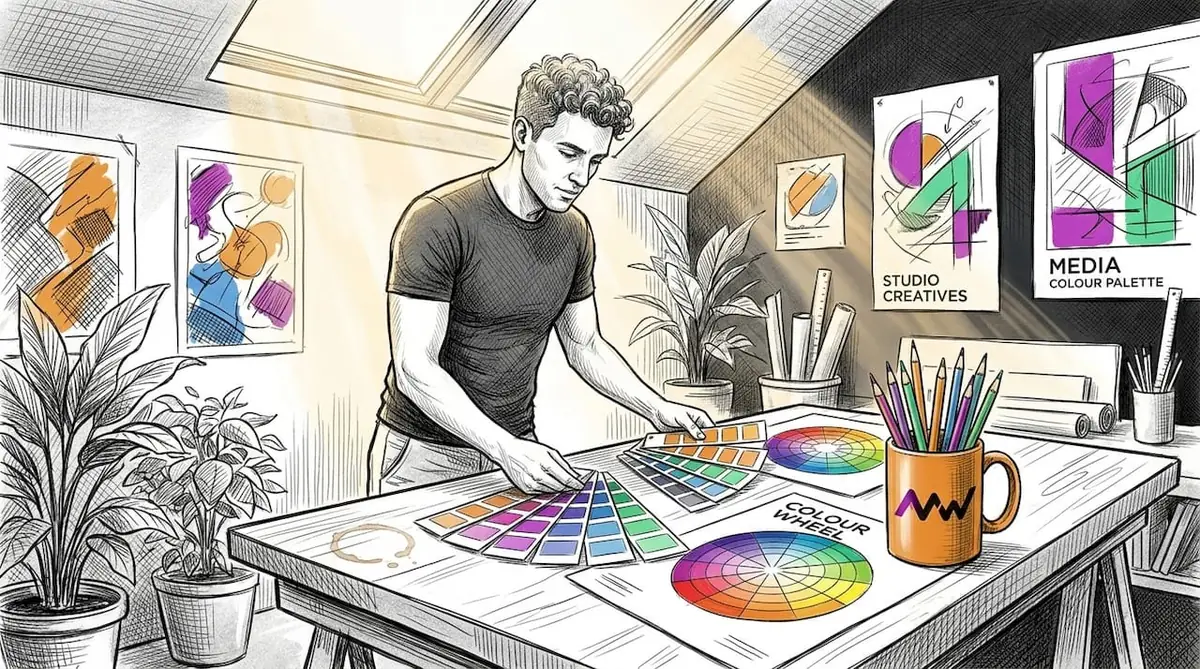
The 60-30-10 rule is worth implementing formally. Sixty per cent of every layout uses your dominant brand colour, thirty per cent uses a secondary colour, and ten per cent is reserved for accent. This is not a rigid design law but a useful default that prevents visual chaos. Pair it with seasonal palette audits and you maintain freshness without losing coherence.
Colour also carries cultural weight. If you are marketing across regions, do the research. White signals purity in some markets and mourning in others. Green reads as natural and eco-conscious in some contexts but carries specific political associations in others. These are not gotchas. They are things the best brand strategists plan for.
Pro Tip: Create a “colour usage do/do not” document with visual examples, not just hex codes. When briefing designers, developers, or agencies, this halves the back-and-forth instantly.
3. Typography as a brand voice
Typography is one of the most overlooked opportunities in brand identity inspiration. A well-chosen typeface communicates personality before anyone reads a word. A law firm using a clean humanist sans-serif signals approachability. A luxury brand using a high-contrast serif signals authority and heritage.
The more advanced play is using type system contrast intentionally. A display typeface with strong personality paired with a highly legible body face can create visual rhythm that reinforces brand positioning. The display does the personality work. The body keeps things readable.
Custom typefaces are within reach for mid-sized brands now, with services like Fontsmith and type foundry collaborations becoming more accessible. For those without that budget, the key is owning your type pairing rather than using whatever comes loaded in a design tool. Make a deliberate choice and document it.
4. Sonic branding: building an audio identity
Sonic branding is far more than a jingle. It is an end-to-end system comprising a sonic logo, a sound palette, an ambient theme, and usage guidelines that specify how audio behaves across every touchpoint. Intel’s five-note chime and McDonald’s “I’m Lovin’ It” hum are the obvious examples, but the discipline extends to app notification sounds, on-hold music, video ad scoring, and even the ambient audio in retail environments.
A sonic logo typically lasts 2 to 5 seconds and must be applied consistently to work. The problem is that most brands either skip audio identity entirely or commission a single piece of music and call it done, which misses the point.
Building a proper sonic identity follows a structured path. It begins with discovery workshops to define the brand’s audio personality, moves through iterative composition with multiple sonic interpretations, and concludes with delivery of guidelines that specify how the sonic elements should function in varied contexts. This structured process, as outlined in Sonic Branding 101, is what separates a functional sonic system from a one-off piece of production music.
- Define your brand’s audio personality using the same adjectives you use for visual identity
- Develop a short sonic logo and a longer ambient theme from the same musical DNA
- Create a sound palette (tones, textures, instruments) that applies across digital products
- Document touchpoint rules: which sounds appear on app launch, notifications, ads, and events
Pro Tip: Brief your sonic branding supplier with your visual brand guidelines, not just a mood board. The best audio identities are built from the same emotional territory as the visual identity, which is why discovery workshops that involve brand strategists, not just audio producers, tend to produce stronger results.
5. Storytelling and interactive branding
Audiences do not just want to be told what a brand stands for. They want to experience it, and the brands that understand this are winning.
Data-driven storytelling is one of the most credible formats available. Spotify Wrapped is the outstanding example: it turns personal listening data into a personalised, shareable brand moment every year. Patagonia’s real-time environmental impact reports do something similar. Numbers make stories credible, and credibility drives loyalty. The lesson is not to copy these campaigns but to find the data that lives inside your own brand and turn it into something a customer would want to share.
Interactive content changes the dynamic from passive to participatory. Quizzes, polls, AR try-on tools, and community voting mechanics all give audiences a reason to engage rather than scroll past. Recent campaigns like e.l.f. Beauty’s Roblox experience show that creativity, technology, and audience participation can combine to create brand moments far more powerful than any single advertisement.
- Use your own data to create personalised brand moments for customers
- Build interactive content that gives your audience a role, not just a viewing position
- Use user-generated content by making your brand the backdrop for customer stories
- Blend emotional and rational positioning: make people feel something, then give them a fact that justifies the feeling
For deeper frameworks on how storytelling functions as a strategic tool, the power of storytelling is worth exploring in detail.
6. Community-led brand building
One of the most powerful unique branding concepts available today is the one that costs the least to start: building an actual community around your brand. Not a loyalty programme. Not a newsletter list. A genuine community where members talk to each other, not just to you.
Brands like Glossier built their identity as much through their community as through their product marketing. LEGO Ideas invites fans to submit and vote on new sets, turning the audience into co-creators. These are not small stunts. They are structural decisions about how the brand relates to its audience.
The community does not have to be large. A tightly engaged group of 500 people who actively discuss, share, and advocate for your brand is worth more than 50,000 passive followers. The key is creating a format where participation produces value for members, not just content for your channels.
7. Brand identity in digital experience design
Your website and app are not separate from your brand identity. They are your brand identity for most of the people who encounter it. This is one of the most overlooked areas in branding tips for small businesses and large organisations alike.
Visual branding in digital contexts means far more than using the right colours and logo. It means micro-interactions that feel consistent with brand personality, loading animations that reflect brand values, error messages written in brand voice, and onboarding flows that tell the brand story rather than just processing sign-ups.
A financial services brand should feel reassuring in its micro-copy and transitions. A creative agency should feel bold and unexpected. These judgements should be made deliberately, documented in a digital brand standards guide, and enforced in every design sprint.
8. Augmented reality and immersive branding
AR and VR are moving from novelty to practical branding territory faster than most teams expect. Immersive tech creates multisensory brand experiences that are simply not possible in static media, and platforms like Roblox have demonstrated that virtual branded environments can generate genuine audience engagement at scale.
AR product try-on is now standard in beauty, eyewear, and furniture. The more interesting territory is using AR to tell brand stories: a packaging QR code that launches an animation explaining product provenance, an AR retail installation that shows a brand’s supply chain, or a virtual event space that uses branded environmental design to reinforce identity.
The principle applies even if your budget does not stretch to a Roblox activation. A well-designed AR filter for Instagram, built with brand consistency in mind, is a legitimate immersive branding asset.
9. AI-powered personalisation as a branding tool
AI enables real-time personalised experiences through dynamic emails, chatbots, and product recommendation engines. But the branding opportunity goes beyond personalised product suggestions.
The brands doing this well are using AI to make every brand touchpoint feel personally relevant without feeling creepy. That balance is difficult to achieve and easy to get wrong. The guardrails are: use data the customer has knowingly provided, personalise the content not just the name field, and maintain brand voice consistency across every automated interaction.
A brand that sounds warm and considered in its editorial content but robotic in its automated emails has a brand consistency problem, not a technology problem.
10. Sustainability and ethical brand positioning
Sustainability messaging is no longer a differentiator. Customers expect it, and they are increasingly capable of identifying when it is superficial. Brands focusing on genuine ethical supply chains and eco-friendly packaging gain trust over time, while those that use sustainability as a tagline without substance lose it.
The effective branding techniques here involve transparency rather than claims. Rather than saying “we are sustainable,” show the supply chain. Publish the numbers. Name the suppliers. This is where digital storytelling tools and sustainability positioning reinforce each other.
11. Comparison of approaches: choosing the right ideas
Not every idea on this list is right for every brand. Here is a practical reference to help you prioritise.
| Branding idea | Resource requirement | Potential impact | Best suited for |
|---|---|---|---|
| Sonic identity system | Medium to high | High, long-term recall | Consumer-facing brands with media budgets |
| Community building | Low to medium | Very high over time | Brands with passionate niche audiences |
| AR and immersive experiences | High | High, novelty-driven | Product brands, retail, lifestyle sectors |
| Data-driven storytelling | Medium | High, loyalty and PR | Brands with rich customer data |
| Typography and visual system | Low to medium | High, foundational | All brands, especially startups |
| AI personalisation | Medium to high | High at scale | E-commerce and digital service brands |
| Sustainability transparency | Low | High, trust building | Any brand with an ethical supply story |
The most effective approach is usually to combine a strong foundational element (visual system, sonic identity) with one engagement-led idea (community, data storytelling) rather than attempting everything at once.
Pro Tip: Pick one idea from the “foundational” category and one from the “engagement” category. Build the foundational one properly first. The engagement idea will perform much better when it has a consistent brand system beneath it.
Brand consistency underpins every item on this list. Without it, even the most creative idea becomes noise rather than signal.
My honest take on creative branding strategy
I have worked with enough brands to notice a pattern: the ones that produce the most memorable creative branding are rarely the ones with the largest budgets. They are the ones that have made peace with their own contradictions.
Every interesting brand has some internal tension. Heritage versus modernity. Accessible versus premium. Playful versus authoritative. Most brand teams try to resolve these tensions by picking one side and suppressing the other. I think that is usually a mistake. Deliberately sustaining brand polarities creates energy and distinctiveness that flat, resolved brand identities simply cannot generate.
What I have found actually works is treating brand tension as a creative asset rather than a problem to fix. Guinness has never stopped being both ancient and contemporary. Apple has never fully resolved the tension between mass market and exclusive. These contradictions are not accidents. They are strategy.
The other thing I keep coming back to is the discipline of auditing. Brands do not drift all at once. They drift slowly, one off-colour social post at a time, one rogue font at a time, until the visual and verbal identity is unrecognisable. A quarterly audit, even an informal one, is the difference between a brand that sustains its creative investment and one that loses it.
Innovation in branding is not a project with an end date. It is an ongoing process of refinement, experimentation, and honest review. The brands that treat it that way are the ones worth watching.
Amir
How AMW Media can bring your branding ideas to life
Reading about top branding ideas is one thing. Implementing them with consistency and creative quality is another. At AMW Media, we work with ambitious brands to translate strategic branding thinking into tangible assets that perform across every channel. Closer to home, our marketing agency High Wycombe page makes the case that almost nobody looking for a nearby agency actually cares about the distance.
Whether you need graphic design services to build a visual identity system from scratch, custom web design that expresses your brand personality in every interaction, or social media management to amplify your brand story with consistency and creativity, AMW Media’s team has the experience to deliver. We have helped brands across sectors turn ambitious creative briefs into campaigns that build real recognition and trust. Get in touch to discuss what the right combination of ideas looks like for your brand.
FAQ
What makes a creative branding idea effective?
An effective branding idea scores well on brand alignment, memorability, scalability, and audience engagement. It should also be feasible within your team’s capacity and connect clearly to a documented brand system.
How do I build a sonic branding identity?
Start with a discovery workshop to define your brand’s audio personality, then develop a sonic logo and ambient theme from the same musical DNA. Deliver usage guidelines specifying how audio elements apply across touchpoints, from app notifications to advertising.
Are AR and immersive experiences only for big brands?
No. A well-designed AR filter built with brand consistency in mind is a legitimate immersive branding asset available to brands of any size. Start with a single touchpoint, such as packaging or social filters, before investing in larger virtual environments.
How often should I audit my brand for consistency?
Quarterly audits are a practical minimum. Score ten representative touchpoints against your documented brand guidelines, note where they diverge, and prioritise fixes. This prevents the slow brand drift that compounds over time and undermines creative investment.
What is the best branding approach for a startup?
Focus on getting the foundations right first: a distinctive visual system with a documented colour palette and type pairing, and a clear brand voice. Once those are consistent, layer in one engagement-led strategy such as community building or data-driven storytelling.
Recommended
- Creative content production steps for marketing success in 2026
- How to build brand identity for market advantage | AMW Media
- Elevate your brand identity: What is visual branding? | AMW Media
- How to run successful social media campaigns for brand growth
Our free marketing audit looks at your site, your ads and your content, and comes back with a 30 day plan. No pitch deck.

Owns how everything looks and feels, from a brand identity to the grade on a reel, and makes the animated films such as Blue Light Services' Journey to Net Zero. Meet the team.