
 Black Steel Doors
 Woodstock Campers
 Phillips Joinery
TL;DR:
- Marketing automation is often misunderstood as just sending automated emails, but it fundamentally involves software managing repetitive tasks to boost sales productivity and reduce costs. Properly designed workflows, triggers, and AI-enhanced insights enable personalised, highly effective marketing across channels, resulting in significant revenue gains and improved lead quality. Success relies on strategic planning, continuous oversight, and selecting platforms that align with your customer journey and data needs.
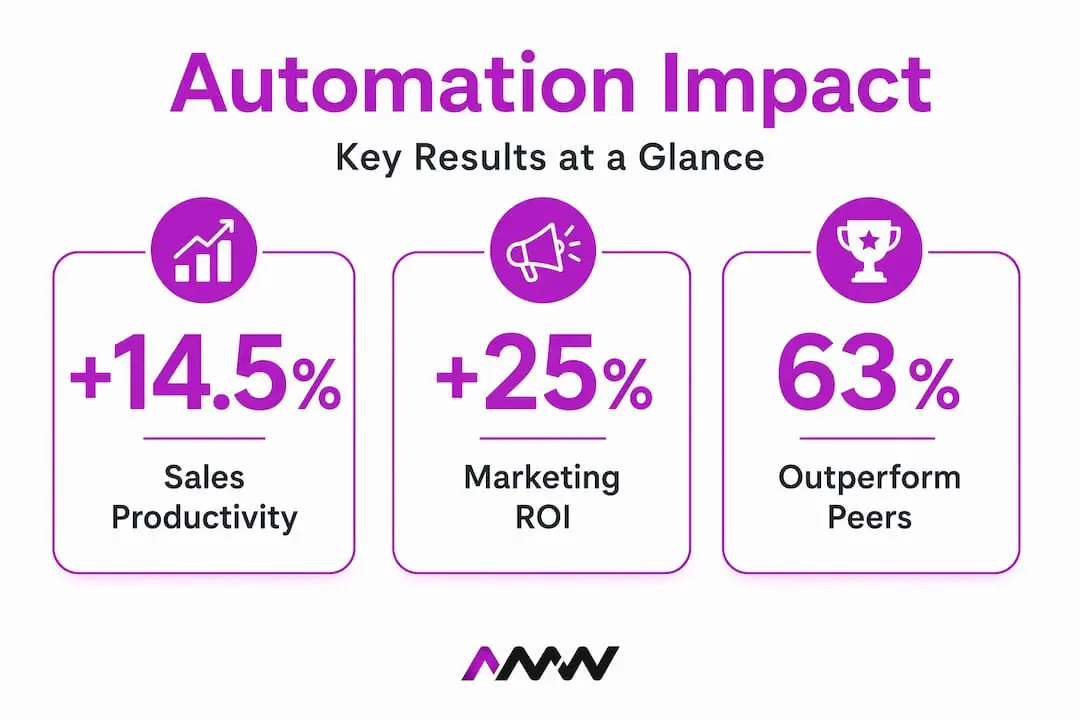
Marketing automation is widely misunderstood. Most people assume it just means sending automated emails, but that barely scratches the surface of what is automation in marketing and why it matters. When implemented properly, automation drives a 14.5% increase in sales productivity, cuts marketing overhead by 12.2%, and results in nurtured leads spending 47% more per purchase than non-nurtured ones. For marketing professionals and business owners looking to grow efficiently, this is not a nice-to-have. It is one of the most powerful levers available to you.
Key Takeaways
| Point | Details |
|---|---|
| Marketing automation explained | It uses software to automate repetitive marketing tasks and personalise customer interactions at scale. |
| Proven efficiency gains | Automation boosts sales productivity by 14.5% and cuts marketing costs by over 12%. |
| High ROI potential | Companies gain an average $5.44 return per $1 spent with typical payback under six months. |
| AI enhances automation | Artificial intelligence makes campaigns smarter, enabling real-time personalisation and improved results. |
| Implementation matters | Successful automation requires strategic alignment, lead nurturing workflows, and ongoing optimisation. |
What is marketing automation and how does it work?
At its core, marketing automation uses software to handle repetitive marketing tasks automatically, freeing your team to focus on strategy, creative thinking, and the work that actually requires a human brain. The automation of marketing tasks spans email campaigns, social media posting, ad management, and personalised content delivery, all without someone manually pressing “send” each time.
The mechanics rely on three building blocks: workflows, triggers, and conditions. A workflow is a pre-built sequence of actions. A trigger is the event that starts it, such as someone filling in a contact form, clicking a specific link, or abandoning a shopping basket. Conditions determine what happens next based on what the user does or does not do. Together, these create branching paths that respond to individual behaviour rather than treating every contact the same way.
Here is what that looks like in practice across different marketing channels:
- Email: A new subscriber receives a welcome sequence matched to the page they opted in from
- Social media: Scheduled posts publish automatically at peak engagement times, freeing your team from daily manual uploads
- Paid advertising: Ad spend adjusts automatically based on conversion data and audience behaviour
- SMS: A customer who has not completed a purchase receives a time-sensitive reminder with a discount code
- Lead scoring: Prospects are assigned points based on actions taken, moving them through your funnel without manual review
The role of AI in marketing automation is making these workflows significantly smarter, but even rule-based automation without AI delivers substantial results when set up correctly. What separates good automation from bad automation is not the tool itself. It is the strategic thinking behind the workflow design.
Understanding why email marketing matters is a strong starting point, because email remains the channel where automation produces the most measurable returns for most businesses. But the real power of automation comes from connecting email with your CRM, your website behaviour data, and your sales pipeline. Business automation through SaaS platforms is how ambitious brands move from disconnected manual tasks to a joined-up marketing operation.
Measuring the benefits: how automation boosts marketing efficiency and revenue
Now that we understand what marketing automation is, let us look at why it delivers such impressive business results.

The numbers are hard to argue with. Companies investing in automation earn an average of £4.30 (approximately $5.44) for every £1 spent over three years, with many reaching payback in under six months. The efficiency gains compound over time as workflows mature and data improves targeting precision.
| Metric | Without automation | With automation |
|---|---|---|
| Sales productivity | Baseline | +14.5% increase |
| Marketing overhead | Baseline | 12.2% reduction |
| Average purchase value (nurtured leads) | Baseline | +47% higher |
| Email ROI per £1 spent | Manual average | £36 return |
| Lead conversion rate (automated vs manual) | Baseline | +2,361% higher |
That last figure deserves a closer look. Automated email campaigns convert at rates more than 2,361% higher than standard broadcast campaigns. The reason is simple: an automated email that responds to what someone just did on your website is infinitely more relevant than a generic newsletter sent to your entire list on a Tuesday morning.
The most impactful benefits break down into four categories:
- Lead quality: Automation scores and nurtures leads based on real behaviour, meaning your sales team only talks to people who are ready to buy
- Cost efficiency: Reducing the manual labour involved in campaign execution cuts your cost per acquisition substantially over time
- Revenue growth: Better-nurtured leads spend more, and effective lead generation through automated workflows consistently outperforms manual outreach
- Reporting clarity: Automation platforms track every touchpoint, giving you clean attribution data rather than guesswork
Pro Tip: Do not measure automation success solely by open rates or click-through rates. The metric that matters most is revenue attributed to automated workflows versus your manual campaigns. This comparison tells you exactly where automation is earning its keep.
“Marketing automation is not just about efficiency. It is about creating a system where the right person receives the right message at precisely the right moment, without anyone in your team having to remember to send it.”
Marketing analytics tied directly to automation platforms closes the loop between what you spend and what you earn. Without that data connection, you are running on assumption. With it, every campaign improvement is evidence-based.
Email marketing strategies that incorporate automation from the outset, rather than bolting it on afterwards, consistently outperform those built around manual campaign sends. The architecture of how you build your list and segment it matters as much as the messages you send.
The role of artificial intelligence in advancing marketing automation
Understanding the role of AI reveals how marketing automation is evolving and becoming smarter to deliver even greater value.
The shift from rule-based automation to AI-powered automation is significant. Traditional automation follows “if this, then that” logic. AI-powered automation learns from patterns across thousands of interactions and adjusts campaigns in real time without requiring you to manually update the rules. The difference in outcomes is substantial.
By 2025, 92% of marketers were using AI tools in their marketing, with 77% specifically using AI-powered automation to personalise content at scale. This is not a trend for large enterprises only. Accessible AI tools have brought predictive personalisation within reach of businesses at every level.
What AI specifically adds to automation includes:
- Predictive send times: AI analyses when individual contacts are most likely to open emails and adjusts delivery accordingly
- Dynamic content blocks: Email and landing page content changes automatically based on predicted preferences, not just past behaviour
- Churn prediction: AI flags contacts showing disengagement signals before they unsubscribe, triggering re-engagement sequences
- Audience segmentation: Rather than manually creating segments, AI clusters your audience by behavioural patterns you would never spot manually
- Ad budget allocation: AI shifts spend toward the best-performing audiences in real time, removing the lag of manual optimisation
BCG’s 2025 research argues that AI in marketing automation reinvents operating models by accelerating data flows and prioritising end-to-end creative and media workflows for profitable growth. The brands winning right now are those treating AI not as a separate tool but as the engine running inside their automation platform.
The role of AI in content creation feeds directly into automation effectiveness. When AI helps produce personalised content variations at scale, automation can test and deliver them without any manual input beyond the initial setup. That is where compounding returns begin.
Incorporating AI into your digital marketing strategy is no longer optional if you want to compete at the level your market demands. The role of AI in marketing strategies has moved from experimental to foundational in a remarkably short space of time.
Pro Tip: When evaluating automation platforms, ask specifically whether their AI features are native to the platform or third-party add-ons. Native AI integrations produce far cleaner data and better performance than bolted-on tools.
Practical steps to implement marketing automation effectively
With a grasp on automation benefits and AI’s role, let us look at practical ways you can implement automation for maximum impact.
Companies that automate lead nurturing generate 50% more sales-ready leads at 33% lower cost, with revenue increases of 10% or more within six to nine months. That outcome does not happen by accident. It requires deliberate setup and ongoing attention.
Here is a practical implementation sequence that works:
- Map your customer journey first. Before touching any software, document every meaningful touchpoint a prospect has with your business from first awareness to repeat purchase. Automation without a journey map is just expensive guesswork.
- Define your triggers and conditions. Identify the specific actions that signal intent or readiness, such as visiting your pricing page twice in one week, downloading a specific asset, or reaching a lead score threshold.
- Build your first three workflows. Start with a welcome sequence for new subscribers, a lead nurturing sequence for prospects who have not yet converted, and a re-engagement sequence for contacts who have gone cold.
- Implement lead scoring. Assign point values to every meaningful action a contact takes. This removes subjectivity from your sales team’s prioritisation decisions.
- Connect your CRM and automation platform. Automation improves lead quality and enables smoother handoffs between marketing and sales, reducing the misalignment that costs companies deals. That connection only works if your systems share data in real time.
- Set up attribution reporting. Before launching any automated campaigns, ensure your analytics captures which workflows are influencing revenue. This data drives every future improvement.
The actions that most reliably improve results after the initial setup:
- Review and update workflow content every quarter. Outdated messaging undermines trust faster than no messaging at all.
- Test subject lines and calls to action systematically. Automated A/B testing removes the manual burden while continuously improving performance.
- Audit your lead scoring model every six months. Buyer behaviour changes, and a model built on last year’s data may be misfiring.
Marketing analytics for ROI should sit at the centre of your automation strategy from day one. Without clean data flowing into your reporting, you cannot tell which workflows are generating revenue and which are burning budget.
| Implementation stage | Key action | Expected outcome |
|---|---|---|
| Planning | Customer journey mapping | Clear automation touchpoints identified |
| Setup | CRM and platform integration | Real-time lead data synchronisation |
| Launch | Welcome and nurture sequences | Immediate engagement lift |
| Optimisation | Lead scoring refinement | Higher quality sales-ready leads |
| Scaling | AI-powered personalisation | Compounding conversion improvements |
Pro Tip: Most teams implement automation and then forget to tell the sales team what it does. Run a brief session with your sales team explaining which sequences contacts are in and what that means for their outreach. Sales teams that understand the automation context close more deals.
Your digital marketing process should treat automation as infrastructure, not a campaign. It runs in the background permanently, improving with every cycle. The lead generation strategies feeding into your automation are equally important, because a brilliant workflow built on a thin or poorly-segmented list will still underperform.
Comparing marketing automation platforms and tools
Knowing how to implement automation strategies leads naturally to choosing the right platforms that fit your business needs.
The market is crowded and the differences between platforms are more meaningful than most comparison articles admit. Here is an honest breakdown based on what actually matters to marketing teams and business owners:
| Platform | Best for | AI features | Key strength | Pricing model |
|---|---|---|---|---|
| HubSpot | SMEs to mid-market | Strong, native AI | All-in-one CRM and automation | Tiered, scales with contacts |
| ActiveCampaign | Small to mid-market | Good predictive tools | Email automation depth | Affordable entry point |
| Marketo (Adobe) | Mid-market to enterprise | Advanced AI analytics | Sales and marketing alignment | Enterprise pricing |
| Klaviyo | E-commerce brands | Strong segmentation AI | Revenue attribution clarity | Usage-based pricing |
| Mailchimp | Small businesses | Basic AI features | Ease of use, fast setup | Freemium with paid tiers |
The most common mistake in platform selection is choosing based on brand recognition rather than workflow fit. A platform with every feature imaginable is worthless if your team cannot use it without a specialist on retainer.
Consider these questions before committing:
- Does it integrate natively with your existing CRM, not via a third-party connector?
- Can you build the specific workflows your customer journey requires without custom development?
- Does the reporting give you revenue attribution, not just engagement metrics?
- What does the onboarding and support look like at your pricing tier?
Your digital marketing tools guide should help you frame the broader technology decisions before you commit to a specific platform. And the platform selection process is worth treating as a structured decision rather than a reactive purchase.
The overlooked truths about marketing automation
Having explored practical how-tos and platform choices, let us step back for a candid look at what most companies miss about marketing automation.
The first uncomfortable truth is this: most marketing automation failures are not technology failures. They are strategy failures that happen to involve technology. We regularly see businesses investing in capable platforms and then building workflows that replicate their existing manual processes without questioning whether those processes were actually effective. Automation accelerates everything, including the wrong approaches.
The second thing most businesses miss is that 63% of companies outperform their competitors through automation adoption. The implication is not that automation guarantees advantage. It is that not adopting it is increasingly a competitive liability. Your competitors are not waiting.
The third overlooked truth involves human oversight. Automation is not a “set it and forget it” system. The businesses extracting the most value from their platforms are those with a dedicated person reviewing performance data, updating content, and adjusting workflows at least monthly. The platform does not optimise itself. Someone has to own it.
There is also a tendency to over-automate customer service interactions in ways that frustrate buyers. The right test is simple: would a human response at this touchpoint generate more trust and conversion than an automated one? If yes, keep it human. Automation should replace tedious repetition, not genuine relationship-building.
We have seen the pattern repeatedly: brands obsessed with marketing analytics and optimisation metrics get dramatically more from automation than those treating it purely as a time-saving device. When you treat automation as a learning system rather than a time-saving tool, the data it generates compounds your understanding of your audience over time.
Finally, the most sustainable competitive advantage from automation comes not from the tools you use but from the quality of the workflows you design. A modest platform with brilliantly structured journeys consistently outperforms an expensive platform with poorly designed ones. Invest in digital marketing strategy thinking first. The technology then has something worth running.
How AMW Media can help you master marketing automation
Marketing automation delivers its full value when strategy, technology, and creative content work together. Getting that combination right from the start saves you months of costly trial and error. For a north west London business, our digital marketing agency Harrow page lists the results we can show and the area we cover.
At AMW Media, we work with ambitious brands to build automation systems that actually convert, not just tick a technology box. Our email marketing services cover everything from list segmentation and workflow architecture to copywriting and performance reporting. Our social media management team handles scheduled content, automated engagement, and audience growth across every major platform. For businesses needing custom solutions beyond off-the-shelf tools, our SaaS automation solutions team builds custom workflows that integrate directly with your existing systems. If you are ready to build an automation setup that generates measurable revenue, get in touch and let us show you what a properly structured system looks like.
Frequently asked questions
What is marketing automation in simple terms?
Marketing automation uses software to perform repetitive marketing tasks automatically, sending personalised messages based on customer behaviour and rules you define, without requiring manual effort each time.
How quickly can I expect to see results from marketing automation?
Many businesses see measurable ROI within six months, with companies reporting revenue increases of 10% or more within six to nine months of a properly implemented automation strategy.
Is marketing automation only useful for large businesses?
No. Smaller businesses report a 25% increase in marketing ROI from automation, and the tools available today scale from startup-level needs to enterprise complexity, making it accessible at every size.
How does AI improve marketing automation?
AI tools integrated with automation platforms enable real-time personalisation at scale, predictive send-time optimisation, and smarter audience segmentation, all of which produce higher conversion rates than rule-based automation alone.
Can marketing automation align my sales and marketing teams?
Yes. Automation improves lead quality and automates the handoff between marketing and sales, eliminating the data gaps and timing delays that typically cause misalignment between the two teams.
Recommended
- Essential digital marketing guide: strategies for brand growth
- How to master your digital marketing process for 2026
- How marketing analytics truly drives ROI for brands | AMW Media
- The role of AI in content creation for ambitious brands | AMW Media
Our free marketing audit looks at your site, your ads and your content, and comes back with a 30 day plan. No pitch deck.

Runs the content calendars and the community side of every social account, and keeps clients posted on what is going out and when. Meet the team.