
 Black Steel Doors
 Woodstock Campers
 Phillips Joinery
Budget £1,500 to £6,000 for a professional SME brochure website, and £3,000 to £10,000-plus if you need e-commerce or custom functionality. On top of that, set aside £15 to £60 a month for hosting, domain and maintenance. Get two or three like-for-like quotes before committing, and match the scope to your actual goals rather than the biggest number you’re offered.
TL;DR:
- Adding advanced features like booking systems or membership portals to simple pages can increase costs by £500 to £1,500 per feature, along with recurring monthly fees.
- Regional variations mean London-based providers charge 15 to 30 percent more, but remote work has narrowed this gap somewhat.
- Hidden expenses such as copywriting, photography, and legal policies can add several hundred pounds to the initial budget, making transparency essential.
- Properly structured quotes should specify page counts, included features, ownership, revisions, SEO, support, hosting, and payment milestones to avoid scope creep.
- Ongoing costs for hosting, domain renewal, plugins, security, and maintenance typically total £80 to £300 annually after the first year.
Table of Contents
- How much do websites cost in the UK by type?
- What drives web design costs in the UK?
- Freelancer vs agency vs DIY: which should you choose?
- What are the ongoing and hidden costs after launch?
- How do you compare web design quotes properly?
- How long does a website project actually take?
- Why trust this budgeting guide?
- Which budget band actually fits your business goals?
- Get a Fixed, No-Surprises Quote for Your Website
- Sources
- FAQ
How much do websites cost in the UK by type?
The honest answer is “it depends on what you’re actually buying”, but that’s not much use when you’re trying to set a budget. So here’s the breakdown that matters: what you get at each price point, not just the number attached to it.
Most UK small businesses land somewhere between £3,000 and £6,000 for a professionally built site, according to industry pricing research. That’s the sweet spot for a proper brochure or small CMS site with decent design work behind it. Go cheaper and you’re usually buying a template with your logo slapped on. Go higher and you’re paying for either e-commerce complexity or a bigger agency’s overheads.
Here’s how the market actually breaks down by build type:
| Website type | Typical cost | What’s usually included |
|---|---|---|
| DIY builder (Wix, Squarespace) | £12, £79 a month | Templated design, basic pages, limited customisation |
| Freelancer brochure site | £1,500, £3,000 | 5 to 10 pages, custom design, basic CMS, mobile responsive |
| Agency brochure site | £3,000, £6,000 | Custom design, copywriting support, SEO basics, CMS training |
| SME CMS/blog site | £1,500, £3,000 | Content management, blog functionality, some integrations |
| E-commerce site | £3,000, £10,000+ | Product catalogue, payment gateway, inventory, checkout flow |
| Custom/complex build | £3,000 to £30,000-plus | Custom features, third-party integrations, unique architecture |
Those freelancer figures come from current UK market data showing hourly rates of £25 to £120 and a standard small business project landing between £1,500 and £3,000. Agencies sit above that, typically quoting £3,000 to £30,000-plus depending on scope and how many specialists touch the project.
A quick word on VAT: most quotes from UK-registered agencies and freelancers will be VAT-exclusive unless stated otherwise, so always ask. If a freelancer isn’t VAT-registered (common below the £90,000 threshold), you won’t see it added at all, which can make sole traders look artificially cheaper than a VAT-registered agency quoting the same job.
Then there’s the bit nobody mentions in the initial quote: hidden extras. Copywriting typically runs £50 to £150 per page, photography £200 to £800, and if you need solicitor-drafted policies (privacy, terms, cookies), add another £300 to £800.
Regional variation matters too. If you’re based outside London and the South East, you’re likely already getting a better deal than you’d think, purely by not paying the regional premium (more on that below).
What drives web design costs in the UK?
Two projects that look identical on paper can come back with wildly different quotes, and it’s rarely because someone’s ripping you off. It usually comes down to a handful of variables that quietly stack up.
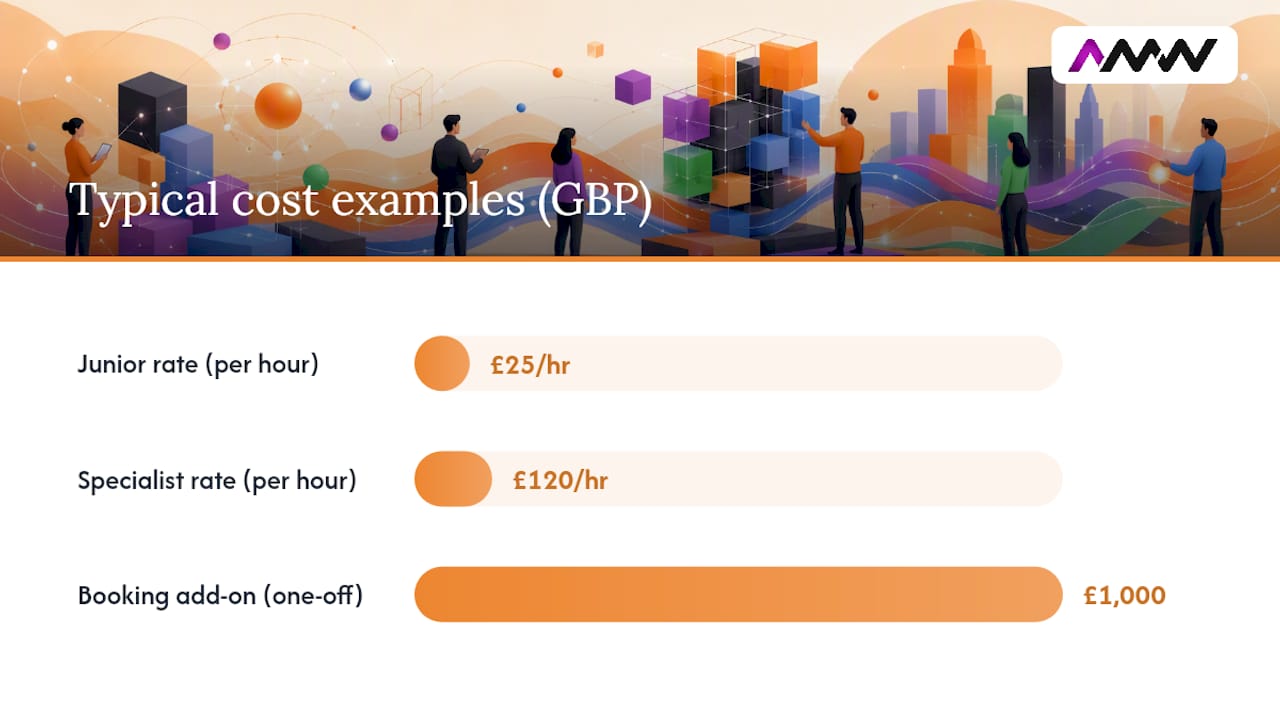
- Experience level: a junior freelancer might charge £25/hour; a specialist with a decade of e-commerce builds behind them can charge £120/hour or more.
- Template complexity: a site using one flexible template repeated across pages costs far less than one where every page is uniquely designed.
- Integrations: booking systems, membership portals, CRM connections, and payment gateways each add development time and ongoing licence costs.
- Content and imagery: who’s writing the copy and shooting the photos changes the quote significantly, as noted above.
- Accessibility and performance testing: proper WCAG compliance checks and page speed optimisation take real hours, not a five-minute plugin install.
- Turnaround speed: a rushed four-week deadline usually costs more than a relaxed ten-week one, because it forces the team to drop other work.
Location plays its part too. Providers based in London and the South East typically charge 15 to 30% more than equivalent providers elsewhere in the UK. Remote working has narrowed that gap, but it hasn’t closed it, mostly because London-based studios still carry higher office and staff costs that get baked into day rates.
Here’s a concrete example of how quickly a “simple” site stops being simple: add a booking system to a basic 8-page brochure site, and you’re often looking at an extra £500 to £1,500 on the build, plus a recurring monthly fee for the booking platform itself. Add membership functionality with gated content, and that figure can double.
Pro Tip: Ask every designer for a written breakdown of which features are “standard” and which are “custom development”. Vague line items like “custom functionality” hide a lot of extra hours.
Freelancer vs agency vs DIY: which should you choose?
This is the decision that actually determines your budget, more than any single feature request. Each route solves a different problem, and picking the wrong one for your situation is where most regret comes from.
Freelancers typically charge £25 to £120 per hour, with day rates commonly running £200 to £550. You get direct access to the person doing the work, often lower overheads, and more flexibility on scope changes. The trade-off is continuity risk: if your freelancer gets busy, ill, or moves on to other clients, support can slow to a crawl.
Agencies work on blended day rates that reflect a whole team, not one person, which is why their quotes for comparable projects often start higher. What you’re paying for is process: proper QA, project management, a handover document, and usually a support contract baked in from day one. For a look at how different providers structure their approach, comparing alternatives side by side can be useful before you commit.
DIY builders like Wix or Squarespace cost the least upfront but demand your own time, and they cap out fast the moment you need anything custom.
- Choose DIY if your budget is under £500 and your site is simple, a single-page presence or a basic portfolio.
- Choose a freelancer if you need custom design on a tighter budget and you’re comfortable managing the relationship directly.
- Choose an agency if you need reliability, a proper support structure after launch, or the project involves several moving parts (e-commerce, integrations, multi-language).
Whichever route you pick, ask for a staged, fixed-price quote with milestone deliverables. It’s the single best way to stop a freelance or agency project drifting into scope creep and unplanned invoices.
What are the ongoing and hidden costs after launch?
The build cost is only half the story. Every website carries running costs, and underestimating them is the most common budgeting mistake SME owners make.
Hosting alone varies significantly by tier: shared hosting runs £3 to £10 a month, managed WordPress hosting £10 to £30, and VPS hosting £15 to £60. Bundled builder platforms like Wix or Squarespace fold hosting into their subscription, typically £12 to £79 a month depending on plan.
- Domain renewal: usually £10, £20 a year, easy to forget until it lapses.
- Plugin and app licences: individually small, but they add up fast across a typical WordPress build.
- Security and backups: essential, not optional, particularly given how common security incidents are for UK businesses, per the Cyber Security Breaches Survey 2024.
- Cookie consent and compliance tools: often a small monthly fee, sometimes bundled into a maintenance retainer.
- Maintenance retainers: commonly £50 to £150 a month for updates, monitoring and small content changes.
A simple WordPress site’s first-year total (hosting, domain, basic plugins) typically runs £150 to £450, with ongoing costs of £80 to £300 a year after that. Over three years, builder platform subscriptions can total £693 to £1,377 depending on the plan and add-ons you accumulate along the way.
This is subscription creep in action: nobody sets out to pay for eight different tools, but a booking plugin here, an SEO add-on there, and a live chat widget somewhere else quietly turns a £15/month site into a £70/month one. Reviewing your active subscriptions every six months is the simplest way to catch it before it becomes a habit. For a deeper look at exactly what a fair monthly maintenance figure should cover, AMW Media’s breakdown of UK maintenance costs is worth reading before you sign anything.
How do you compare web design quotes properly?
Two quotes for “the same job” can differ by thousands, and the gap almost always comes down to what’s excluded rather than what’s included. Getting quotes onto the same footing takes a bit of structure.
A proper quote should specify:
- The exact number of pages and templates included.
- Whether copywriting and photography are included or extra.
- Which CMS or platform the site is built on, and who owns the login.
- The number of revision rounds included before extra charges apply.
- Whether the price includes basic SEO setup (meta tags, sitemap, analytics).
- What warranty or bug-fix period follows launch.
- Ongoing maintenance and support costs, quoted separately.
- Hosting arrangements, including who pays and who manages renewals.
- Payment structure and milestone schedule.
- What happens if the project runs over the agreed timeline.
Ask every designer or agency these questions directly, in writing, before you sign anything. It’s not awkward, it’s standard practice, and any professional worth hiring will expect it.
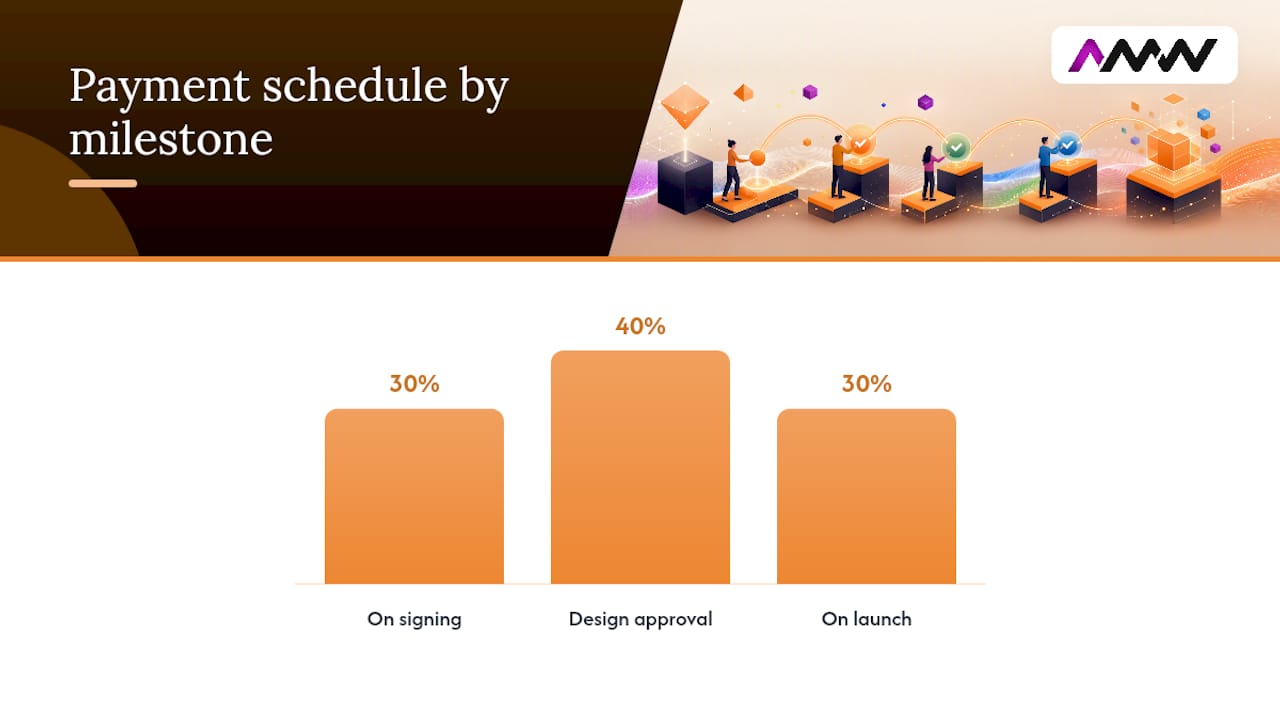
Structure payments in stages tied to milestones, for example 30% on signing, 40% at design approval, and 30% on launch. This protects both sides and gives you a natural checkpoint to review progress before committing more money.
Pro Tip: If a quote doesn’t mention what happens after launch, that’s the question to ask first. A cheap build with no support plan often costs more over two years than a slightly pricier one with maintenance included.
How long does a website project actually take?
Timelines vary more than people expect. A simple brochure site typically takes 2 to 4 weeks; an SME CMS build runs 4 to 8 weeks; e-commerce sites usually need 6 to 12 weeks; and custom or complex builds can run 3 to 6 months or longer.
- The single biggest delay cause is content: waiting on client copy and images stalls more projects than any technical issue.
- Third-party API integrations (payment gateways, booking systems) often take longer to configure than initial estimates suggest.
- Slow approval turnaround from your side adds weeks without anyone “doing” anything wrong.
Send content early, agree a fixed number of feedback rounds upfront, and appoint one decision-maker on your side to approve designs. It sounds obvious, but it’s the difference between a six-week launch and a four-month one.
Why trust this budgeting guide?
This guide draws on current UK market pricing data and AMW Media’s own experience delivering web design projects for SMEs across a range of industries, including local builds like the work delivered in High Wycombe. AMW Media holds partnerships with Google, Meta, Shopify, WordPress and Framer, and the team’s portfolio includes client case studies covering brochure sites, e-commerce builds and custom automation work. If you want the step-by-step version of how a project actually runs from brief to launch, AMW Media’s guide to the web design process covers it in more depth.
Which budget band actually fits your business goals?
If your site exists to generate leads, credibility matters more than feature count. A well-designed £2,000 to £4,000 brochure site with strong copy will usually outperform a £10,000 site stuffed with functionality nobody uses. If you’re selling online, the calculation flips: checkout speed, product presentation and payment reliability directly affect revenue, so the £3,000 to £10,000 e-commerce band is money spent on the business itself, not just marketing.
Either way, don’t spend the entire budget on launch day. Set aside a slice for conversion optimisation and content updates in the months after go-live, because a site that never changes after launch quietly loses relevance. And underfunding maintenance is the single most common regret SME owners raise a year in.
Amir
Get a Fixed, No-Surprises Quote for Your Website
Most of the guesswork in web design pricing disappears the moment you get a proper scoped quote instead of a ballpark figure over email. Custom websites for UK SMEs often come with a fixed staged-payment structure agreed upfront, so you know exactly what you’re paying at each milestone before work starts, not after.
Some digital agencies hold partnerships with Google, Meta, Shopify, WordPress and Framer, and work across brochure sites, e-commerce builds and more complex custom projects with automation where it helps. First contact typically involves a short discovery call to understand your goals, followed by a scoped proposal with a clear timeline and price, no pressure to sign on the spot. If SEO or ongoing content is part of your plan, it’s worth reading up on why SEO matters for small business growth before your first call, so you can ask the right questions about what’s included.
If you’re ready to turn a vague budget range into an actual number for your project, get in touch with AMW Media’s web design team for a proposal.
Sources
- How Much Do Freelance Web Designers Cost UK 2026
- Website Design Costs UK 2026: What You Should Pay
- The true cost of running a website in the UK
- Cyber Security Breaches Survey 2024
FAQ
How much should a full website design cost?
For most UK SMEs, a full professional website costs between £1,500 and £6,000, with e-commerce or custom builds ranging from £3,000 to £10,000 or more depending on complexity.
How much should I pay someone to design my website?
UK freelance designers typically charge £25 to £120 an hour, with a standard 5 to 10 page business site landing between £1,500 and £3,000 in total.
What is the average cost for a website designer?
Freelancer day rates commonly sit between £200 and £550, while agencies work on higher blended day rates that usually push project totals to £3,000 or more for comparable work.
Recommended
- Budget £50, £150 a Month: UK Website Maintenance Costs for SMEs
- Step by step web design for small businesses: a guide
- Types of web development services: a 2026 business guide
What you pay also depends on how much the site has to do: a brochure costs less than a site built to rank and convert. Our Milton Keynes web design page sets out what is included at each level.
Our free marketing audit looks at your site, your ads and your content, and comes back with a 30 day plan. No pitch deck.

Founded AMW Media in 2024 and runs strategy, paid media and the CRM builds. The reason everything here is in house and measured in revenue. Meet the team.