
 Black Steel Doors
 Woodstock Campers
 Phillips Joinery
An AI SEO strategy exists to make your content discoverable and citable by AI answer engines like Google’s AI Overviews, ChatGPT and Perplexity, not just rankable in a list of ten blue links. The two moves to make this week: check whether your key pages are technically eligible for AI crawlers, and rewrite your top-performing pages so they answer the question in the first two sentences. Everything else in this playbook builds on those two steps.
TL;DR:
- Ensuring AI crawlers can access your site is the top priority because blocked access prevents your content from being cited in AI answers.
- Rewriting high-traffic pages into answer-first formats and adding schema markup for FAQs and articles significantly increase AI citation chances.
- Monitoring citation rates through manual checks and dedicated tools provides measurable proof of AI visibility improvements.
- Starting with technical eligibility and content restructuring yields more impact than broader site overhauls, especially for top-ranking pages.
- Consistent fact-checking and human oversight are essential to prevent hallucinated claims and maintain trust as AI SEO efforts scale.
What is an AI SEO strategy and why does it matter now?
Search Engine Optimisation used to mean one thing: rank on page one of Google. An AI SEO strategy, sometimes called Answer Engine Optimisation (AEO) or Generative Engine Optimisation (GEO), aims at a different target. It’s the practice of structuring, formatting and technically preparing your content so that AI systems, whether that’s Google’s AI Overviews, ChatGPT Search, or Perplexity, pull it into their generated answers and cite you as the source.
The mechanics are different from traditional ranking. A conventional search engine indexes your page and decides where it sits in a results list. An AI answer engine does something closer to research: it retrieves several sources on a topic, synthesises them into a direct answer, and picks which ones to name as references. Your job shifts from “outrank the competition” to “be the source the AI trusts enough to quote.”
This matters because the volume of search that ends in a click is shrinking. Gartner has predicted that traditional search engine volume will fall as AI chatbots and virtual agents take over more queries directly. If fewer people are clicking through a results page because they’re getting their answer inside a chat window, your visibility has to move into that chat window too.
The reassuring part: you don’t throw away everything you know about SEO. Google’s own guidance on generative AI features is explicit that these systems rely on the same core indexing and quality signals as standard Search. Crawlability, site health, and useful, expert content remain the entry ticket. AI citation is a new layer on top of the old foundation, not a replacement for it.
What’s new is the premium on:
- Answer-first formatting that lets an AI system lift a clean, self-contained answer without editing it.
- Structured data that helps machines parse what a page is actually saying.
- Demonstrable expertise and originality, because AI systems increasingly favour sources that add something beyond a rehash of what’s already ranking.
- Technical access for AI-specific crawlers, which many sites block by default without realising it.
That last point catches out more sites than you’d expect, and it’s where the practical work starts.
Strategic framework: four pillars to organise your AI SEO work
Trying to “do AI SEO” as one undifferentiated task is how teams end up busy but not moving the needle. Split the work into four pillars, each with one outcome you’re accountable for.
Pillar 1: Technical eligibility. The outcome is simple: can AI crawlers reach, read and index your content at all? This covers robots.txt rules, canonical tags, sitemap health and structured data. It’s unglamorous, but it’s a hard gate. If GPTBot or PerplexityBot is blocked, nothing else in this list matters.
Pillar 2: Content format. The outcome is extractability. Even indexed, well-written content can get skipped over if the answer is buried in paragraph four behind three sentences of preamble. This pillar is about restructuring pages so the direct answer sits at the top of each section, with the supporting evidence underneath.
Pillar 3: Measurement. The outcome is proof. You need a way to know whether citation is actually happening, because Search Console conflates AI-driven and organic traffic and won’t tell you on its own. This pillar covers citation rate tracking, share-of-voice comparisons, and how you translate that into a client report that still makes sense when click volume dips.
Pillar 4: Governance. The outcome is trust. As you scale AI-assisted content production, you need editorial guardrails so nothing hallucinated, generic, or wrong gets published under your byline. This pillar is your human-in-the-loop process, your fact-checking step, and your rule for when a human writer overrides a generated draft.
Prioritise using a simple impact-times-effort filter, not intuition. A blocked crawler (Pillar 1) is high impact and low effort, so it goes first, always. Rewriting your entire content library into answer-first format (Pillar 2) is high impact but higher effort, so you sequence it by page value, starting with pages that already rank well but aren’t formatted for extraction. Building a full measurement dashboard (Pillar 3) is medium impact and medium effort, worth doing once you have something to measure. Governance (Pillar 4) is often treated as a nice-to-have, which is a mistake: it’s low effort to set up early and expensive to retrofit after a hallucinated claim gets published.
A rough majority of impact comes from fixing crawler access and reformatting your highest-traffic pages, which usually moves your citation visibility more than a full-site content overhaul. Get those two things right before you touch anything else.
Typical activities that sit under each pillar:
- Technical: audit robots.txt for AI crawler rules, fix canonical conflicts, submit updated sitemaps, add FAQPage and Article schema.
- Content: rewrite section openers to answer the implied question directly, mine “People Also Ask” data for subquery headings, add expert commentary that isn’t available elsewhere.
- Measurement: set up an AI citation tracker, log manual spot-checks across platforms weekly, build a simple citation-rate column into existing client reports.
- Governance: define a fact-check step before publishing AI-assisted drafts, require named expert review on any statistic, keep a changelog of AI-generated sections for accountability.
Technical foundations: indexability, AI crawlers and schema
Before any content rewrite, confirm your site can actually be read by the systems doing the citing. This is the gate everything else passes through.
Start with your robots.txt file. Most sites were configured years before AI crawlers existed, and many still block them by accident, or by an old blanket rule nobody’s revisited. Check explicitly for GPTBot (OpenAI), PerplexityBot and ClaudeBot (Anthropic). If these are disallowed, you’re invisible to the systems you’re trying to get cited by, regardless of how good your content is.
Next, check indexing health the same way you would for standard SEO, because Google’s guidance confirms that generative features draw from the same core index. Look for orphaned pages, conflicting canonical tags, and a sitemap that’s actually current rather than one nobody’s touched since a migration two years ago.
Then move to structured data. Not every schema type earns its keep here. The ones worth your time:
- Article schema on blog posts and guides, so machines understand the content type, author and publish date.
- FAQPage schema on any page with genuine question-and-answer content, which HubSpot’s playbook flags as one of the more reliable levers for earning AI overview citations.
- HowTo schema on step-by-step guides, particularly useful for process-heavy topics.
Sensible practice here: only mark up content that matches the schema type. Stuffing FAQPage schema onto a page with no real FAQ content is the kind of shortcut that Google’s quality systems are built to catch.
A quick four-step audit you can run this week:
- Pull your robots.txt and manually check for GPTBot, PerplexityBot and ClaudeBot allowances.
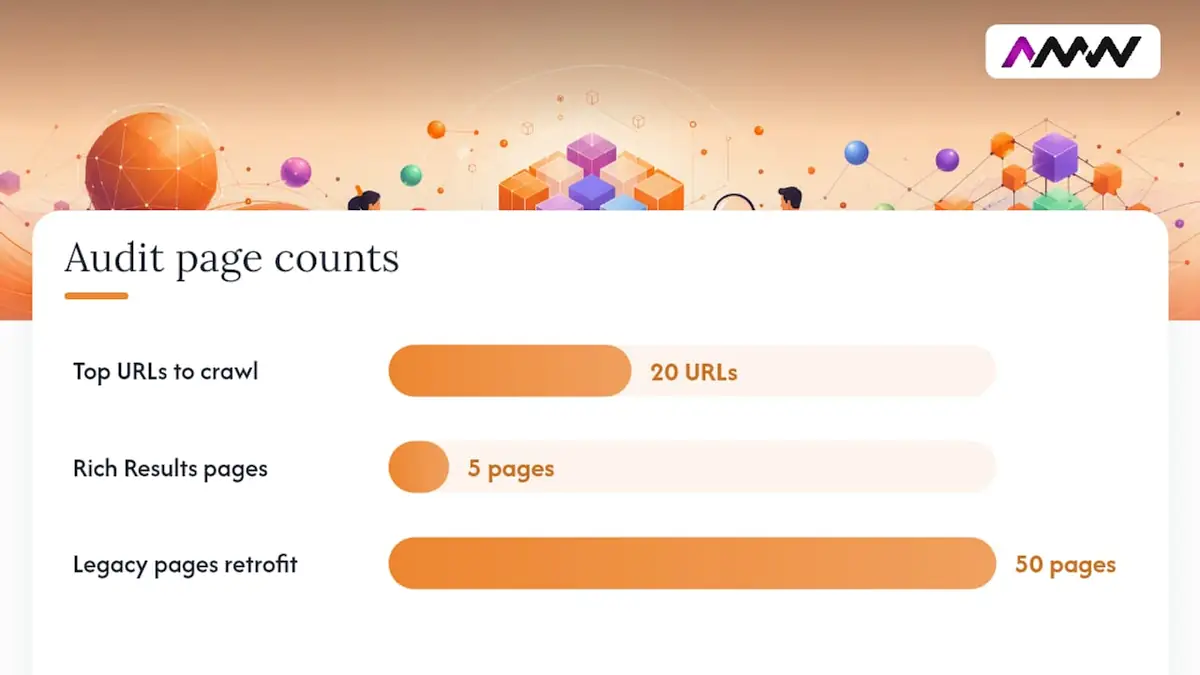
- Run your top 20 URLs by traffic through a crawler tool to confirm indexability and canonical consistency.
- Check schema validity using Google’s Rich Results Test on your five most valuable pages.
- Fix and resubmit your sitemap, then request re-indexing on any page you’ve changed.
Pro Tip: Agency playbooks like Amplefound’s checklist recommend structuring case studies and service pages as clean JSON-LD from the start, so your highest-value pages are the easiest ones for an AI system to parse correctly. Retrofitting schema onto fifty legacy pages is a slog; building it in on new pages costs you almost nothing.
Content format and production: write for extraction, not just for readers
The single biggest formatting change that helps AI citation: answer the question before you explain it. Structure each section as heading (phrased as the query), then a direct one or two sentence answer, then the supporting evidence, data, or nuance underneath. An AI system scanning your page for something to quote will grab that opening answer far more readily than a paragraph that spends three sentences setting the scene first.
This is echoed across the practitioner guidance worth following. HubSpot’s playbook on optimising for AI overviews recommends this exact answer-first pattern paired with question-led headings. Seven Solvers goes further, arguing that a shared foundation of answer-first content, schema and demonstrated expertise covers most of what any AI platform needs, with only minor platform-specific tweaks needed on top.
Question mining is where you decide which headings to write in the first place. Three sources worth building into your process:
- People Also Ask (PAA) data from the SERP itself, which shows you the actual phrasing searchers use.
- AlsoAsked, which maps question clusters a layer deeper than the standard PAA box.
- Manual platform testing, meaning you actually type your target query into ChatGPT, Perplexity and Google’s AI Overviews and see what gets cited back. This tells you what the current competitive answer looks like, and where yours could be sharper.
A practical guide from on optimising content for AI search covers similar territory: match your heading structure to how people actually ask the question, not how you’d naturally title a blog section.
Here’s the part teams skip because it’s slower: human-in-the-loop controls. Generative tools are excellent at producing a fluent, plausible-sounding paragraph. They’re not reliably good at knowing when a fact is wrong. If your production line is “prompt, generate, publish”, you will eventually publish a hallucinated statistic under your brand’s name, and that’s a much bigger problem than a missed citation.
Build in three checkpoints instead:
- Every statistic gets traced to a real, checkable source before publication, not paraphrased from memory.
- Expert commentary, ideally an actual named person with real credentials, gets added to differentiate the piece from ten other AI-assisted articles saying the same thing.
- A human editor reads the final draft specifically hunting for generic filler and unverified claims, not just typos.
The pages that win citation over time tend to be the ones with something an AI model can’t invent on its own: original data, a named practitioner’s genuine opinion, or a case study nobody else has access to. Commodity explainer content, however well formatted, is competing with a thousand near-identical versions of itself.
Pro Tip: If two of your competitors’ pages already show up as citations for a query, don’t just match their format. Ask what they’re missing, usually a concrete example, a number, or an opinion, and lead with exactly that.
Measurement and reporting: proving AI SEO is working
Standard analytics won’t tell you this story on their own. Google Search Console currently bundles AI-driven impressions in with regular organic search, which means a rising AI Overview presence and a falling click-through rate can look identical to a ranking drop if you’re only watching the usual dashboard. That distinction is worth building into how you report from month one, because it’s the conversation every client eventually has when their clicks dip.
The metric to build around is citation rate: the percentage of your target queries where your brand or content gets named as a source in an AI-generated answer. AgencyAnalytics frames this as a forward-looking KPI, comparable to share of voice, and it’s a useful one because it gives you something to point to when organic clicks alone don’t tell the full story.
Practical ways to track it:
- Manual spot-checks: run your top 15 to 20 target queries through Google’s AI Overviews, ChatGPT and Perplexity monthly, and log whether your domain appears and how it’s described.
- Dedicated AEO tracking tools that automate this checking across platforms at scale, useful once you’re managing this for more than a handful of pages.
- AI referral traffic, filtered separately from standard organic in your analytics platform where the tool allows it, to catch genuine downstream visits from an AI citation.
- Downstream conversion tracking on any traffic you can attribute to an AI referral source, so citation isn’t treated as a vanity number disconnected from business outcomes.
For client reporting, a monthly cadence works well: citation rate this month versus last, a shortlist of newly-earned citations with screenshots, organic click trend for context, and any technical fixes completed. Agencies making this shift, per AgencyAnalytics’ research, are already adapting their reporting templates to include AI visibility rather than treating it as a footnote. If you’re not doing this yet, your competitors’ account managers probably are.
Tactical workflows and team roles: running an AI SEO campaign
Strategy without a schedule stays theoretical. Here’s a realistic eight to ten week campaign structure you can adapt to a single client or an internal push.
- Weeks 1 to 2, discovery and audit. Run the technical audit from earlier in this piece: crawler access, indexing health, schema coverage. Identify your top 15 to 20 target queries and check current AI citation status for each.
- Weeks 2 to 3, question mapping. Mine PAA, AlsoAsked and manual platform tests to build a heading map for each priority page, matched to real subqueries.
- Weeks 3 to 5, content rewrite. Restructure priority pages into answer-first format, add expert commentary and original data points, and fix schema markup page by page.
- Weeks 5 to 6, technical fixes. Resolve any robots.txt, canonical or sitemap issues found in discovery; resubmit for indexing.
- Weeks 6 to 8, QA and publish. Run every rewritten page through fact-checking and editorial review before it goes live.
- Weeks 8 to 10, measurement baseline. Start tracking citation rate weekly, log first results, and build the reporting template for ongoing cadence.
Roles matter here because AI SEO work gets sloppy fast when everyone assumes someone else is doing the fact-checking. A workable split: a researcher handles question mining and source-checking; a writer drafts the answer-first content, using AI drafting tools like those Salesforce describes for keyword research and on-page optimisation as an assist, not a replacement; a technical SEO specialist owns crawler access, schema and indexing; an editor runs final QA against hallucination and generic filler; and an analyst owns citation tracking and the client report.
Build three QA checkpoints into every page before publish: does the schema payload validate, does the opening of each section actually answer its heading in one or two sentences, and has the page been tested against at least one AI platform to see whether it’s being cited or whether a competitor is winning that spot instead. Skipping the third check is the most common shortcut, and it’s the one that tells you whether any of this worked.
Implementation checklist: quick wins to run this month
Ordered roughly by impact against effort, here’s where to start.
- Audit robots.txt for GPTBot, PerplexityBot and ClaudeBot access. Owner: technical SEO. Time: half a day. Success signal: crawlers confirmed unblocked.
- Fix any broken canonical tags on your top 20 pages. Owner: technical SEO. Time: 1 day.
- Resubmit a cleaned sitemap. Owner: technical SEO. Time: 2 hours.
- Rewrite the opening of your five highest-traffic pages into answer-first format. Owner: writer/editor. Time: 2 to 3 days.
- Add FAQPage schema to genuine Q&A content. Owner: technical SEO. Time: 1 day per page.
- Run manual AI citation checks on your top 15 queries to establish a baseline. Owner: analyst. Time: half a day.
- Mine PAA and AlsoAsked for your next content batch’s heading structure. Owner: researcher. Time: 1 day.
- Add one piece of original data or named expert commentary to your top three pages. Owner: writer. Time: varies.
- Set up a monthly citation-rate tracking sheet or tool. Owner: analyst. Time: half a day setup.
- Build a fact-check step into your existing content workflow. Owner: editor. Time: process change, ongoing.
- Add Article schema across your blog if missing. Owner: technical SEO. Time: 1 to 2 days.
- Brief the wider team on the new citation-rate KPI so reporting language is consistent. Owner: account lead. Time: 1 meeting.
| Priority tier | Actions | Typical time to complete |
|---|---|---|
| Quick wins | Robots.txt audit, canonical fixes, sitemap resubmission | Within a week |
| Mid-term | Answer-first rewrites, schema rollout, baseline citation check | Two to four weeks |
| Longer-term | Ongoing citation tracking, fact-check workflow, team KPI alignment | Ongoing, review monthly |
AMW Media’s perspective and the evidence behind it
This playbook comes from AMW Media’s own work sitting across SEO, content production and technical builds for SME and growth-stage clients. That combination matters here specifically: AI SEO sits at the junction of technical access, editorial quality and measurement, and treating any one of those in isolation is how most teams stall.
AMW Media holds partnerships including Google, Meta, Shopify, WordPress and Framer, which shapes how the team approaches the technical side of this work, schema, indexing, crawler access, alongside the content and design work needed to make a page worth citing.
The pattern that shows up repeatedly in this kind of work: clients with strong existing SEO foundations see faster movement on AI citation once content gets reformatted into answer-first sections, because the technical trust signals are already in place. Clients starting from a weaker technical base need that groundwork done first, robots.txt, schema, indexing health, before content changes have anywhere to land. That sequencing, technical first, format second, measurement running throughout, is the throughline of this entire playbook.
Why most AI SEO advice gets the order wrong
Most of what gets published on this topic front-loads content tactics: write answer-first paragraphs, add schema, chase question headings. All correct, but the sequencing is backwards. If GPTBot is blocked in your robots.txt, a beautifully formatted answer-first page achieves nothing, because the model never sees it. Technical eligibility isn’t a checkbox alongside content strategy; it’s the gate content strategy has to pass through first.
The other place conventional advice falls short is measurement. Plenty of guides mention tracking AI visibility as an afterthought, one line at the end of a long list. In practice, citation rate is the only number that lets you have an honest conversation with a client or a boss when organic clicks dip but visibility hasn’t actually fallen. Skip that measurement layer and you’re flying blind on the exact metric that matters most right now.
If you take one thing from this playbook, make it this: audit your crawler access before you touch a single sentence of content. Everything downstream depends on it.
Amir
How AMW Media can help you get cited, not just crawled
If you’ve read this far and realised you don’t actually know whether GPTBot can reach your site, that’s the starting point, and it’s exactly where AMW Media’s SEO work begins for new clients: a proper audit before any content gets touched.
AMW Media’s SEO services cover the full stack this article walks through: technical audits, schema implementation, answer-first content rewrites, and ongoing citation-rate tracking so you can actually show what AI visibility is doing month to month. If the audit turns up page experience or structural issues that content changes alone can’t fix, the team’s web design work sits alongside the SEO engagement rather than as a separate pitch. And once your top pages are earning citations, social media management helps get that content in front of people directly, rather than relying on AI answer engines alone to do the distribution.
The sensible next step is a discovery audit: a straight look at your crawler access, indexing health and current AI citation status before anything gets rewritten. Get in touch with AMW Media to book one.
Sources
- Google Search Central: guide to optimising for generative AI features on Google Search
- How to optimise for AI overviews (AIOs): A complete 2026 playbook, HubSpot
- AgencyAnalytics: how AI search is changing SEO for agencies in 2026
- Gartner press release on search volume impact from AI chatbots
- Seven Solvers: how to optimise for Google AI Overviews, ChatGPT Search and Perplexity (2026)
FAQ
Can you do SEO with AI?
Yes. AI tools can assist with keyword research, content drafts and on-page optimisation, but a human still needs to fact-check, edit and validate anything before it publishes under your brand.
What is the 80/20 rule in SEO for AI citation?
Fixing crawler access and reformatting your highest-traffic pages into answer-first content typically moves AI citation visibility more than a full content overhaul, so start there before broader work.
Can ChatGPT do SEO?
ChatGPT can help draft content, suggest headings and simulate how a query might be answered, but it can’t audit your technical setup or guarantee citation. Treat it as one input into a broader AI SEO strategy, not the strategy itself.
What is AI SEO called now?
It’s most commonly called Answer Engine Optimisation (AEO) or Generative Engine Optimisation (GEO), though “AI SEO” remains the term most people search for. All three describe the same shift towards optimising for citation in AI-generated answers rather than ranking position alone.
AI answers behave differently for local queries, where the Business Profile and review signals carry more weight than the page copy. We cover that split on our Milton Keynes SEO page.
Recommended
- SEO in marketing: strategies for long-term growth
- SEO trends in 2026: what UK marketers need to know
- Master your SEO strategy: guide for effective brand growth
- The role of AI in content creation for ambitious brands
Our SEO manager runs the technical checks by hand, looks at who is beating you, and sends back the order to fix it in. Free, and you keep it either way.

Technical, on page and local SEO. Turns the numbers in Search Console into pages that rank and enquiries that convert. Meet the team.