
 Black Steel Doors
 Woodstock Campers
 Phillips Joinery
Ambitious brands often invest heavily in digital marketing yet struggle to see meaningful SEO results. Without a clear, structured approach, even well-intentioned efforts can miss the mark, leaving websites buried in search rankings whilst competitors thrive. This guide walks you through a proven framework for building and executing an SEO strategy that drives measurable growth, from initial audits and goal setting through implementation and ongoing optimisation, ensuring your brand achieves the online visibility it deserves.
Key Takeaways
| Point | Details |
|---|---|
| Clear goals and audits | Define specific business objectives and audit current site health to guide every SEO decision. |
| Integrate three core elements | Technical optimisation, on page signals, and content marketing must work together to drive visibility and engagement. |
| SMART goals with targets | Define SMART goals tied to business outcomes and track progress with concrete examples such as increases in product page traffic by a set percentage within a defined timeframe. |
| Baseline metrics and tools | Document current organic traffic, top performing pages and conversion rates using tools like Google Search Console, SEMrush, Ahrefs and Screaming Frog to establish ROI. |
Understanding the SEO challenge: why strategies fail and how to succeed
Many businesses launch SEO initiatives with enthusiasm but quickly hit roadblocks. SEO strategies fail due to lack of clear goals and poor auditing of current site health, leaving teams guessing rather than executing with purpose. Without understanding your site’s existing technical issues, content gaps, and competitive position, you’re essentially building on unstable ground.
Keyword selection represents another common pitfall. Chasing high-volume terms without considering business alignment wastes effort on traffic that never converts. A visitor searching for free information behaves differently from one ready to purchase, yet many strategies treat all keywords equally. The most effective approaches balance search volume with commercial intent and relevance to your actual offerings.
Successful SEO requires integrating three core elements. Technical optimisation ensures search engines can crawl and index your site efficiently. On-page elements signal content relevance and quality. Content marketing attracts links and engagement. When these work in isolation, results suffer. A technically perfect site with thin content won’t rank. Brilliant content on a broken site won’t get indexed.
Your initial preparation phase should include comprehensive site analysis covering page speed, mobile responsiveness, crawl errors, and existing content performance. Simultaneously, define specific business objectives your SEO efforts will support, whether that’s lead generation, ecommerce sales, or brand awareness. This foundation prevents the scattered, reactive approach that characterises failed strategies.
Pro Tip: Document your site’s current organic traffic, top-performing pages, and conversion rates before making changes. This baseline proves invaluable when demonstrating ROI and identifying which tactics deliver results versus those that need adjustment.
Preparing your SEO strategy: essential tools and audits
Effective preparation requires the right technology stack. Google Search Console provides free insights into how Google views your site, revealing indexing issues, mobile usability problems, and search query data. Pair this with tools like SEMrush or Ahrefs for competitor analysis and keyword research. Screaming Frog excels at technical audits, crawling your site to identify broken links, duplicate content, and structural issues.

| Tool | Primary use | Pricing | Best for |
|---|---|---|---|
| Google Search Console | Performance monitoring, indexing | Free | Essential baseline data |
| SEMrush | Keyword research, competitor analysis | From £100/month | Comprehensive SEO suite |
| Ahrefs | Backlink analysis, content research | From £90/month | Link-building focus |
| Screaming Frog | Technical site audits | Free up to 500 URLs | Identifying technical issues |
| Google Analytics 4 | User behaviour, conversion tracking | Free | Understanding visitor actions |
Your site audit should examine technical health first. Check for HTTPS implementation, XML sitemap accuracy, robots.txt configuration, and canonical tag usage. Evaluate page speed using Google PageSpeed Insights, targeting scores above 90 for mobile. Review site architecture to ensure important pages sit no more than three clicks from the homepage.
Content evaluation follows technical assessment. Identify thin pages with under 300 words, duplicate content across multiple URLs, and pages with high bounce rates indicating poor user satisfaction. Effective SEO preparation relies on specialised audit tools to map out improvements systematically rather than guessing which changes matter most.
Defining SMART goals transforms vague ambitions into actionable targets. Rather than “improve rankings,” specify “increase organic traffic to product pages by 40% within six months” or “achieve first-page rankings for five commercial keywords by Q3.” Each goal should tie directly to business outcomes like revenue, leads, or market share.
Use audit findings to prioritise improvements. Quick wins like fixing broken links or optimising meta descriptions build momentum. Larger projects like site restructuring or comprehensive content creation require phased implementation. Your strategic plan should sequence activities logically, addressing technical barriers before investing heavily in content that might not get indexed properly.
Pro Tip: Create a spreadsheet tracking all identified issues with columns for priority level, estimated effort, responsible party, and completion date. This transforms overwhelming audit reports into manageable action plans whilst ensuring nothing falls through the cracks.
Executing your SEO strategy: step-by-step optimisation tactics
Keyword research forms the foundation of effective execution. Start with seed keywords representing your core offerings, then expand using tools to identify related terms, questions, and long-tail variations. Analyse search intent behind each keyword. Informational queries need educational content. Commercial investigation terms require comparison guides. Transactional searches demand clear product or service pages.
- Map keywords to existing pages or identify content gaps requiring new pages
- Prioritise keywords balancing search volume, competition, and business relevance
- Create a content calendar scheduling keyword-focused content creation over coming months
- Develop topic clusters with pillar pages covering broad subjects and cluster content addressing specific subtopics
- Ensure internal linking connects related content, distributing authority and guiding users through your site
On-page optimisation ensures each page communicates its purpose clearly to search engines and users. Title tags should include target keywords within the first 60 characters whilst remaining compelling. Meta descriptions, whilst not ranking factors, influence click-through rates when written persuasively. Header tags (H1, H2, H3) structure content logically, incorporating keywords naturally without forced repetition.
| SEO tactic | Primary benefit | Implementation complexity | Expected timeline |
|---|---|---|---|
| Technical fixes | Improved crawling and indexing | Medium | 2-4 weeks |
| Keyword optimisation | Better relevance signals | Low | 1-2 weeks |
| Content creation | Attracts links and traffic | High | Ongoing |
| Link building | Increased domain authority | High | 3-6 months |
| User experience improvements | Lower bounce rates, better engagement | Medium | 4-8 weeks |
Structured content marketing and on-page optimisation improve search rankings by delivering genuine value that users want to engage with and share. Focus content development on answering real questions your audience asks. Use tools like AnswerThePublic or analyse “People Also Ask” boxes in Google results to identify common queries.
Quality trumps quantity in content creation. One comprehensive, well-researched guide outperforms ten shallow articles. Aim for depth that establishes authority, incorporating original research, case studies, or unique perspectives rather than rehashing existing information. Include visual elements like charts, diagrams, or videos to enhance engagement and time on page.
Link building remains crucial despite algorithm evolution. Earn links through creating link-worthy content like original research, comprehensive guides, or useful tools. Reach out to relevant websites highlighting how your content adds value to their audience. Guest posting on reputable sites in your industry builds both links and brand visibility, though quality matters far more than volume.
Pro Tip: Before creating new content, search your target keyword and analyse the top 10 results. Identify common elements they share, gaps you can fill, and opportunities to provide superior depth or a fresh angle. This competitive intelligence ensures your content stands out rather than simply adding to the noise.
Monitoring, measuring, and refining your SEO strategy
Tracking the right metrics separates successful strategies from vanity exercises. Organic traffic growth indicates increasing visibility, but segment this by landing page and traffic source to understand which efforts drive results. Keyword rankings show progress towards specific targets, though focus on movements across your entire keyword portfolio rather than obsessing over individual positions.
Conversion rate from organic traffic reveals whether you’re attracting the right visitors. High traffic with low conversions suggests keyword targeting misalignment or landing page issues. Monitor bounce rate and time on page as engagement signals. Pages with high bounce rates may need content improvements or better matching to search intent.
- Track organic traffic trends monthly, comparing year-over-year to account for seasonality
- Monitor Core Web Vitals scores as Google increasingly weighs user experience in rankings
- Analyse click-through rates from search results to identify opportunities for title and description optimisation
- Review backlink profile growth and quality, watching for toxic links requiring disavowal
- Measure goal completions and revenue attributed to organic search in Google Analytics
Google Analytics 4 and Search Console provide essential data, but interpret metrics in context. A ranking drop might reflect algorithm updates affecting all sites in your niche rather than problems with your strategy. Conversely, traffic increases during seasonal peaks shouldn’t mask underlying issues if growth rates lag behind previous years.
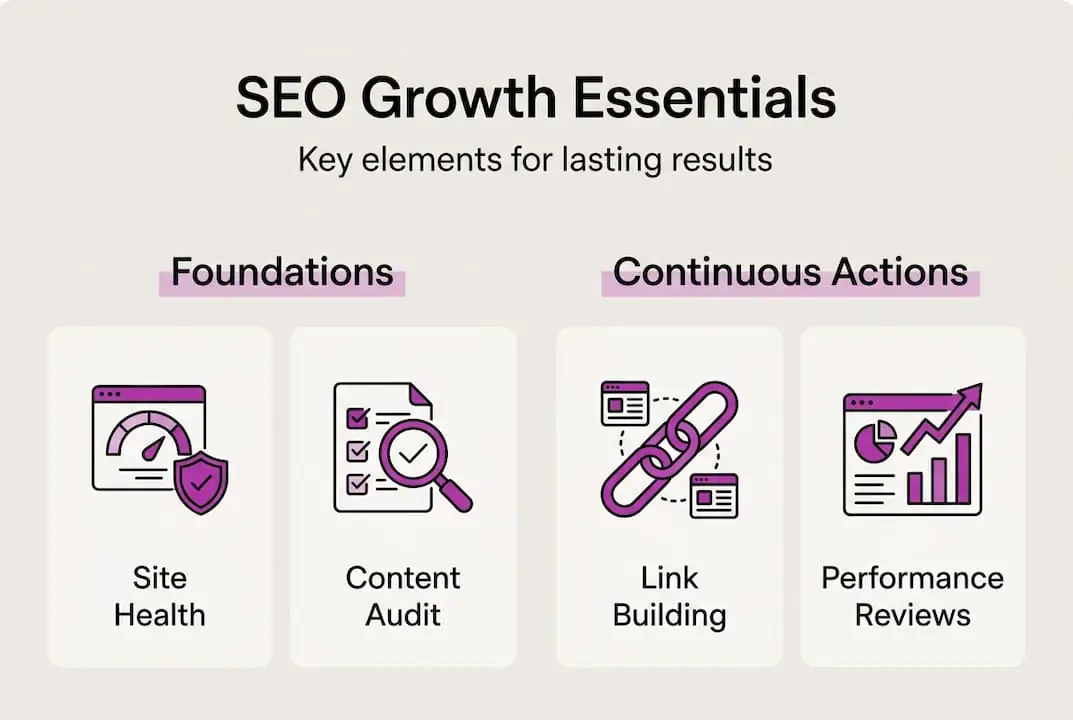
Regular performance analysis and swift adjustments sustain SEO growth by identifying what works and doubling down whilst cutting ineffective tactics. Common monitoring pitfalls include ignoring user behaviour signals in favour of rankings alone, failing to segment data by device type or geography, and making changes too frequently without allowing time to assess impact.
Refine your strategy based on evidence rather than assumptions. If certain content types consistently attract links and engagement, produce more. When technical issues resurface, investigate root causes rather than applying temporary fixes. Algorithm updates may require pivoting keyword focus or content approach, but core principles of quality and relevance remain constant.
Establish a review cadence matching your resources and market dynamics. Monthly reviews suit most businesses, examining traffic trends, ranking movements, and conversion performance. Quarterly deep dives should assess strategic direction, competitive landscape shifts, and whether SEO efforts align with evolving business priorities. Annual planning sessions set objectives for the year ahead based on accumulated insights.
Pro Tip: Create a simple dashboard in Google Data Studio or Looker Studio connecting Search Console and Analytics data. Visualising key metrics in one place makes patterns obvious and streamlines reporting to stakeholders who need results summaries rather than raw data.
Open up expert digital marketing support for your SEO strategy
Building and executing an effective SEO strategy demands expertise across technical, creative, and analytical disciplines. Whilst this guide provides a solid framework, partnering with specialists accelerates results and avoids costly mistakes.
AMW Media combines strategic thinking with practical execution to help ambitious brands achieve measurable online growth. Our SEO services and packages are matched to your specific goals, whether you’re launching a new site, recovering from penalties, or scaling an established presence. We integrate SEO with broader digital marketing efforts including content production, social media, and PPC for cohesive strategies that amplify results across channels.
For brands in specific sectors, our industry expertise ensures strategies align with market dynamics and customer behaviour patterns. Explore our retail and ecommerce marketing solutions designed for competitive online selling environments. London businesses face a market that is more expensive and more crowded than anywhere else in the country, and we work with them as their digital marketing agency London partner. Let’s discuss how we can elevate your online presence and drive the growth your brand deserves.
Frequently asked questions
How can I define clear SEO goals for my brand?
Set specific, measurable, achievable, relevant, and time-bound (SMART) goals that connect directly to business outcomes rather than vanity metrics. For example, target “increase organic leads by 35% within six months” rather than vague aims like “improve SEO.” Align goals with your target audience needs and commercial priorities, ensuring SEO efforts support broader marketing and revenue objectives. Review goals quarterly using performance data to adjust targets as market conditions and business priorities evolve. Working with experienced SEO services and packages providers helps ensure goals remain realistic yet ambitious.
What tools are essential for an effective SEO audit?
Essential tools include Google Search Console for indexing and performance insights, SEMrush or Ahrefs for keyword and competitor research, and Screaming Frog for comprehensive technical crawls identifying structural issues. Google Analytics 4 tracks user behaviour and conversions, whilst PageSpeed Insights reveals performance bottlenecks affecting rankings and user experience. Select tools based on your audit scope, budget constraints, and specific needs, starting with free options like Search Console before investing in premium platforms. Many agencies provide access to enterprise tools as part of service packages, eliminating the need for individual subscriptions. Quality content creation for brand growth relies on insights these tools provide.
How often should I review and update my SEO strategy?
Review your SEO strategy quarterly as a baseline, with additional reviews following major algorithm updates that significantly impact rankings or traffic. Monthly performance monitoring identifies tactical adjustments needed for individual campaigns or pages, whilst quarterly reviews assess strategic direction and resource allocation. Use performance data including traffic trends, conversion rates, and competitive movements to inform updates rather than making changes arbitrarily. Annual planning sessions should set overarching objectives and budget allocation for the year ahead based on accumulated insights and business growth plans.
Can content marketing improve SEO results?
Quality content marketing significantly improves SEO by attracting organic backlinks, improving keyword rankings through comprehensive topic coverage, and increasing user engagement signals like time on page and return visits. Search engines reward sites that consistently publish valuable, original content addressing user needs and questions. Content also provides opportunities to target long-tail keywords and capture traffic across the customer journey from awareness through to conversion. Consistent content creation for brand growth builds topical authority, positioning your brand as an industry leader whilst supporting broader SEO objectives through natural keyword integration and link attraction.
Recommended
- Why invest in content creation for competitive brand growth
- Harness social media in branding for growth in 2026
- SEO Services & Packages London | AMW Media | AMW Media
- Why use agency services to grow your brand in 2026
Our SEO manager runs the technical checks by hand, looks at who is beating you, and sends back the order to fix it in. Free, and you keep it either way.

Leads the WordPress, Shopify and custom builds, and the integrations that connect them to your CRM. Fast, accessible and yours to keep. Meet the team.