
 Black Steel Doors
 Woodstock Campers
 Phillips Joinery
In the UK, expect a managed social retainer to start around £500 to £1,200 for a single channel and rise to £1,000 to £3,000+ for video-led, multi-channel packages. Community management typically adds around £300 to £900 a month for weekday cover. The biggest swing factor is video production time, followed closely by how many hours of community replies you need. Pick a budget band first, then ask agencies to quote against that scope.
TL;DR:
- Video drives the premium: TikTok management runs about £1,000 to £2,500 monthly, while Instagram or Facebook often costs £500 to £1,500.
- Ten hours of weekday community cover typically costs £300 to £800 monthly; evening or weekend coverage costs more, while saved replies can limit hours.
- Paid ad management, influencer fees, and studio quality shoots are usually extra; ask whether tools, licensing, post boosting, and crisis response are included.
- Most retainers have a minimum term of three months and require 30 days’ notice, or 60 days for larger accounts; check automatic renewal terms.
Table of Contents
- Channel-by-channel costs: TikTok, Instagram, Facebook, LinkedIn and X
- Community management: turning hours into a monthly cost
- How agencies and freelancers actually charge for this
- What actually moves the price up or down
- Sample budgets for UK small and medium businesses
- Why this guidance holds up, and a compliance checklist to budget for
- Typical contract lengths and notice periods
- Costs beyond the retainer that catch people out
- When payments are due and what triggers them
- In-house versus agency versus freelancer: what costs more
- Why prices vary by UK region
- When outsourcing social makes the most sense
- How we can help with your social media budget
- FAQ
- Sources
Channel-by-channel costs: TikTok, Instagram, Facebook, LinkedIn and X
Price depends heavily on which platform you want managed, because some channels demand far more production time than others. These are illustrative bands rather than fixed quotes, since every agency scopes things slightly differently:
- TikTok: roughly £1,000 to £2,500 a month, reflecting the filming, editing and trend-chasing that short-form video demands.
- Instagram or Facebook (managed retainer): roughly £500 to £1,500 a month, covering a mix of static posts, Stories and some Reels.
- LinkedIn: roughly £600 to £1,500 a month, often priced higher per post because B2B content needs more research and a more polished tone.
- X or Threads: usually the cheapest single channel, since posting is quicker and production needs are lighter.
Video is the main reason TikTok and Reels-heavy packages cost more than static-only Instagram or X management. A single 30-second video can take several hours to shoot, edit, caption and then repurpose into three or four formats for different platforms, and that time has to be priced somewhere.
A standard retainer usually includes strategy and a content calendar, content creation, scheduled posting, basic community replies and a monthly report. It usually does not include paid ad spend management, influencer fees or studio-quality shoots, which agencies normally quote separately because they involve different skills and, often, different people on the team.
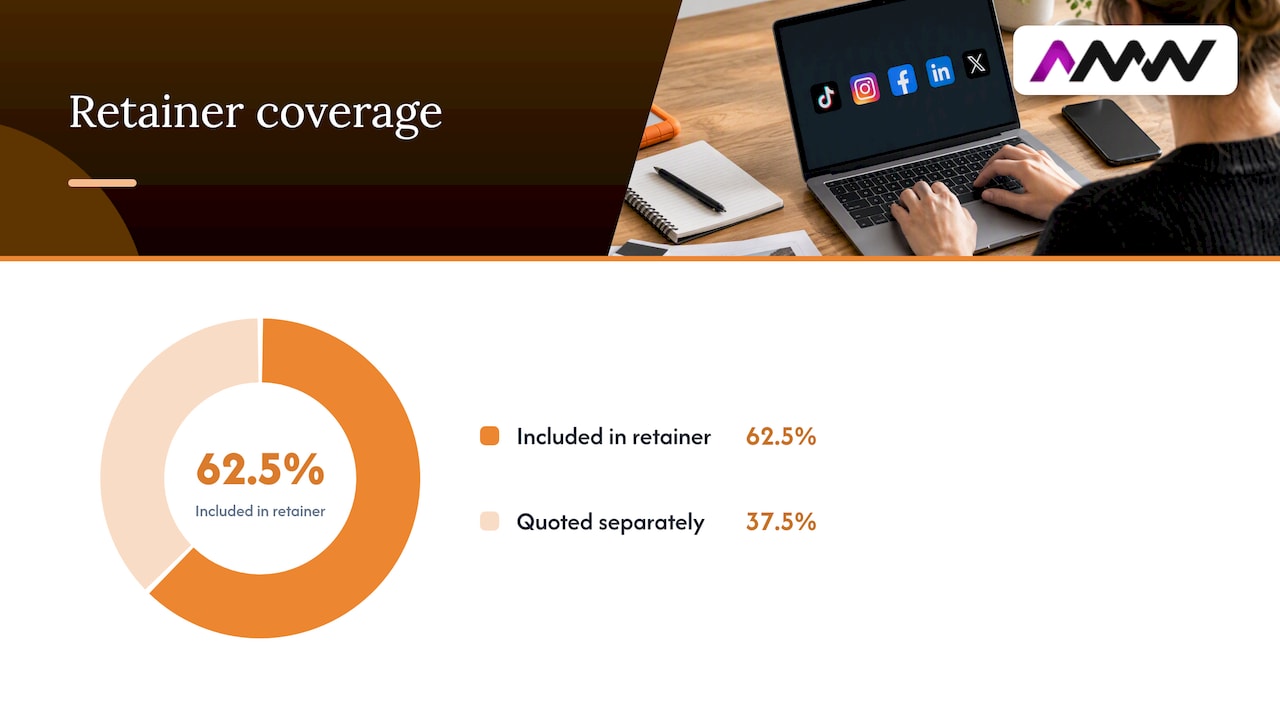
If you want someone managing your ad account rather than just organic posts, expect that to be billed on top, either as a flat monthly fee or as a percentage of ad spend. It is one of the most common places where a seemingly affordable retainer quietly grows once paid social enters the picture.
Community management: turning hours into a monthly cost
Community management, meaning replies, DMs and comment moderation, is usually priced by the hour and then rolled into a monthly figure. A simple way to think about it: 10 hours a month of weekday cover typically lands somewhere between £300 and £800, depending on the seniority of the person replying and how fast you want responses turned around.
- Weekday-only cover usually runs to 7 to 15 hours a month and sits at the lower end of that range.
- Expanded cover, including evenings and weekends, adds a noticeable premium because it often means a second person or an out-of-hours allowance.
- Saved replies and escalation rules (a clear list of what the community team can answer directly versus what gets passed to you) keep hours down, because nobody is drafting a fresh response to the same question five times a day.
- Bundling community management into a content retainer is usually cheaper than buying it separately, since the same team is already looking at the account daily. Buy it as a standalone add-on only if your content is handled in-house and you just need someone watching the inbox.
How agencies and freelancers actually charge for this
Most UK providers use one of four models, and the right one depends on how much control you want over scope month to month:
- Monthly retainer: a fixed fee covering agreed deliverables, usually with a three-month minimum term so both sides have time to see results before reviewing.
- Hourly or day rate: better for one-off projects or when you only need occasional support, since you are not paying for a fixed scope you might not use.
- Per-post or per-video pricing: common for high-production video work, where each asset has a clear, separately costed production process.
- Campaign or project fees: a flat fee for a defined launch, seasonal push or short-term activity, agreed upfront rather than billed monthly.
Retainers suit businesses that want consistent, ongoing output. Hourly and per-post pricing suit businesses with occasional or highly variable needs.
What actually moves the price up or down
A few levers do most of the work when it comes to your final bill:
- Creative complexity: templated graphics cost far less than bespoke video, which involves filming, editing, grading and captioning.
- Posting frequency and platform count: three platforms posting daily costs considerably more than one platform posting three times a week, simply through the extra hours involved.
- Paid social management: usually billed separately, either flat fee or a percentage of spend, because it needs different skills from organic content.
- Approval rounds and rapid-response needs: every extra review cycle or urgent out-of-hours request adds time that someone has to be paid for.
Pro Tip: Shoot once, cut many ways. A single filming session can be repurposed into a TikTok, a Reel, a LinkedIn clip and a handful of static quote graphics, which keeps your production cost down without cutting your output.
Sample budgets for UK small and medium businesses
Here is roughly what different budget bands tend to buy, based on typical UK agency scoping:
- Starter package, around £500 to £1,200 a month: one channel, four posts a week, basic community replies and a monthly report. Good for businesses testing whether social is worth the investment.
- Growing brand package, around £1,200 to £2,500 a month: two channels, a mix of video and static content, weekly reporting and modest community cover.
- Established package, £2,500 a month and up: multiple channels, regular video production, paid social management and dedicated community hours.
- Freelance day-rate benchmark: contractor rate data for related marketing roles suggests median hourly rates around £42.50 and median day rates around £525 in comparable categories, though recent social media manager contract listings are sparse, so treat these as a rough guide rather than a fixed figure. To turn a day rate into a monthly cost, multiply by the number of days you actually need rather than assuming full-time.
Why this guidance holds up, and a compliance checklist to budget for
We put this guide together drawing on published UK data protection and advertising guidance rather than guesswork, because pricing without compliance is only half the picture. A few things worth adding to any agency contract:
- GDPR and PECR: if an agency sends direct marketing messages or manages your DMs, both parties may be joint controllers under UK GDPR and PECR, so responsibilities should be written into the contract.
- Influencer and ad labelling: the ASA and CMA expect paid or gifted content to carry a clear ‘Ad’ label, and your contract should state who checks this.
- Scope and escalation clauses: ask for clear deliverables, response times and a named point of escalation before signing anything.
Building proper consent flows and monitoring influencer posts takes real time, so a cheap quote that skips this is usually skipping a cost, not avoiding one.
Typical contract lengths and notice periods
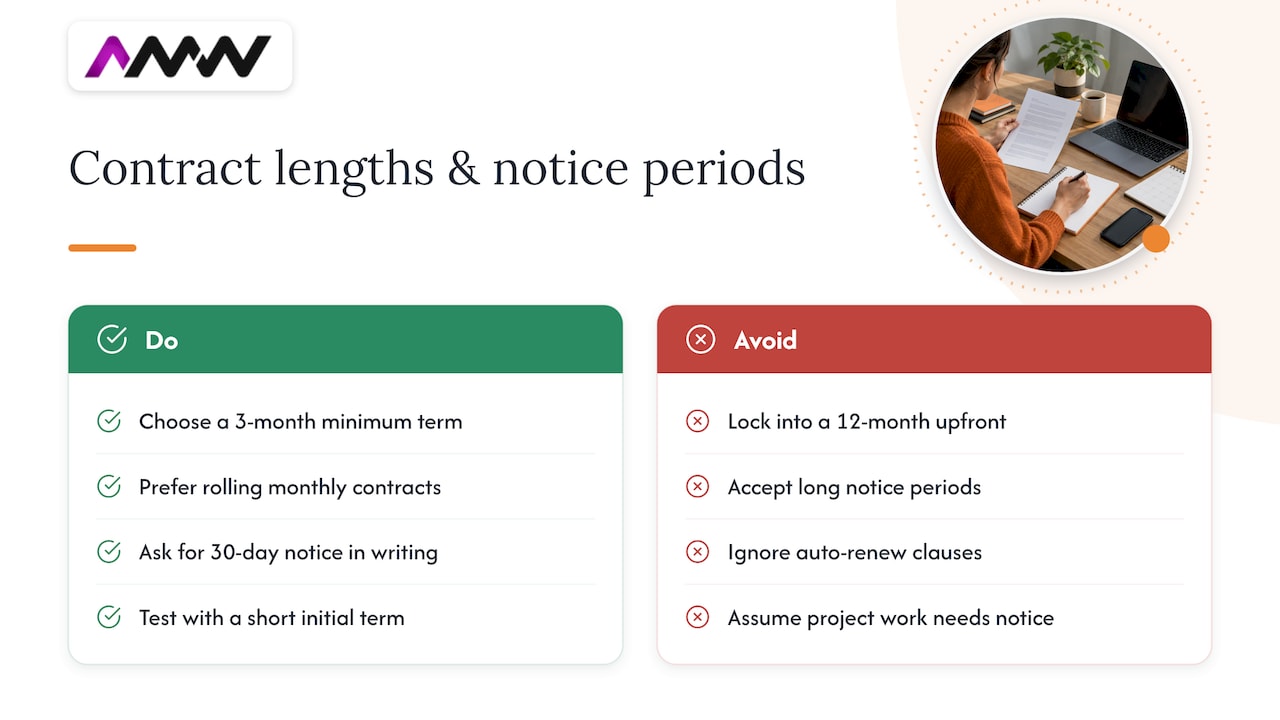
Most UK agencies work on rolling monthly contracts with an initial minimum term, commonly three months, which gives the team enough runway to build a content calendar and show results before either side reviews things. Shorter than that, and you are often paying for setup time you never get the benefit of.
Notice periods usually sit at 30 days, sometimes 60 for larger retainers with dedicated staff attached. Read this carefully before signing, because a long notice period on a package you are not happy with can trap you into paying for several more months than you planned.
Project-based work, such as a single campaign or a one-off video shoot, does not usually carry a notice period at all since it ends when the deliverables are signed off. If you are testing an agency for the first time, a shorter initial term with the option to extend is generally a safer way to budget than locking into a 12-month contract upfront.
Watch for auto-renewal clauses too. Some contracts quietly roll into another fixed term if you do not cancel within a set window, which can catch businesses out if nobody is tracking renewal dates. Ask for this in writing before you sign, not after your first invoice of the new term arrives.
Costs beyond the retainer that catch people out
The monthly retainer is rarely the full bill. Scheduling and reporting tools (think Hootsuite, Sprout Social or Later) often come with their own subscription cost, and some agencies pass this through separately rather than folding it into the headline price.
Influencer collaborations are another line item entirely. Fees vary hugely by follower count and niche, and on top of the fee itself, someone needs to check the post carries the right advertising disclosure, since even gifted products count as payment under ASA rules.
Crisis management, meaning rapid response during a PR issue or a viral complaint, is usually quoted as an add-on rather than built into a standard retainer, because it requires people on standby outside normal working hours. If your industry is prone to public scrutiny, it is worth asking upfront what this would cost rather than finding out mid-crisis.
Stock imagery, music licensing for video and paid boosting on individual posts are smaller but real additions too. None of these are large individually, but stacked together they can add a few hundred pounds a month to a quote that looked simple on the cover page.
When payments are due and what triggers them
Most UK retainers bill monthly in advance, meaning you pay before the work happens rather than after, which is standard practice across the industry and worth expecting rather than questioning.
Project work tends to follow a milestone structure instead: a deposit to secure the booking, a further payment on delivery of a draft or first cut, and a final payment on sign-off. This protects both sides, since the agency is not working entirely on spec and you are not paying in full before seeing anything.
Onboarding or setup fees, when they apply, are usually charged once at the start and cover strategy work, account audits and the first content calendar. Ask whether this is separate from month one’s retainer or included in it, since this is a common point of confusion in new contracts.
If you are agreeing a project fee for a campaign, ask for a written schedule tying each payment to a specific deliverable, such as “50%) on brief approval, 50% on final delivery”, rather than vague timing language. It makes budgeting far easier and avoids disputes later.
In-house versus agency versus freelancer: what costs more
A full-time in-house social media manager in the UK typically costs more than a single-channel agency retainer once you add salary, National Insurance, pension contributions and the software they will need. The trade-off is dedicated attention and deeper product knowledge, which an agency juggling several clients cannot always match.
A freelancer sits in between. You get senior-level skill without the overhead of employment, but capacity is limited to whatever hours you have booked, and cover during holidays or illness is something you need to plan for yourself.
An agency retainer usually costs less than a full-time hire for businesses that need multi-channel management, and it comes with built-in redundancy, since the work is not relying on one person. The trade-off is less day-to-day presence in your business and, sometimes, less brand-specific nuance in early months.
For most SMEs, the honest comparison is total cost versus total output: a £1,500 agency retainer covering two channels, video and reporting is often doing the work of a salary that would cost two or three times that once everything is accounted for.
Why prices vary by UK region
London-based agencies and freelancers typically charge more than those based outside the capital, reflecting higher office costs, salaries and client expectations in that market. A retainer quoted by a London agency can sit noticeably above the same scope quoted by a team based in Manchester, Leeds or Cardiff.
That said, most social media management is delivered remotely, so location matters less than it used to. Many UK businesses now hire agencies outside their own city specifically because the quote is lower for comparable quality, with video shoots being the main exception since filming often still needs someone on-site.
Industry and competition also play a role regionally. A business in a crowded market, such as London hospitality, may pay more for a team experienced in that specific sector, regardless of where the agency is physically based. When comparing quotes, it is worth asking where the actual people doing the work are based, rather than just where the agency’s office address is listed.
When outsourcing social makes the most sense
If your budget sits below roughly £1,500 a month, an agency retainer usually makes more financial sense than a hire. Above that, compare total output to a salaried role and measure results against engagement and lead volume before increasing spend.
— Amir
How we can help with your social media budget
Social media management packages can map directly onto the bands above, from single-channel content and community cover through to multi-platform work with regular video production and reporting. Packages should be scoped against your actual goals rather than a generic template, and flexible terms without locking you into a long contract may be offered.
- Content production, including video and photography, so your social output does not rely on stock imagery alone.
- Ongoing reporting that shows what is actually working, not just a vanity metrics summary.
- Flexible scope that can grow from a single channel into a full multi-platform package as your budget allows.
If you want a quote scoped to your business rather than a generic price list, get in touch through our social media management page and we will put together a package based on the channels, content mix and community hours you actually need.
FAQ
How much do I charge for social media management?
If you are freelancing, UK contractor rate data for comparable marketing roles suggests median rates around £42.50 an hour or £525 a day, though social media manager-specific contract data is limited. Many freelancers instead quote a monthly package based on expected hours, which tends to be easier for clients to budget against.
What is the 70/20/10 rule for social media?
Definitions vary slightly, but a common version splits content into 70% proven, audience-tested material, 20% new ideas building on what already works, and 10% experimental content testing fresh formats or topics. It is a content-mix guideline rather than a pricing rule, and it has no fixed cost attached to it.
How much should you charge to manage a social media account?
Pricing should reflect scope rather than a flat number: a single-channel account with basic posting and replies typically sits at the lower end of the retainer range, while multi-channel, video-heavy accounts with community cover sit much higher. Building the quote around actual hours and deliverables, rather than a round figure, tends to produce a fairer price for both sides.
What is the average hourly rate for a social media manager in the UK?
Related contractor categories on ITJobsWatch show median hourly rates around £42.50, though recent social media manager-specific listings are too sparse to treat as a precise industry average. Agency-employed managers are usually priced within a monthly retainer rather than quoted an hourly figure directly.
Sources
- Marketing and data protection in detail | ICO
- Gov
- Recognising ads: Social media and influencer marketing | ASA
- Social Media Manager contract job trends & rates | ITJobsWatch
Recommended
- Social Media Management Services
- Online marketing package for UK SMEs: how to choose
- How to build a social media presence for your business
- Website advertising packages for SMEs: a clear guide
Our free marketing audit looks at your site, your ads and your content, and comes back with a 30 day plan. No pitch deck.

Founded AMW Media in 2024 and runs strategy, paid media and the CRM builds. The reason everything here is in house and measured in revenue. Meet the team.