
 Black Steel Doors
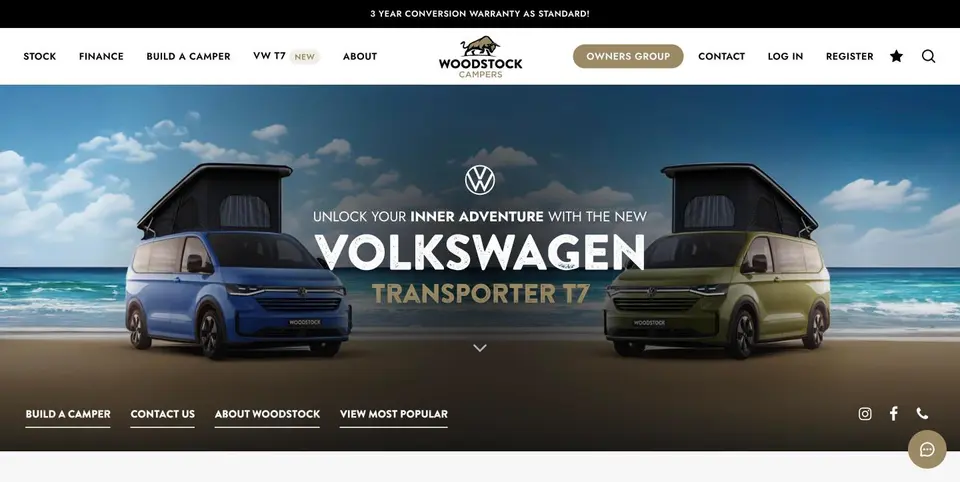 Woodstock Campers
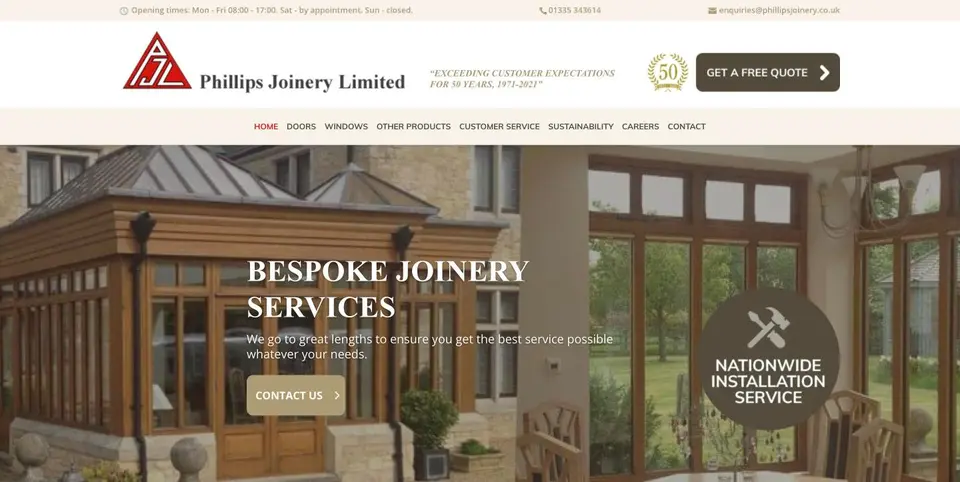 Phillips Joinery
Pick one platform, set one measurable goal, and post consistently for 90 days. That is the honest short answer. A survey of 501 UK small businesses found that 84% generate at least some work via social media, and nearly three in ten estimate that 10 to 19% of their revenue comes directly from social activity. The opportunity is real. The problem is that most businesses start by doing too much at once, spreading themselves across five platforms with no clear goal and wondering why nothing converts.
Here is your first-week checklist to get moving:
- Define one primary goal (lead generation, portfolio visibility, direct sales, or recruitment).
- Claim your profile on one platform that matches your audience (LinkedIn for B2B, Instagram for visual trades and ecommerce, Facebook for local services).
- Plan three content types you can produce consistently: one educational post, one showcase post, one social-proof post.
- Install tracking from day one: UTM parameters on every link, and connect Google Analytics 4 to your website.
- Set a 90-day review date before you add a second platform.
For most UK SMEs, LinkedIn is the strongest starting point for B2B lead generation, Instagram for visual-led consumer brands, and Facebook for local service businesses with an existing community. DataReportal’s Digital 2026 report puts UK social media user identities at 55.5 million, your audience is already there. The rest of this guide shows you how to reach them.
Key takeaways
A consistent social media presence for businesses comes down to five things: a clear goal, the right platform, content that earns attention, tracking that proves impact, and compliance that protects the brand.
| Point | Details |
|---|---|
| Start with one goal | Define one measurable commercial objective before choosing a platform or creating any content. |
| Pick one platform first | Match the platform to your audience: LinkedIn for B2B, Instagram for visual brands, Facebook for local services. |
| Track from day one | Install UTM parameters on every link and connect social profiles to Google Analytics 4 before your first post. |
| Label paid content clearly | Any post involving payment or gifting must be labelled “Ad” prominently, per ASA, CMA, and GOV.UK guidance. |
| AMW Media for managed growth | AMW Media provides end-to-end social media management, content production, and paid media with monthly KPI reporting. |
1. Define your goals and know exactly who you are talking to
The single biggest reason social media fails for small businesses is not bad content. It is the absence of a clear commercial goal. “Get more followers” is not a goal. “Generate 10 qualified enquiries per month from Instagram by September” is.
Start with one primary business objective and attach 1 to 3 KPIs to it. Here is a simple template:
| Field | Example |
|---|---|
| Objective | Generate inbound leads for kitchen fitting services |
| Metric | Enquiry form submissions from social traffic |
| Target | 8 per month |
| Timeframe | 3 months |
| Owner | Marketing manager / business owner |
Different SME types suit different goals. A local trades business might track booked consultations. A B2B services firm might track LinkedIn connection requests converting to discovery calls. An ecommerce brand tracks add-to-cart events from social referrals.
Once the goal is set, build a minimal audience persona. You do not need a 20-page document. Answer four questions: Who are they (age, role, location)? What problem are they trying to solve? Where do they spend time online? What triggers them to buy? That is enough to make content decisions.
Pro Tip: Write your goal on a sticky note and put it next to your screen. Every piece of content you create should pass one test: does this move someone closer to that goal? If it does not, it is a distraction.
2. Which platform should your business actually be on?
The honest answer: fewer platforms done well beat many platforms done badly. Start with one, get consistent, then expand. Here is a quick guide to the six platforms UK SMEs use most, and what each one is good for.
Quick platform starter guide:
- Sales and local awareness: Facebook
- Visual portfolio and consumer brand: Instagram
- B2B lead generation and thought leadership: LinkedIn
- Younger audiences and viral reach: TikTok
- Real-time commentary and industry conversation: X (Twitter)
- Long-form education and evergreen content: YouTube
| Platform | Best for | Primary content format | Organic reach / viral potential | Paid options and typical cost band | Ease of management |
|---|---|---|---|---|---|
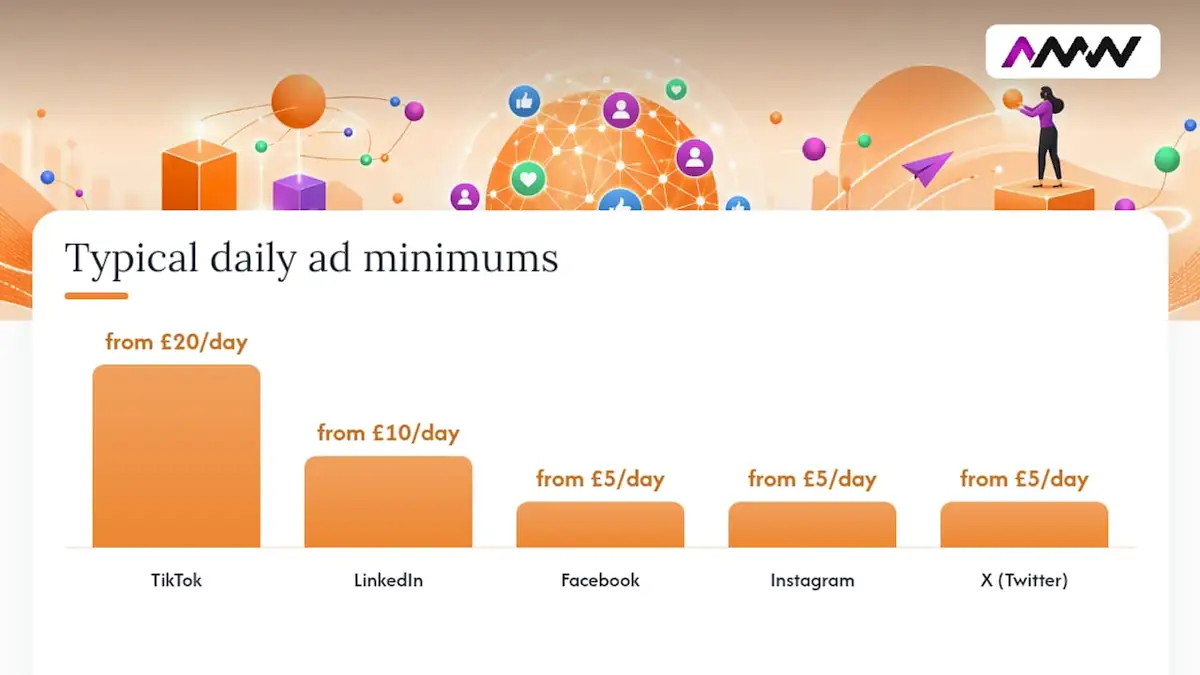
| Facebook (Meta) | Local services, community building, older demographics | Mixed: images, video, text | Moderate; declining organic reach for pages | Highly targeted; from around £5/day | Good; Meta Business Suite available |
| Visual brands, trades, ecommerce, lifestyle | Images, Reels, Stories | Strong for Reels; moderate for static | Broad targeting; from around £5/day | Good; managed via Meta Business Suite | |
| B2B services, recruitment, thought leadership | Articles, text posts, short video | Strong for personal profiles; moderate for pages | Higher CPCs; from around £10/day | Moderate; native scheduler available | |
| TikTok | Consumer brands targeting younger audiences, entertainment | Short-form video | Very high viral potential | Growing ad platform; from around £20/day | Moderate; requires video production |
| X (Twitter) | News, commentary, customer service, PR | Short text, images, threads | Low organic reach currently | Relatively low CPMs; from around £5/day | Easy; fast-paced posting |
| YouTube | Education, how-to content, product demos | Long and short-form video | High for search-optimised content | Pre-roll and display ads; variable cost | Harder; requires video editing |
Meta Business Suite deserves a specific mention. If you are on Facebook, Instagram, or both, Meta Business Suite is the free management hub that lets you schedule posts, reply to messages across both platforms, and view basic analytics in one place. For a solo owner or small team, it removes the need for a paid scheduling tool in the early stages.
A 2026 qualitative study of UK B2B SMEs found that LinkedIn, X, and Facebook were the dominant platforms for B2B firms, with some participants attributing 15 to 30% of annual revenue to social channels. That is a sample-based finding, not a guarantee, but it signals where B2B attention and budget tend to pay off.
3. How to make your profiles look professional from day one
A half-finished profile loses trust before you post a single piece of content. Here is the checklist to get every profile conversion-ready.
Profile setup checklist:
- Username and handle: consistent across all platforms (ideally your business name, no random numbers).
- Profile photo: your logo on a clean background, minimum 400×400px.
- Cover image: branded, with a clear value proposition or current offer.
- Bio: who you help, what you do, and a CTA in under 160 characters.
- Business category: set correctly so platforms surface you in the right searches.
- Contact details: phone, email, and website filled in on every platform.
- Link setup: use a single landing page or a link-in-bio tool (such as Linktree or a custom page on your site) rather than changing your link constantly.
- Brand consistency: same logo, colour palette, and tone across every platform.
Example bios by business type:
- Local trades: “Trusted kitchen fitters in Manchester. Free quotes, 5-star rated. Book via the link below.”
- B2B service: “We help UK accountancy firms grow their client base through content and paid media. Talk to us.”
- Ecommerce: “Handmade ceramics, shipped across the UK. New drops every Friday. Shop the link.”
On UTM parameters: every link you put in a bio or post caption should carry a UTM tag so Google Analytics 4 can tell you which platform and which specific post drove traffic and conversions. Without UTMs, social traffic appears as a single undifferentiated block and you cannot prove what is working. A free UTM builder (Google’s Campaign URL Builder does the job) takes 30 seconds per link.
4. Build a content strategy you will actually stick to
Content planning fails when it is too complicated to maintain. The fix is to pick three or four content pillars that map directly to your goals, then build a simple repeating calendar around them.
Content pillars for common SME goals:
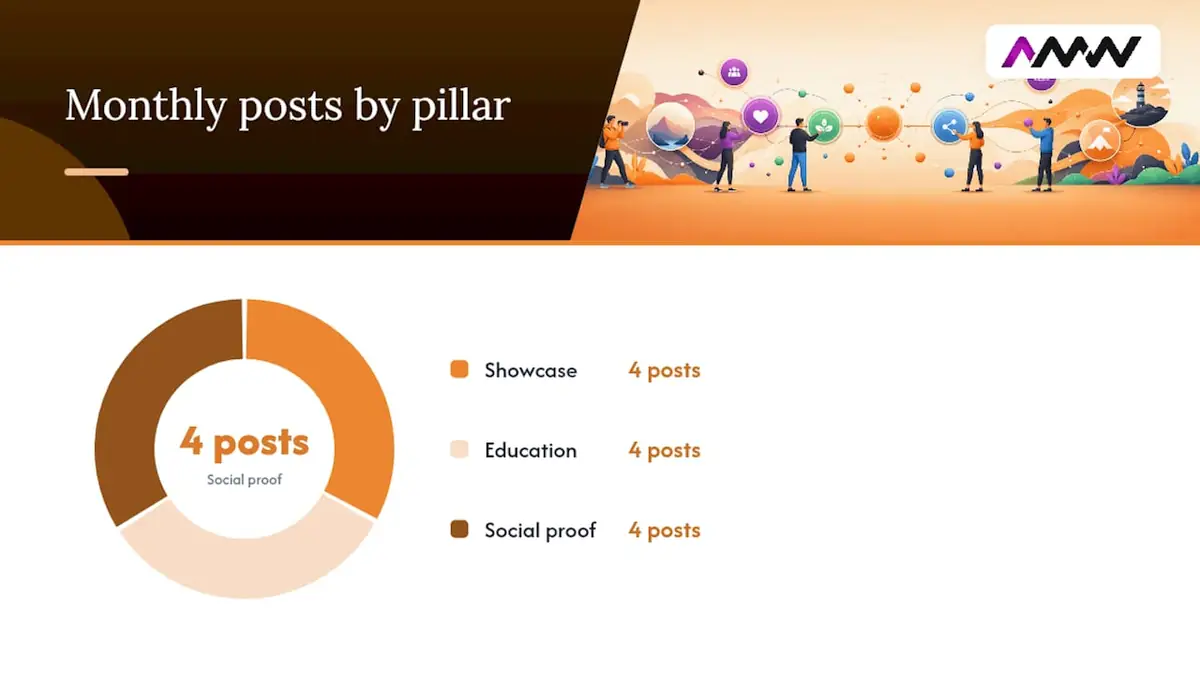
- Showcase: finished work, before-and-after, product photography, project highlights.
- Education: how-to tips, FAQs, industry explainers that position you as the expert.
- Social proof: client results, testimonials, case studies, reviews.
- Promotions: offers, seasonal campaigns, new services or products.
A simple four-week calendar for a solo owner or small team might look like this: post three times per week, rotating through showcase on Monday, education on Wednesday, and social proof on Friday. That is 12 posts per month, which is enough to maintain visibility without burning out.
Repurposing saves time. One filmed case study becomes: a 60-second Reel, a carousel of five key results, a LinkedIn text post with the headline finding, and a paragraph for your email newsletter. Four pieces of content from one shoot.
For tools: Canva handles most graphic and carousel needs at no cost on the free tier. For scheduling, Meta Business Suite covers Facebook and Instagram for free. For a content brief, keep it simple:
- Objective (what should this post achieve?)
- CTA (what do you want the viewer to do?)
- Assets needed (image, video, graphic)
- Caption length (short for Reels, longer for LinkedIn)
- Hashtags (3 to 5 relevant, not 30 generic)
Pro Tip: Batch your content creation. Set aside two hours every two weeks to write captions, create graphics, and schedule posts. Trying to post in real time every day is how consistency dies.
For more social media post examples that actually work, the AMW Media blog has practical formats you can adapt immediately.
5. Engagement and community management without burning out
Posting is only half the job. How you respond to comments, messages, and mentions shapes how your brand is perceived just as much as the content itself.
Set a response SLA. Aim to reply to comments within 24 hours and direct messages within 4 hours during business hours. For customer service queries on Facebook or Instagram, faster is better: slow responses are publicly visible and signal poor service.
Write a moderation policy. Decide in advance what you will and will not engage with. Negative feedback that is genuine deserves a calm, professional reply. Spam and abusive comments can be hidden or deleted. Keep a brief record of any moderation decisions in case of a dispute.
Escalate when needed. If a complaint is complex or involves a refund or legal matter, move it to private messages or email quickly. A public back-and-forth rarely ends well.
Encourage user-generated content (UGC). Ask customers to tag you when they use your product or service. A simple “tag us and we’ll share your post” in your packaging or post-purchase email can generate a steady stream of authentic content. Always ask permission before reposting, and credit the original creator.
Keep UGC legally clean. If you offer an incentive (a discount, a free product) in exchange for a post, that post must be labelled as an ad. More on this in the compliance section below.
Batch your engagement time. Check and respond twice a day rather than leaving notifications open all day. Constant interruptions kill productivity.
For a deeper look at improving social media engagement through content and community tactics, AMW Media’s blog covers practical formats and response frameworks.
6. Paid vs organic: when does it make sense to spend?
Organic social is free in cash terms but costs time. Paid social costs money but can compress timelines dramatically. The decision is not either/or; it is about knowing when each is the right tool.
Use organic when:
- You are still testing what content resonates.
- Your goal is community building or brand awareness with a modest budget.
- You have strong existing followers who share your content.
Switch to paid when:
- You have a specific conversion goal (leads, sales, event sign-ups) with a deadline.
- Organic reach has plateaued and you need to reach new audiences.
- You have a proven piece of content and want to amplify it.
Sample test-budget bands for UK SMEs:
- Low (£5 to £15/day): Brand awareness campaigns on Facebook or Instagram. Objective: reach and impressions. Good for testing creative.
- Medium (£15 to £50/day): Lead generation campaigns on LinkedIn or Facebook. Objective: form fills or website traffic. Enough data to optimise within 2 to 3 weeks.
- Scale (£50+/day): Retargeting campaigns and conversion-focused ads once you have proven creative and a converting landing page.
Watch these metrics in any paid test: cost per click (CPC), cost per lead (CPL), and return on ad spend (ROAS) where you can track purchase value. On LinkedIn, CPCs are higher (often £4 to £8 per click) but the audience quality for B2B tends to justify it. On Facebook and Instagram, CPCs are lower but require sharper audience targeting to avoid wasted spend.
For businesses considering paid search alongside paid social, AMW Media’s PPC management services cover both channels with a focus on measurable return.
7. Measure what matters: KPIs, scorecards and UTMs
The businesses that turn social media into a genuine revenue channel are the ones that measure it like a business channel. That means a small set of KPIs, checked monthly, compared to targets.
KPI table by goal:
| Goal | Key metrics to track |
|---|---|
| Brand awareness | Reach, impressions, follower growth, share of voice |
| Engagement | Likes, comments, shares, saves, engagement rate |
| Lead generation | Link clicks, form fills, cost per lead, enquiry volume |
| Sales / ecommerce | Add-to-cart from social, conversion rate, ROAS |
| Retention / loyalty | DM volume, repeat engagement, review volume |
Monthly scorecard template:
- Total reach vs. last month
- Engagement rate vs. target
- Link clicks and UTM-tracked sessions to website
- Leads or conversions attributed to social
- Top-performing post (format, topic, CTA)
- One insight and one change to test next month
UTM naming matters more than most people realise. If your UTM source is sometimes “instagram” and sometimes “Instagram” and sometimes “IG”, Google Analytics 4 treats these as three separate sources and your data fragments. Agree a naming convention on day one and stick to it.
For a fuller picture of how marketing analytics drives ROI, AMW Media’s guide covers attribution models and reporting frameworks in more detail.
8. Realistic timelines and what it costs for a UK small business
Social media is not a fast channel. Setting the right expectations early prevents businesses from abandoning a strategy that was actually working.
Timeline expectations:
- 0 to 3 months: Profile setup, content testing, audience building. Expect modest reach and low engagement. This is the data-gathering phase, not the revenue phase.
- 3 to 6 months: Patterns emerge. You know which content types and topics resonate. Organic reach grows if posting is consistent. First paid tests should run here.
- 6 to 12 months: Compounding effect kicks in. A consistent brand presence, growing follower base, and refined paid strategy start to produce measurable leads or sales.
Budget bands (monthly, GBP):
- DIY (£0 to £200/month): Owner-managed, using free tools (Meta Business Suite, Canva free tier). Time cost: 5 to 10 hours per week. Suitable for early-stage businesses testing the channel.
- Partially outsourced (£500 to £1,500/month): Freelance content creator or part-time social media manager. Covers content creation and scheduling; owner handles strategy and engagement.
- Fully managed (£1,500 to £4,000+/month): Agency-managed, including strategy, content production, community management, and paid media. Suitable for businesses ready to treat social as a primary growth channel.
Time commitment for a solo owner doing it themselves: roughly 6 to 8 hours per week covers content creation, scheduling, engagement, and basic reporting. A small in-house team of two can split this more efficiently, with one person owning content and the other handling community and analytics.
Every figure is published: Social media management starts at £299 a month, and the full rate card is on our pricing page, where you can tick what you need and see the total before you speak to anybody.
9. UK legal and compliance essentials you cannot ignore
This is the section most guides skip, and it is the one that can cost you the most. UK advertising law applies to your social media activity from the moment you promote a product or service, regardless of whether you are a sole trader or a limited company.
Regulatory checklist:
- Label paid posts as ads. If you pay an influencer or send them a free product in exchange for a post, that post must be labelled “Ad” or “Advert” clearly and prominently. Gov is explicit: businesses are responsible for ensuring correct disclosure, not just the creator.
- The CAP Code applies. The ASA’s guidance on social media confirms that the CAP Code covers influencer marketing and paid social content. Advertising must be obviously identifiable as advertising.
- Financial promotions have stricter rules. If your business operates in financial services, FCA guidance FG24/1 warns that financial promotions on social media must be standalone compliant and present required risk information with sufficient prominence. Truncated captions and character limits on some platforms can make compliance difficult, and the FCA notes that some channels may not be suitable for complex financial products at all.
- Keep records. Document which creators you work with, what you paid or provided, and what they posted. If the ASA or CMA investigates, you need to show a paper trail.
- Check platform policies. Each platform has its own advertising policies on top of UK law. Meta, TikTok, and LinkedIn all have category restrictions (alcohol, gambling, financial products) that can get ads rejected or accounts suspended.
Example disclosure text (short-form): “#Ad” or “Advert:” at the start of a caption, before any other text. Buried disclosures at the end of a long caption do not meet the prominence requirement.
Compliance note: The CMA, ASA, and FCA are all increasing scrutiny of social media advertising. Transparency is not optional, it is the baseline.
10. Common mistakes and a quick checklist to fix them
Most social media problems come back to the same handful of errors. Here is what to watch for and how to fix each one quickly.
Common mistakes and quick fixes:
- No clear goal: Write one measurable goal before your next post. Use the template in Step 1.
- Inconsistent branding: Run a brand audit across all profiles. Same logo, same colours, same bio tone. Fix it in one sitting.
- Ignoring audience signals: Check your analytics monthly. If one content type consistently outperforms others, make more of it.
- Weak or missing CTAs: Every post should tell the viewer what to do next. “Book a free call”, “Shop the link”, “Comment below” are all CTAs. Pick one per post.
- No tracking: Add UTM parameters to every link. Connect your social profiles to Google Analytics 4. Without this, you are guessing.
- Poor influencer disclosure: If you send a product or pay for a post, it is an ad. Label it. See Step 9.
- Posting without a plan: Use the four-week calendar template from Step 4. Batch-create content every two weeks.
One-page quick checklist (print or paste into a team brief):
- [ ] Goal defined and written down
- [ ] One platform chosen and profile complete
- [ ] Brand assets consistent across all profiles
- [ ] Content pillars mapped to goals
- [ ] Four-week calendar built
- [ ] UTM parameters set up
- [ ] Response SLA agreed
- [ ] Compliance checklist reviewed
- [ ] Monthly scorecard template ready
- [ ] 90-day review date in the diary
For a more detailed social media strategy checklist, AMW Media’s guide walks through each step with examples.
What an agency would actually do in your first 30 to 90 days
The 30 to 90 day plan below works whether you are hiring an agency or doing the work yourself. The difference is execution speed, not the steps.
Days 1 to 30: Audit and rapid fixes. An agency starts by auditing what already exists: profile completeness, existing content performance, competitor benchmarking, and audience data. The output is a prioritised fix list. For a small business doing this in-house, spend the first two weeks completing the profile checklist, installing tracking, and producing your first ten pieces of content before you go live.
Days 31 to 60: First campaign and content rhythm. Launch your first paid test with a modest budget (£5 to £15/day) on the platform most aligned to your goal. Run it for two weeks minimum before drawing conclusions. Alongside this, establish your posting rhythm: three times per week, consistent pillars, batched creation. Agencies at this stage are also building the reporting infrastructure: UTMs, dashboards, and a monthly scorecard.
Days 61 to 90: Measure, learn, adjust. Pull your first monthly scorecard. Which posts drove the most link clicks? Which paid creative had the lowest cost per lead? Double down on what worked, cut what did not. Agencies document this as a “what we learned” note that feeds the next quarter’s strategy.
Practical trade-offs for small budgets: prioritise one high-quality piece of content per week over five mediocre ones. A single well-produced Reel or case study post will outperform daily filler. If you are buying short-term expertise, a freelance content creator for a day’s shoot gives you four to six weeks of repurposed content. Understanding the difference between hiring a fractional CMO and an agency can also help you decide what kind of external support fits your stage and budget.
How AMW Media can help you get there faster
Building a strong social media presence for businesses takes time, consistency, and the right mix of creative and strategy. AMW Media’s social media management service handles the full picture: content production (video and photography), platform management, community engagement, paid media, and monthly reporting with clear KPIs. The team holds Google and Meta certifications, which means your paid campaigns are set up and optimised by people who do this every day, not learning on your budget.
For businesses that want social to connect with the rest of their digital presence, AMW Media also covers SEO and web design, so the traffic your social activity generates actually converts when it lands on your site. Whether you need a fully managed retainer or a short-term campaign to test the channel, the starting point is a conversation. Get in touch via AMW Media to discuss what your first 90 days could look like.
Sources
- Gov
- Remit: social media (ASA / CAP guidance)
- Social media surge: over 8 in 10 UK SMEs generate work through social media, Yellow Business News
FAQ
Does having a social media presence affect business results?
Yes, significantly. A survey of 501 UK small businesses found 84% generate at least some work via social media, with nearly three in ten attributing 10 to 19% of their revenue directly to social activity.
How do you build a social media presence for a business from scratch?
Start by defining one measurable goal, claiming your profile on one platform that matches your audience, and posting three content types consistently (showcase, education, social proof) for at least 90 days before expanding.
What is the 5-3-1 rule on social media?
The 5-3-1 rule is a content mix guideline: for every five posts that share others’ content or general value, post three pieces of your own original content, and one direct promotional post. It is a rough framework to avoid over-promoting, not a rigid formula.
What is the 5-5-5 rule for social media?
Definitions vary, but a common version suggests spending five minutes engaging with your audience, five minutes engaging with others in your industry, and five minutes reviewing your analytics each day. It is a habit-building heuristic rather than a platform-specific standard.
Do UK businesses need to label influencer posts as ads?
Yes. GOV.UK guidance and the ASA’s CAP Code both require that any post involving payment or gifting is clearly labelled “Ad” or “Advert” at the start of the caption, and the brand is responsible for ensuring this happens.
Recommended
- How to boost your online presence for lasting brand growth | AMW Media
- Social Media Management Services | AMW Media | AMW Media
- Social Media Management Services | AMW Media
- Social media marketing tips to boost brand engagement
Our free marketing audit looks at your site, your ads and your content, and comes back with a 30 day plan. No pitch deck.

Runs the content calendars and the community side of every social account, and keeps clients posted on what is going out and when. Meet the team.