
 Black Steel Doors
 Woodstock Campers
 Phillips Joinery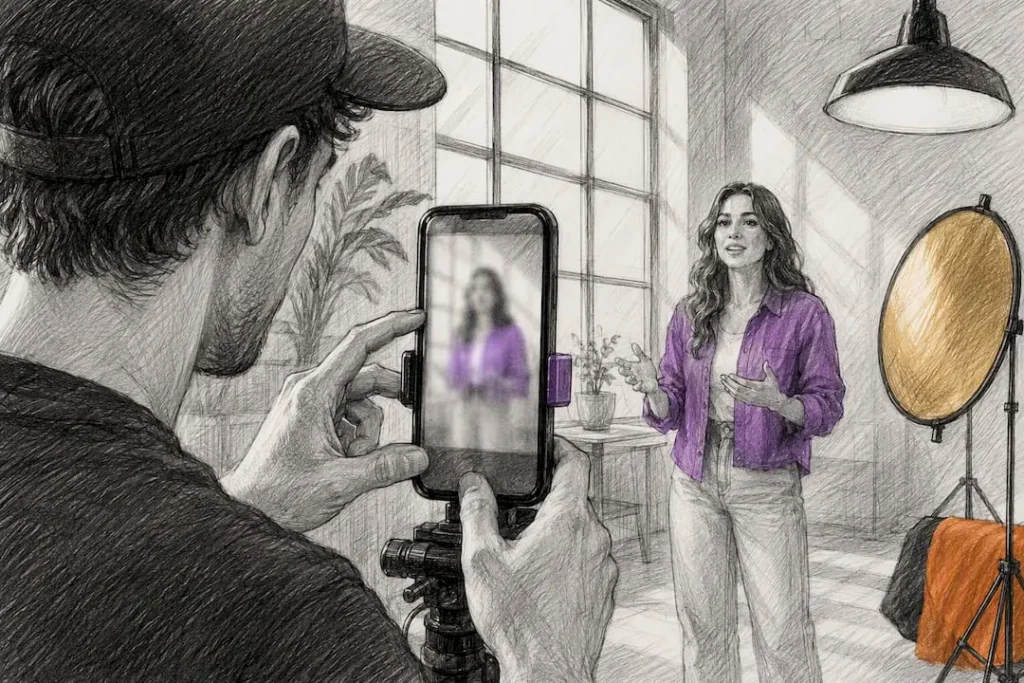
Yes, brands should prioritise Instagram Reels for growth in 2026, but only the platform-native, hook-first kind. Use vertical clips under 60 seconds that deliver one useful idea, caption it for search, and skip the recycled TikTok exports. Expect strong reach and saves within weeks, but treat direct sales impact as a slower, secondary win that builds over a 90-day test.
TL;DR:
- Brands should focus on native, hook-first Reels under 60 seconds that deliver a single useful idea, avoiding recycled TikTok exports or watermarked content.
- Consistent posting over 90 to 180 days, with at least four Reels weekly, is necessary to build algorithm signals like watch time, saves, and shares that increase reach.
- Reels formats should match the audience’s discovery or trust-building phase, using quick tips, before/after transformations, tutorials, and behind-the-scenes clips accordingly.
- Proper production includes filming in native 9:16, writing hooks before shooting, adding captions for search, and exporting clean files without watermarks for maximum discoverability.
- Tracking success requires focus on KPIs such as watch time, saves, shares, profile visits, and reach relative to follower count, not follower growth alone.
Why Instagram Reels for brands matter right now
Reels are the fastest growing engagement surface Instagram has, and they consistently pull higher organic reach than static posts or carousels, according to Hootsuite’s 2026 breakdown. That matters because reach on other formats has been flat for most brand accounts for years. Reels are where the algorithm is actively pushing new content to people who don’t already follow you.
What Reels do well: they put your brand in front of strangers. Someone scrolling the Explore-style Reels feed has never heard of you, and a good hook changes that in three seconds. What they don’t do especially well, at least not immediately, is drive people straight to a demo booking or a checkout page. That’s a job for landing pages, retargeting, and email, not a 20-second clip about your product’s best feature.
Here’s the outcome map most brands should expect from a serious Reels effort:
- Awareness and reach: the fastest win, often visible within the first few weeks.
- Saves and shares: a mid-term signal that content is genuinely useful, not just watched.
- Profile visits: a sign people are curious enough to check you out properly.
- Pipeline and sales: the slowest metric to move, and it needs supporting assets (bio link, highlights, a landing page) to convert what Reels bring in.
Growth typically doesn’t show up until months three to six. Sustained testing across roughly 90 to 180 days, often with 90 or more Reels published, gives the algorithm enough data to start recommending your content to people who don’t follow you yet, according to Kompozy’s growth playbook. Brands that quit after three weeks are quitting right before the curve bends upward.
How the Reels algorithm actually decides who sees you
The Reels algorithm isn’t a black box; it’s a scoring system built on a handful of signals you can directly influence. Understanding them changes how you script, shoot, and edit.
The signals that matter most:
- Watch time and completion rate: how much of the Reel gets watched, and whether people finish it.
- Shares and sends: people forwarding your Reel via DM to someone else.
- Saves: bookmarking for later, a strong signal of genuine value.
- Originality: native, unwatermarked uploads score better than recycled clips.
- Engagement velocity: how fast the above happens after publishing.
Later’s 2026 analysis confirms these are the core levers Instagram itself has pointed to. Each one responds to a different production choice. Watch time comes from a hook that promises value in the first two to three seconds, not a slow logo intro. Sends and saves come from giving people a reason to act. That means a closing line like “save this for your next shoot” or “send this to the person who needs it” isn’t fluff, it’s a direct instruction that moves the metric Instagram weights most heavily for reach beyond your existing followers, per Sprout Social’s algorithm research.
Originality is where a lot of brands quietly sabotage themselves. Uploading a TikTok export with the watermark still visible tells Instagram this content originated elsewhere, and the platform down ranks it accordingly, per Kompozy’s findings. If you’re repurposing across platforms, as covered in AMW Media’s guide to getting TikTok followers, always re-export clean, watermark-free versions for each platform separately.
Pro Tip: Loopable content, a clip that ends visually where it began, tends to get rewatched without the viewer realising, and rewatches quietly inflate your average watch time score.
Common pitfalls: a slow first two seconds, on-screen text that’s too small to read one-handed, and captions that repeat the audio word for word instead of adding context.
High-value Reel formats brands can copy this week
Not every format earns its place in your calendar. Some are built for cold discovery, pulling in strangers who’ve never seen your brand. Others are built to deepen trust with people already following you. Knowing which is which stops you wasting a shoot day on the wrong goal.
Formats that favour discovery (built to travel to non-followers):
- Quick tip: one specific, useful piece of advice delivered in 30 to 45 seconds. A skincare brand demonstrating the correct amount of product to use per application beats a generic “our top 5 tips” listicle every time.
- Before/after: visually dramatic transformations, whether that’s a renovated room, a redesigned logo, or a fitness client’s six-week progress.
- Myth-busting: correcting a common misconception in your industry. A mortgage broker explaining why a good credit score alone doesn’t guarantee approval will stop scrollers mid-thumb.
- Trend remix: taking a trending audio or format and adapting it to your niche without losing the joke or the beat.
Formats that favour saves and retention (built to deepen trust with existing audience):
- Tutorial: a step-by-step walkthrough people will genuinely bookmark, like a bakery showing exact fold technique for croissant dough.
- Behind-the-scenes: production days, packing orders, or a founder’s actual morning routine. This is where personality-led content wins, and B2B brands in particular benefit from trading polish for authenticity, according to Pixel8 Production’s B2B strategy guide.
- Event recap: a fast-cut summary of a launch, trade show stand, or workshop, giving people who missed it a reason to follow for the next one.
- UGC roundup: stitching customer clips together with your brand’s framing added on top.
- Micro interview: 30 to 60 second Q&A with a team member or client, one question, one sharp answer, no waffle.
- Product demo, reframed: rather than “here’s our product,” frame it as “here’s the problem this solves in real time.”
- Day-in-the-life: especially strong for service businesses and agencies where the process itself is the sell.
- FAQ, answered on camera: pull your most repeated customer service question and answer it as a standalone Reel.
For B2B accounts specifically, the sweet spot is 30 to 60 second quick tips, behind-the-scenes clips, and micro interviews that prioritise a single useful idea over corporate gloss, according to Pixel8’s guide. AMW Media’s roundup of engaging social post examples has more real-world illustrations worth studying before your next shoot list.
When briefing a producer or creative team, hand them the goal, not just the format. “This needs to stop a scroll from a stranger” produces a different shot list than “this needs to make an existing follower trust us more.”
Production and publishing: the compact checklist
Getting the strategy right means nothing if the finished file looks amateur or gets buried by a technical mistake on export. Here’s the sequence that matters, in order.
- Shoot in native 9:16, face-on to camera where possible, with the subject lit from the front, not silhouetted against a window.
- Write the hook before you film anything else. The first line of dialogue or on-screen text needs to promise a specific payoff within two seconds.
- Add burned-in captions (on-screen text). This isn’t just accessibility, Instagram’s OCR and natural language processing increasingly treat on-screen text as a primary discoverability signal, according to Kompozy’s audit.
- Write caption text like a search query. Hashtags carry far less discovery weight now than they did a few years back; the caption itself, plus your on-screen text, is doing the heavy lifting for search.
- Choose audio deliberately. Trending audio helps discovery, but original audio, your own voiceover or brand sound, helps with attribution and repeat recognition over time.
- Export clean, with no watermark, even if the source footage started life on another platform.
- Pick a cover frame that reads clearly as a thumbnail, ideally with the hook text visible.
- Schedule in batches rather than posting reactively, so cadence doesn’t collapse the moment someone’s on annual leave.
Pro Tip: Film three to five hooks in a single sitting using the same setup and lighting, then edit them into separate Reels across the following fortnight. One recording session, five weeks of content, and nobody has to know it wasn’t shot fresh each time.
Anyone building formats and repurposing workflows around this checklist will find Markbin’s guide to embeddable content formats a useful companion resource for stretching one shoot across multiple channels.
Measurement: the KPIs that actually tell you something
Most brands watch follower count and wonder why nothing feels like it’s working. Follower count is close to the least useful metric for judging a Reel’s performance. Track these instead.
- Watch time and completion rate: the clearest signal your hook and pacing are working.
- Saves: a strong proxy for perceived usefulness, more meaningful than a like.
- Shares and sends: the single most powerful driver of reach beyond your existing audience, since sends via DM are weighted heavily by the algorithm, according to Instapdown’s ranking signal breakdown.
- Profile visits: tells you whether the Reel is curious enough to make strangers investigate the account behind it.
- Reach vs. follower count: if reach regularly exceeds your follower count, the algorithm is actively distributing you to new people.
A realistic benchmark for a brand account in an active test phase: if a Reel’s reach is running two to three times your follower count and it’s pulling saves in the double digits, that’s a genuinely strong signal worth repeating in a similar format. If reach never clears your follower count, the hook or the format is the problem, not the topic.
Connect these numbers to something further downstream where possible. If a Reel drives a spike in profile visits, check whether your bio link and highlights are actually built to convert that curiosity into an email sign-up or an enquiry. AMW Media’s piece on video marketing strategies covers how to tie video performance back to real business KPIs rather than vanity numbers, and pairing Reels analytics with proper funnel tracking, the kind Opptymizer’s CRM guide describes, closes the loop between “people watched this” and “people bought something.”
The 90-day cadence playbook
Consistency beats intensity, but the first three months need more intensity than what follows.
- Weeks 1 to 4 (test phase): post daily if you have the capacity, or a minimum of four times weekly. This is where you’re gathering data, not perfecting a formula.
- Weeks 5 to 8 (refine): drop to 3 to 4 Reels weekly, a cadence B2B strategy guides consistently point to as sustainable for growth without burning out a small team, per research on B2B SaaS Reels performance. Run simple A/B tests: same topic, two different hooks, and compare completion rates.
- Weeks 9 to 12 (lock in what works): identify your two or three best-performing formats and build a repeatable production template around them.
- Ongoing: maintain 3 to 4 weekly, batch-filmed monthly, with one new format experiment slipped in every few weeks so the account doesn’t stagnate.
Batch filming is what makes this survivable. Recording five to six Reels in one session and editing them across the following weeks, as mentioned earlier, keeps quality consistent without demanding daily production effort.
AMW Media’s perspective and how we actually run this
I’m Amir, and the pattern I see most often is brands treating Reels like an occasional extra rather than a proper production line. AMW Media holds Meta and Google partner status alongside Shopify, WordPress, and Framer certifications, and our content team runs video, photography, and social management as connected disciplines rather than separate departments.
In practice, that means:
- One shoot day, multiple weeks of content: we plan filming around formats, not single Reels, so a single session produces a fortnight’s worth of usable clips.
- Caption and on-screen text written before editing starts, not bolted on afterwards, because search discoverability depends on it.
- Native exports for every platform, so a Reel destined for Instagram never carries a watermark from wherever it started life.
- Monthly performance reviews tied to saves, shares, and profile visits rather than follower count alone.
Clients who commit to a genuine 90-day test consistently see the reach curve everyone else quits right before hitting.
Amir
What Instagram Reels actually are
Instagram Reels are short, vertical videos, native to the 9:16 aspect ratio, that sit in their own dedicated tab and feed on the platform. Clips can run up to 90 seconds, though the highest-performing brand content tends to sit between 15 and 60 seconds.
The format comes bundled with a set of native tools: a built-in audio library, text overlays, speed controls, transition effects, and a “Remix” feature that lets other accounts respond to or riff on existing Reels. There’s also a dedicated Reels tab on every profile, separate from the main grid, meaning viewers can browse someone’s short-form video history without wading through static posts.
What sets Reels apart from a standard video post is distribution intent. Instagram built the format specifically to compete for short-form attention, and it rewards content accordingly with placement in the standalone Explore-style Reels feed shown to non-followers. A regular video post mostly reaches people who already follow you. A Reel is built to escape that bubble entirely, which is precisely why it behaves differently in the algorithm and why brands treating it like “just another video slot” tend to underperform.
Fitting Reels into the wider marketing plan
Reels shouldn’t operate as an island. The strongest results come from treating them as the top-of-funnel engine that feeds every other channel you already run.
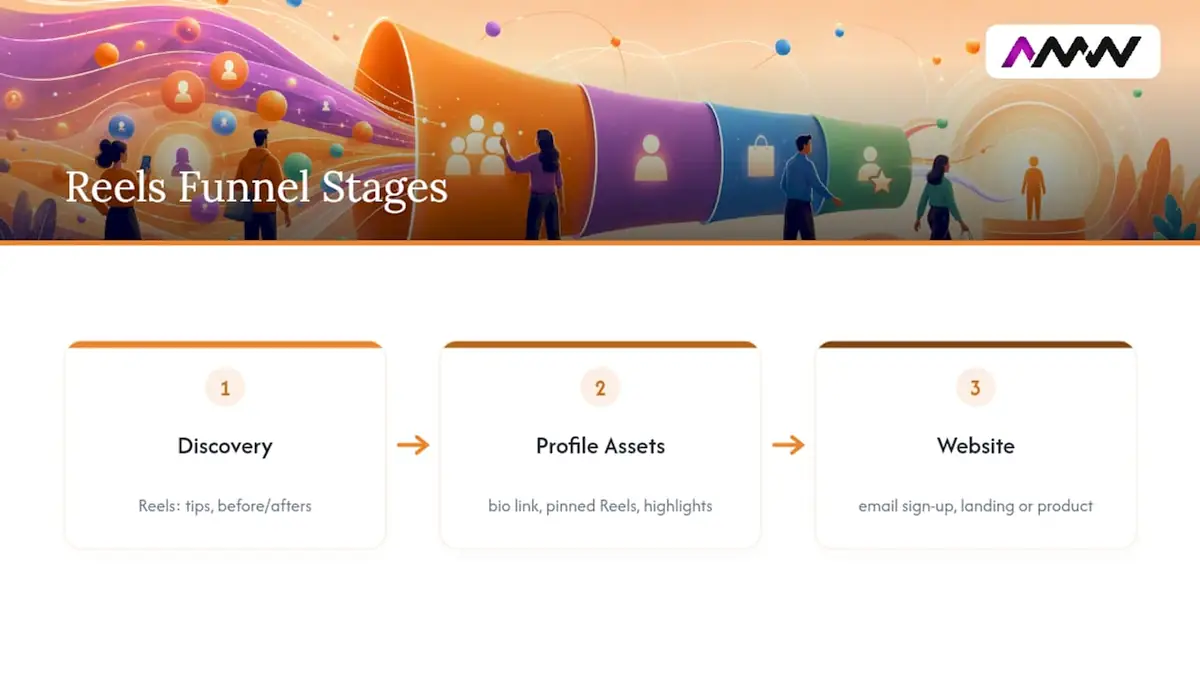
Map each Reel format to a stage of your funnel. Discovery formats, quick tips, before/afters, myth-busting, exist to pull in cold strangers. Once someone visits your profile from one of those, your bio link, pinned Reels, and highlights need to carry them toward an email sign-up, a landing page, or a product page. That’s where a Reel’s job ends and your website’s job begins.
Repurpose aggressively across channels rather than treating each platform as a separate content strategy. A tutorial filmed for Reels can become an email newsletter clip, a paid ad, or a blog embed. AMW Media’s guide on creative content formats breaks down how one asset stretches across ten different uses without feeling recycled to the audience seeing it.
Paid amplification deserves a place here too. Once you’ve identified an organic Reel that’s outperforming, a modest ad spend behind it, run through PPC campaign management, often outperforms building a paid creative from scratch, because you already have proof the content resonates before you’ve spent a penny boosting it.
Finally, tie Reels output to a quarterly content calendar alongside your other marketing activity, product launches, seasonal campaigns, sales periods, rather than posting reactively whenever someone remembers to film something.
Tailoring Reels to your audience and brand voice
The biggest mistake brands make with tone is assuming Reels demand a completely different personality to the rest of their marketing. They don’t. They demand the same personality, delivered faster and with less padding.
Start by mapping who’s actually watching. Instagram Insights breaks down your audience by age band, location, and active hours, and that data should directly shape both your posting schedule and your scripting choices. An audience skewing 35 to 44 responds differently to pacing and humour than one skewing 18 to 24, even within the same industry.
Brand voice translates into three concrete choices on camera: who’s speaking, how fast they talk, and what vocabulary they use. A financial services brand doesn’t need to invent slang to feel current on Reels, it needs a confident, unhurried delivery and a hook that respects the viewer’s intelligence rather than shouting at them. A streetwear brand can afford far more chaos in editing and cutting rhythm without losing credibility.
Test tone the same way you test hooks. Run one Reel with a formal, presenter-style delivery and a near-identical topic with a casual, off-the-cuff delivery, then compare completion rates. The data usually settles the internal debate about “how casual can we actually be” faster than any brand guideline document.
Consistency matters more than perfection here. A recognisable intro style, a consistent on-screen text font, or a specific way team members address the camera all build recognisability over weeks of scrolling, even before someone consciously registers your handle.
Music, copyright, and staying on the right side of the rules
Instagram’s built-in audio library exists for a reason: tracks licensed through it are cleared for use within the app, which sidesteps most of the copyright risk that comes with adding unlicensed music yourself. Stick to that library, or to audio you’ve created or properly licensed, and you avoid the two most common outcomes of getting this wrong: a Reel getting muted automatically or a formal copyright claim against your account.
Business and creator accounts sometimes have narrower access to trending commercial tracks than personal accounts do, a distinction that trips up plenty of brand managers who wonder why a sound that’s everywhere on their personal feed isn’t available on the company page. Original audio, voiceover, or licensed music you’ve cleared separately, sidesteps this limitation entirely and offers a real bonus: it’s easier for audiences to recognise as yours over time.
The same caution applies to visual content, not just audio. Using someone else’s video clip, photo, or graphic without permission carries the same legal exposure as unlicensed music, regardless of whether you gave credit in the caption. If you’re featuring UGC, get explicit permission first, even if the customer tagged you, and keep a simple record of that permission somewhere your team can find it later.
None of this is exotic legal territory, it’s the same due diligence brands have always needed for any content bearing their name. The stakes are simply higher now because Reels travel further and faster than a static post ever did.
Working with influencers and creators to extend reach
Creator partnerships solve a problem brand-only content often can’t: unfamiliarity. A creator’s existing audience already trusts them, and that trust transfers, at least partially, to whatever they’re showing or talking about.
The most effective structure for brands isn’t a single one-off sponsored post. It’s a short run of three to five Reels across a few weeks, giving the audience repeated exposure without feeling like an obvious one-time ad drop. Micro-creators, those with smaller but highly engaged followings in a specific niche, often outperform larger accounts on cost-per-engagement, because their audience is narrower and more relevant to what you’re selling.
Brief creators on the outcome you need, not the exact script. Handing someone a word-for-word script usually produces something stiff that their audience can spot as an ad from the first frame. Give them the key message, the format constraints (length, one clear call to action), and let their own voice carry it.
Co-created Reels, where the creator’s account and the brand’s account both post versions, or use Instagram’s Collab feature to share a single post across both feeds, extend reach further than either account posting alone. This is worth testing specifically because Collab posts count engagement toward both accounts simultaneously, effectively doubling the algorithm’s data points from a single piece of content.
Researching audience fit properly before reaching out saves wasted budget. Resources like Influenna’s audience research content are useful for brands building a creator shortlist based on genuine audience overlap rather than follower count alone.
Going beyond Instagram Insights for deeper analysis
Instagram’s native Insights panel is a reasonable starting point, but it has real limits. It shows you what happened on a given Reel, reach, saves, shares, watch time, but it’s weaker at showing you patterns across dozens of Reels over months, or how Reels performance connects to what happens after someone leaves the app.
For pattern recognition across a growing content library, export your Insights data monthly and track it in a simple spreadsheet or a dedicated social analytics tool, rather than relying on memory or scrolling back through the app. Look specifically for correlations: do Reels posted before 9am consistently outperform afternoon posts for your audience? Does a particular hook style keep resurfacing among your top five Reels each month?
External analytics tools earn their keep when you need to compare Reels performance against other channels, or when several team members need visibility without everyone logging into the same account. This is also where connecting Reels-driven traffic to a proper CRM matters. If a Reel drives someone to your bio link and eventually to an enquiry form, a tool along the lines described in Opptymizer’s funnel tracking breakdown is what actually closes that loop, showing which content genuinely fed the pipeline rather than just racking up views.
Review this data on a fixed monthly cadence rather than reactively. Reacting to a single viral or flat Reel in isolation tends to produce knee-jerk strategy changes that don’t hold up once you look at the fuller pattern.
Adapting Reels for your specific industry
A quick-tip format that works brilliantly for a skincare brand won’t automatically translate to a law firm, and pretending otherwise is how a lot of B2B accounts end up posting Reels nobody watches.
Retail and e-commerce brands have it easiest: product demos, before/afters, and UGC roundups map naturally onto visual products people can see themselves using.
Professional services and B2B need to lean harder into the personality-led, low-polish end of the format spectrum. A 45-second Reel of a consultant answering the one question every client asks in week one performs better than a slickly produced explainer nobody asked for, because it prioritises utility over gloss, exactly the pattern Pixel8’s B2B research points to.
Hospitality and food service benefit enormously from behind-the-scenes and process content, kitchen prep, plating, the actual making of something, because process itself is inherently watchable.
Healthcare and regulated industries need myth-busting and educational quick tips more than any other sector, since so much of the audience’s hesitation comes from misinformation a 30-second clip can directly correct, while staying carefully within advertising standards for the sector.
Trades and local services (plumbers, electricians, builders) do well with before/afters and quick tips that double as trust signals, showing competence without needing to sell anything explicitly.
Whatever the industry, the format bank from earlier in this guide adapts. The category rarely changes; the specific execution and tone within it does.
When to prioritise Reels, and when not to
Reels reward brands with an existing appetite for video and enough internal capacity to sustain a weekly cadence for months, not weeks. If your team can barely manage one social post a fortnight, launching a Reels strategy on top of that is setting yourself up to quit exactly when the algorithm starts rewarding you.
Delay Reels if you have no video assets at all and no capacity to create them regularly, or if your audience genuinely skews toward a platform where short vertical video isn’t the dominant behaviour. In that case, fix the underlying content pipeline first, static posts and email, before adding a format that demands more from production.
Paid and organic work best paired. Test formats organically, then put budget behind the two or three that clearly resonate, rather than guessing which concept deserves ad spend from a blank page.
How AMW Media can help you build a Reels strategy that lasts
Reading a checklist is one thing, sustaining daily filming, editing, captioning, and posting for 90 straight days on top of your actual job is another. That’s the gap AMW Media exists to close, without locking you into a rigid annual contract you can’t get out of.
Our social media management service handles exactly the workflow covered in this guide: batch-filming sessions, caption writing built for search, native exports with no watermarks, and monthly reviews against saves, shares, and reach rather than vanity metrics. A typical starter engagement runs a focused first month of shoot planning and format testing, followed by a rolling monthly cadence of production and publishing once we know what’s working for your specific audience.
If you’ve already got Reels driving profile visits but nowhere solid for people to land once they get curious, our web design team can also sort out the landing page that turns that curiosity into an actual enquiry.
Get in touch and we’ll map out what a proper 90-day Reels test looks like for your brand, no vague promises, just a clear plan and a start date.
Sources
- Instagram Reels for business in 2026: Best practices + examples
- Instagram Reels algorithm 2026: Every ranking signal explained
- How to grow Instagram with Reels (the 2026 playbook) · Kompozy
FAQ
How do I make Reels for my brand?
Start with a specific, useful idea, film vertically with a strong hook in the first two seconds, add burned-in captions, and export without a watermark before posting natively to Instagram.
What is the 5-3-1 rule on Instagram?
Definitions vary across sources, but the common version suggests posting a mix of five engagement-focused pieces, three value-driven pieces, and one promotional piece within a given content cycle, rather than a single fixed rule Instagram itself enforces.
How can I promote brands on Instagram?
Combine consistent organic Reels covering quick tips and behind-the-scenes content with targeted paid amplification behind whichever organic posts already show strong saves and shares.
What are some good Instagram Reel ideas for businesses?
Quick tips, before/afters, behind-the-scenes production clips, customer UGC roundups, and short myth-busting explainers all perform reliably across most industries, with 30 to 60 second lengths working best for B2B accounts specifically.
How often should brands post Reels?
Aim for daily or four times weekly during an initial 90-day test phase, then settle into a sustainable 3 to 4 times weekly cadence once you know which formats resonate with your audience.
Recommended
- How to create engaging social media content that works
- Innovative social media content ideas to boost engagement
- The role of video content in digital brand engagement
Our free marketing audit looks at your site, your ads and your content, and comes back with a 30 day plan. No pitch deck.

Owns how everything looks and feels, from a brand identity to the grade on a reel, and makes the animated films such as Blue Light Services' Journey to Net Zero. Meet the team.