
 Black Steel Doors
 Woodstock Campers
 Phillips Joinery
Video will represent 82% of all internet traffic by 2026, fundamentally reshaping how businesses connect with audiences. Marketing professionals and business owners face mounting pressure to integrate video into campaigns, yet many struggle to understand what video marketing truly entails and how to deploy it effectively. This article unpacks video marketing’s definition, presents compelling performance data, explores strategic components, examines format choices, and provides practical guidance to help you harness video’s power for measurable business growth across digital platforms.
Key takeaways
| Point | Details |
|---|---|
| Video dominates engagement | Social videos generate 12 times more shares than text and images combined, making video essential for brand visibility. |
| ROI is measurable and positive | 82% of marketers report positive returns from video marketing, with clear metrics linking video to business outcomes. |
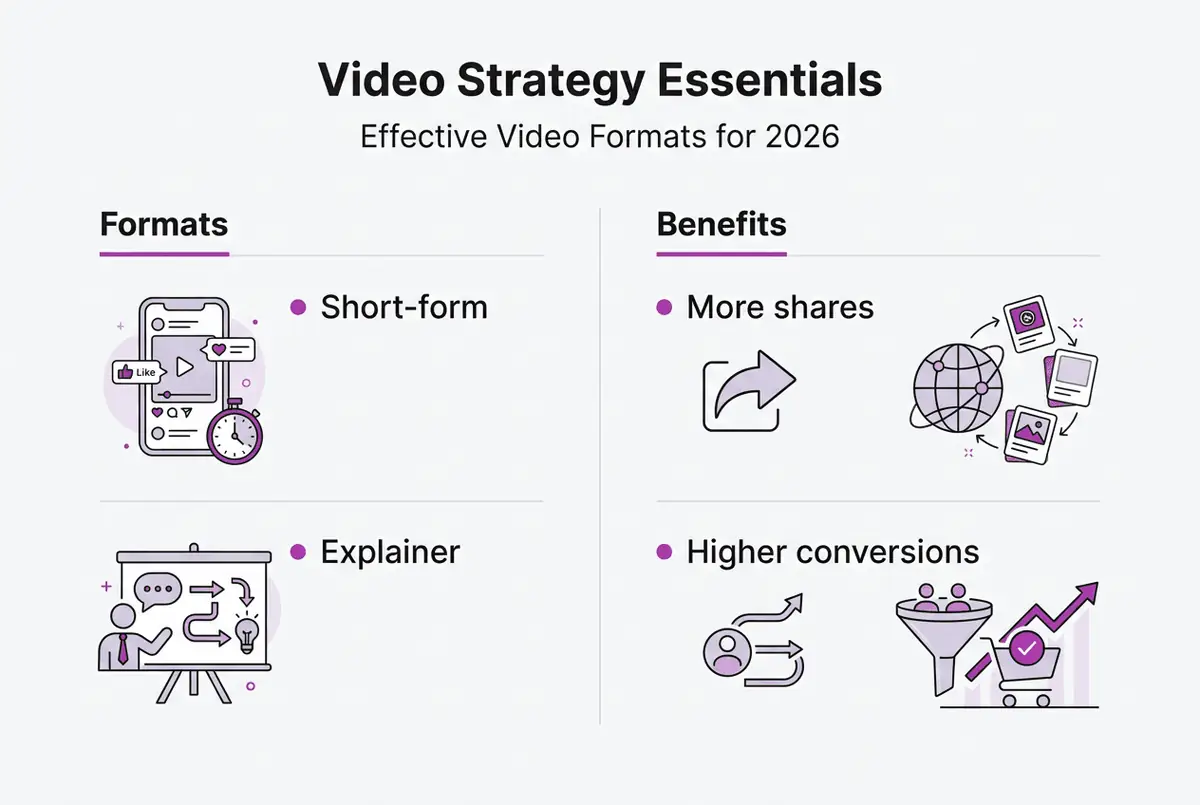
| Short-form content wins | Short-form videos achieve 2.5 times higher engagement than long-form content on social platforms in 2026. |
| Strategic planning matters | Effective video marketing requires audience targeting, platform optimisation, content planning, and performance measurement. |
| Multiple formats serve different goals | Explainer videos, testimonials, tutorials, and live streams each fulfil distinct marketing objectives across buyer journeys. |
Understanding video marketing and its business impact
Video marketing uses video content to promote products, services, or brands across digital channels. Businesses deploy videos in social media campaigns, email sequences, landing pages, and advertisements to educate prospects, demonstrate value, and drive conversions. The approach has become indispensable because 89% of businesses are using video marketing in 2026, recognising its unmatched ability to capture attention and communicate complex messages quickly.
The business case for video is compelling. 82% of marketers say video delivers positive ROI, outperforming most other content formats in engagement and conversion metrics. This return stems from video’s unique capacity to combine visual, auditory, and emotional elements that resonate with audiences far more effectively than static content.
Social videos generate 12 times as many shares as text and images combined, creating exponential reach opportunities for brands willing to invest in quality video content.
Video marketing delivers multiple strategic advantages for businesses seeking to strengthen their digital presence. Enhanced engagement tops the list, as moving visuals naturally command more attention than text or images. Improved information retention follows, with viewers remembering 95% of a message when consumed via video compared to just 10% when reading text. Conversion rate optimisation represents another critical benefit, as landing pages with video convert up to 80% better than those without.
Additional benefits include:
- Stronger emotional connections with audiences through storytelling and visual narratives
- Higher search engine rankings, as Google prioritises video content in results
- Increased brand trust and credibility through authentic testimonials and demonstrations
- Better mobile reach, as smartphone users consume video at accelerating rates
- Improved social media performance through platform algorithms favouring video content
Integrating video into your social media branding growth strategy amplifies these advantages, creating compound effects across channels. Marketing professionals who master video fundamentals position their brands to capitalise on the format’s dominance throughout 2026 and beyond.
Core elements of an effective video marketing strategy
A strong video marketing strategy integrates performance measurement, platform optimisation, content planning, and audience targeting to ensure videos contribute directly to business objectives rather than serving as isolated creative exercises. Each component plays a distinct role in transforming video content from expense into investment.
Four essential elements form the foundation of successful video marketing:
Performance measurement establishes clear metrics linking video content to business outcomes. Track view duration, engagement rates, click-through rates, and conversion attribution to understand which videos drive results. Set specific KPIs before production begins, whether that’s lead generation targets, brand awareness metrics, or direct sales attribution. Regular analysis reveals patterns showing which topics, formats, and platforms deliver the strongest returns.
Platform optimisation tailors video specifications and distribution tactics to each channel’s unique requirements. Instagram Reels demand vertical 9:16 format and 90-second maximum length, whilst YouTube supports longer horizontal content with detailed descriptions. LinkedIn audiences respond to professional thought leadership videos, whereas TikTok users expect entertainment-focused short clips. Optimising video specs, captions, thumbnails, and posting schedules for each platform maximises reach and engagement.
Content planning creates a structured calendar aligning video topics with audience needs and business goals. Map content to buyer journey stages, producing awareness videos for top-of-funnel prospects, consideration content for mid-funnel evaluation, and decision-stage videos addressing final objections. Balance educational content with promotional material, maintaining a ratio that builds trust whilst advancing sales objectives.
Audience targeting ensures videos reach the right viewers at optimal moments. Define detailed audience segments based on demographics, behaviours, pain points, and preferences. Create distinct video variations for different segments when necessary, speaking directly to each group’s specific concerns and motivations. Use platform targeting tools to deliver videos to high-intent audiences most likely to convert.
Pro Tip: Review video analytics monthly to identify underperforming content and double down on formats generating the strongest engagement and conversion rates, then reallocate budget accordingly.
Partnering with specialists in video content production services accelerates strategy implementation by combining technical expertise with creative vision. Following proven creative content production steps ensures consistency and quality across your video library whilst maintaining strategic alignment.
Choosing the right video formats and content types for your brand
Video marketing encompasses diverse formats, each serving distinct purposes within comprehensive campaigns. Explainer videos simplify complex concepts through animation or live action, making them ideal for product launches and service descriptions. Testimonial videos use customer voices to build credibility and address prospect objections through authentic social proof. Tutorial videos demonstrate product usage or teach valuable skills, positioning brands as helpful authorities whilst showcasing solutions.
Short-form social videos dominate platforms like Instagram, TikTok, and YouTube Shorts, delivering quick entertainment or information in under 60 seconds. Live video creates real-time connection opportunities through Q&A sessions, product launches, or behind-the-scenes glimpses that humanise brands. Each format demands different production approaches, distribution strategies, and performance expectations.
The engagement gap between short-form and long-form content has widened significantly. Short-form videos get 2.5x more engagement than long-form content, reflecting shrinking attention spans and platform algorithm preferences. This data doesn’t eliminate long-form’s value, particularly for in-depth tutorials or thought leadership, but it demands strategic format selection based on content goals and audience context.

| Format | Optimal Length | Best Platforms | Primary Use Case |
|---|---|---|---|
| Short-form social | 15-60 seconds | Instagram, TikTok, YouTube Shorts | Quick tips, entertainment, brand awareness |
| Long-form educational | 5-15 minutes | YouTube, LinkedIn | Detailed tutorials, thought leadership |
| Product demos | 2-5 minutes | Website, email, YouTube | Feature showcases, conversion optimisation |
| Customer testimonials | 60-90 seconds | Website, social media | Trust building, social proof |
Common content types and their platform matches include:
- Behind-the-scenes footage for Instagram Stories and TikTok, humanising brands through authentic glimpses
- Educational how-to content for YouTube and LinkedIn, establishing expertise whilst providing genuine value
- Product announcements for email and website landing pages, driving direct conversions
- User-generated content campaigns for Instagram and Facebook, using customer creativity
- Webinar recordings for LinkedIn and email nurture sequences, deepening prospect relationships
Pro Tip: Test multiple formats simultaneously during campaign launches, then analyse performance data after two weeks to identify which formats resonate strongest with your specific audience before scaling production.
Consider that 30% of top landing pages include videos to boost conversions, demonstrating video’s power beyond social platforms. Strategic video content planning steps ensure format choices align with distribution channels and business objectives rather than following trends blindly.
Real-world examples and applications of video marketing for businesses
Businesses across sectors deploy video marketing to solve specific challenges and accelerate growth. A software company may use tutorial videos to reduce support tickets by 40%, while consulting firms use thought leadership videos to shorten sales cycles, demonstrating video’s versatility beyond simple brand awareness. These applications translate directly into measurable business outcomes rather than vanity metrics.
Different industries prioritise distinct video marketing approaches based on their unique customer journeys and decision factors:
| Industry | Primary Video Use | Key Metric | Typical Result |
|---|---|---|---|
| Software/SaaS | Product tutorials, feature demos | Support ticket reduction | 30-40% fewer support requests |
| Professional services | Thought leadership, case studies | Sales cycle length | 20-35% shorter cycles |
| Retail/ecommerce | Product showcases, unboxing | Conversion rate | 60-80% higher conversions |
| Home services | Before/after, process explanations | Lead quality | 45% more qualified leads |
Sector-specific applications reveal video marketing’s practical value:
- Software companies create comprehensive video libraries addressing common user questions, enabling customers to self-serve solutions whilst freeing support teams for complex issues
- Consulting firms produce executive interviews and market analysis videos establishing partners as industry authorities, building trust before sales conversations begin
- Professional services firms develop case study videos showcasing client transformations, providing concrete evidence of capabilities that text testimonials cannot match
- Retail brands deploy user-generated content campaigns encouraging customers to share product experiences, creating authentic social proof at scale
- Home services businesses film project transformations documenting process transparency, addressing homeowner concerns about quality and professionalism
Measurable outcomes extend beyond engagement metrics to business fundamentals. Video marketing accelerates lead generation by capturing attention in crowded feeds, improves lead quality by pre-qualifying prospects through educational content, and enhances customer education reducing post-purchase support needs. Brand awareness compounds as shareable video content reaches audiences beyond paid distribution, whilst customer retention improves through ongoing video engagement maintaining top-of-mind presence.
Businesses serving professional services marketing needs or home services marketing sectors particularly benefit from video’s ability to demonstrate expertise and build trust before prospects request quotes. The format’s capacity to convey competence and professionalism through visual evidence proves invaluable in high-consideration purchase categories where buyers seek reassurance before committing.
How AMW Media can help you amplify your video marketing
Navigating video marketing’s complexities demands both creative vision and technical expertise. AMW Media specialises in video content production services that transform marketing objectives into compelling visual stories driving measurable results. Our team combines strategic planning with production excellence, ensuring every video serves specific business goals whilst maintaining brand consistency.
Beyond production, our social media management services optimise video distribution across platforms, maximising reach and engagement through data-driven posting strategies and audience targeting. Integrated SEO services ensure your video content ranks prominently in search results, capturing organic traffic whilst paid campaigns drive immediate visibility. Whether you need a comprehensive video marketing strategy or tactical production support, AMW Media delivers purpose built solutions that elevate your brand’s digital presence and accelerate business growth.
Frequently asked questions
What is video marketing?
Video marketing uses video content strategically across digital channels to promote brands, products, or services whilst achieving specific business objectives. It encompasses everything from social media clips and website explainer videos to email campaigns and paid advertisements. The approach uses video’s superior engagement and retention capabilities to communicate messages more effectively than text or static images, ultimately driving awareness, consideration, and conversions throughout customer journeys.
Why is video marketing crucial for business growth in 2026?
Video marketing has become essential because 89% of businesses now use it, creating competitive disadvantages for brands without video strategies. The format delivers measurable returns, with 82% of marketers reporting positive ROI from video investments. Beyond adoption rates, video fundamentally outperforms other content types in engagement, with social videos generating 12 times more shares than text and images combined. This performance gap translates directly into greater brand visibility, stronger customer relationships, and accelerated revenue growth for businesses embracing video marketing.
How does video marketing improve engagement compared to other content?
Social videos generate 12 times as many shares as text and images combined, creating exponential reach opportunities that static content cannot match. This engagement advantage stems from how the brain processes visual content 60,000 times faster than text, allowing viewers to absorb information quickly whilst maintaining attention. Video’s combination of visual, auditory, and emotional elements creates memorable experiences that audiences feel compelled to share, discuss, and act upon, resulting in measurably higher interaction rates across all digital platforms.
What types of video formats should businesses focus on in 2026?
Businesses should prioritise short-form videos, as short-form videos get 2.5x more engagement than long-form content across social platforms in 2026. However, format selection should align with specific objectives rather than following trends blindly. Explainer videos work brilliantly for product launches, testimonial videos build trust through social proof, tutorial videos establish expertise whilst demonstrating value, and live videos create real-time connection opportunities. The most successful strategies deploy multiple formats strategically, matching each type to distinct stages within customer journeys and platform contexts.
How can businesses measure the success of their video marketing efforts?
Businesses should track metrics directly linking video content to business outcomes rather than focusing solely on vanity metrics like view counts. A strong video marketing strategy connects videos to measurable business outcomes through KPIs including engagement rates, watch time percentages, click-through rates, conversion rates, and sales attribution. Use platform analytics to identify which topics, formats, and distribution tactics generate the strongest returns, then optimise content production and budget allocation accordingly. Regular analysis reveals patterns enabling continuous improvement, ensuring video marketing investments deliver quantifiable value rather than serving as isolated creative exercises.
Recommended
- Creative content production steps for marketing success in 2026
- Harness social media in branding for growth in 2026
- AMW Media, Digital Marketing Agency London
- Social Media Management Services | AMW Media | AMW Media
Our free marketing audit looks at your site, your ads and your content, and comes back with a 30 day plan. No pitch deck.

Runs the content calendars and the community side of every social account, and keeps clients posted on what is going out and when. Meet the team.