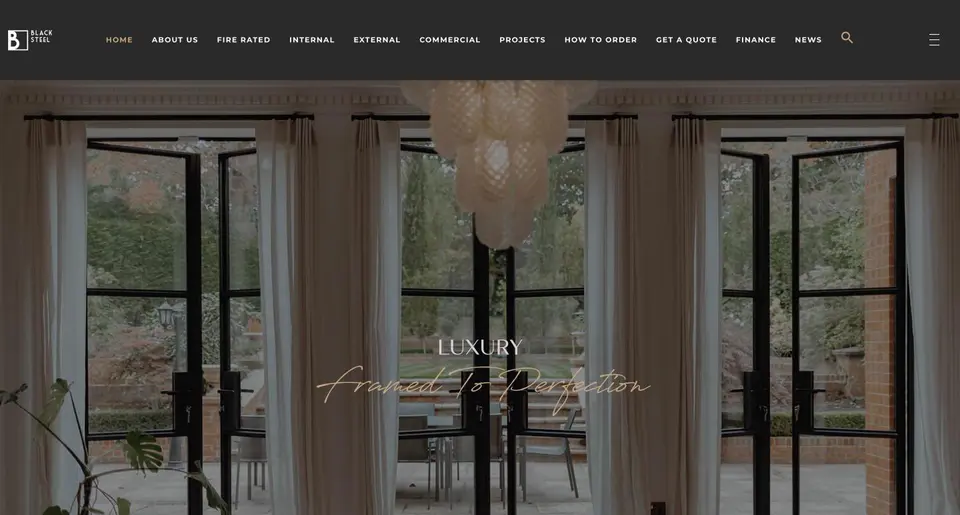
 Black Steel Doors
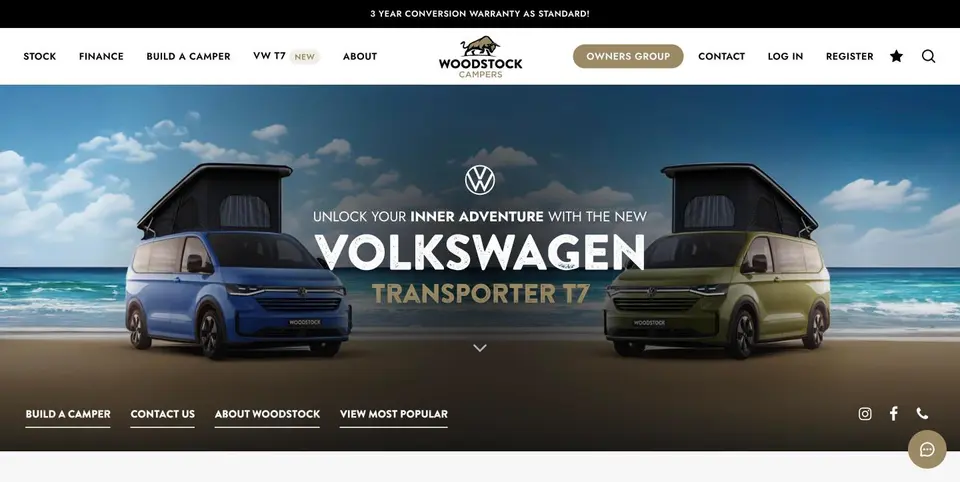 Woodstock Campers
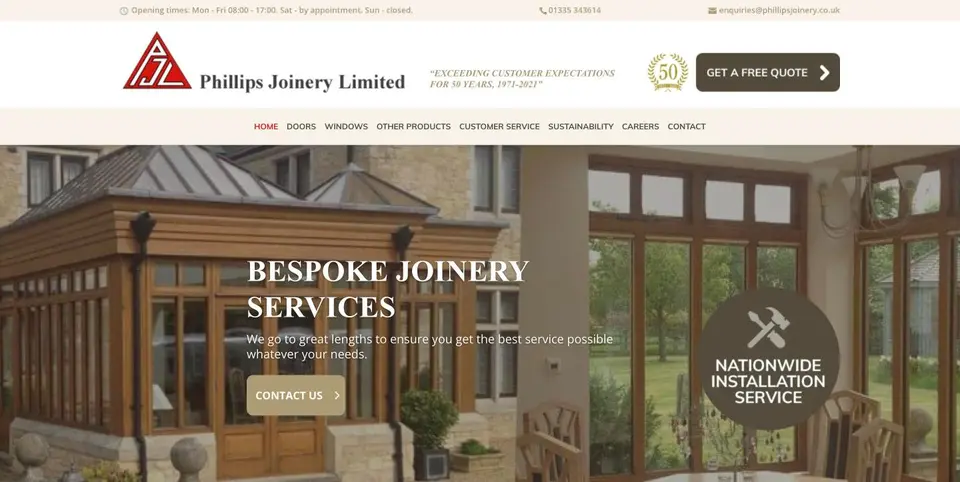 Phillips Joinery
Graphic design · brand identity, print, packaging, digital A brand is a system, not a logo
Put your website, your last three social posts, a quote document and a photograph of your van side by side. If a stranger could not tell they came from the same company, the logo was never the problem.
 Live client figure
Put four things side by side
Your website. Your last three social posts. A quote document you sent last week. A photograph of your van, or your packaging, or your reception.
Now show them to somebody who has never heard of you and ask whether they came from the same company. That is the whole brand test, and most businesses fail it without ever noticing, because you only ever see the pieces one at a time.
A brand is a system rather than a logo. The logo is the smallest part of it and the part most graphic design agencies sell hardest, because it is the easy thing to present in a meeting.
What a brand system actually contains
- The logo, in the versions you need: full, stacked, icon only, one colour, and files a printer will accept without emailing you back.
- Colour, defined properly, with enough contrast to work on a button and in body text as well as on a hero image. This is where most brand identities quietly fall apart on a website.
- Typography that holds up at 360 pixels wide as well as on a billboard, with a licence that covers your website.
- Photography direction. How your pictures are framed and lit, so a year of images looks like one brand rather than four.
- Layout rules and templates for the things you produce weekly: social media assets, quote documents, proposals, price lists.
- Brand guidelines short enough that somebody actually reads them. Ten useful pages beats sixty nobody opens.
Get that system right and the visual communication stays consistent whoever is producing the material, which is the point. Get only the logo and you have bought a nice picture.
Our graphic design services
All produced by our own graphic design team, with no white label partners. As a creative agency we also film and build the website, which is what keeps the design process honest.
- Brand identity design and logo design. New identities and refreshes of existing ones.
- Print. Brochures, price lists, exhibition graphics, vehicle livery, signage and the artwork specifications printers need.
- Packaging design. Where the product sits on a shelf or arrives in a box, and the box is part of the purchase.
- Digital design. Social media assets, email templates, advert creative and the digital applications of the identity across every platform you use.
- Web design. The identity applied to a working site, handled by the same team, covered on our web design page.
- Illustration where it earns its place, which is less often than designers would like.
Design that has to work next to photography
Most design agencies hand over an identity and never see it used. Ours gets used the following month, because we are also filming and photographing the business.
That changes the design decisions in practical ways. Colour palettes get chosen knowing what the actual product looks like. Layouts leave room for the photographs that will exist rather than for stock images that will not. Typography gets tested against the real headline lengths rather than against Latin placeholder text.
It also means the brand arrives complete. A new identity with no photography to put in it looks unfinished for six months, and that is the period when everybody decides whether the rebrand worked.
What good design earns you
The benefits of design are hard to see on an invoice and obvious in a shortlist. When three quotes arrive and one comes from a business that looks like it has its act together, that is design making you stand out before anybody has read a word.
Consistency is most of it. A brand holding its style across the website, the van, the quote document and the advertising reads as one company. One that changes every six months reads as several, and the customer cannot tell which version they are dealing with.
Detail is the rest. Kerning nobody consciously notices, alignment that makes a price list readable, a form somebody can complete on a phone. Clients rarely mention any of it, and every one of them affects whether the sale completes.
Design also has to adapt. What works at poster size collapses in a social thumbnail, so creating a system rather than a single artwork is what keeps things usable a year later. The creation of those underlying rules matters more than any one piece of artwork.
Some sectors carry extra weight. A finance business needs to look like it will still exist in a decade. A restaurant needs to look like somewhere worth a Friday evening. The design expertise is in reading which world you are in and dressing for it, rather than dressing for a design award.
We specialise in brands that have real work to show and no visual language to show it in. Ideas that never leave a deck are worthless. A brand story surviving contact with a printer, a screen and a van livery is what brings a business to life for somebody meeting it the first time.
Across the full range of assets, engagement follows recognition. People buy from businesses they feel they have seen before, and the quality of that impression is set long before anybody speaks to you.
We are happy to discuss what your business actually needs, including when the answer is a tidy up rather than a rebrand. Support after handover is part of it, because a brand nobody can apply correctly stops being one inside a year.
Choosing a graphic design agency
Design is bought on taste more than any other marketing service, which makes it the easiest one to buy badly. Four checks help.
Ask to see the system, not the logo. Any agency can show you a beautiful mark on a white background. Ask for the guidelines, the templates and the applications from the same project. That is where the real work sits and where the weak studios have nothing to show.
Ask about industry experience carefully. Having designed for your exact sector is less useful than it sounds and occasionally a liability, because it produces work that looks like everybody else in your market. What matters more is whether the agency has solved a similar problem: the same kind of buyer, the same length of decision.
Ask who does the design. Plenty of graphic designers work as subcontractors behind an account manager. Our graphic design team is employed here, which means the person who presented the creative vision is the person producing the artwork three weeks later.
Look at case studies with the brief attached. A portfolio of pretty images tells you what an agency likes. A case study explaining the problem, the constraint and the reason for the decision tells you how they think, and that is what you are buying.
One more: creativity without strategy produces work that wins nothing. Design should make your target audience understand something faster, choose you more often, or remember you longer. If a designer cannot say which of the three a decision serves, it is decoration.
Rebrand or refresh
A full rebrand is right when the business has changed: a new market, a merger, a name that no longer describes what you sell, or an identity so dated that it costs you credibility with the customers you now want.
A refresh is right far more often. The name and the recognition are worth keeping, the execution needs bringing up to date, and the money is better spent making the system consistent than starting again.
Be honest about what problem you are solving. A rebrand does not fix an unclear offer, a slow website or an enquiry nobody answers, and it is regularly sold to businesses whose real problem is one of those three. We would rather tell you that and do a smaller job.
How a brand project runs
Our design process starts with discovery: what you sell, who buys it, what your competitors look like, and what people already recognise you by. Founders usually know more about this than they think and less about how it looks from outside.
Then routes. Two or three distinct directions rather than twelve variations of the same idea, because twelve options is a way of making the client do the choosing. A collaborative approach here means an honest conversation about which direction fits the business, not a vote.
Then the system: the chosen route developed into the full set of applications, the guidelines written, the files organised and handed over.
Then rollout, which is the stage most projects underestimate. Website, social, print, signage, vehicles, documents. We plan it in order of what customers see most.
Typical projects run four to eight weeks depending on scope and how quickly decisions come back.
Work you can look at
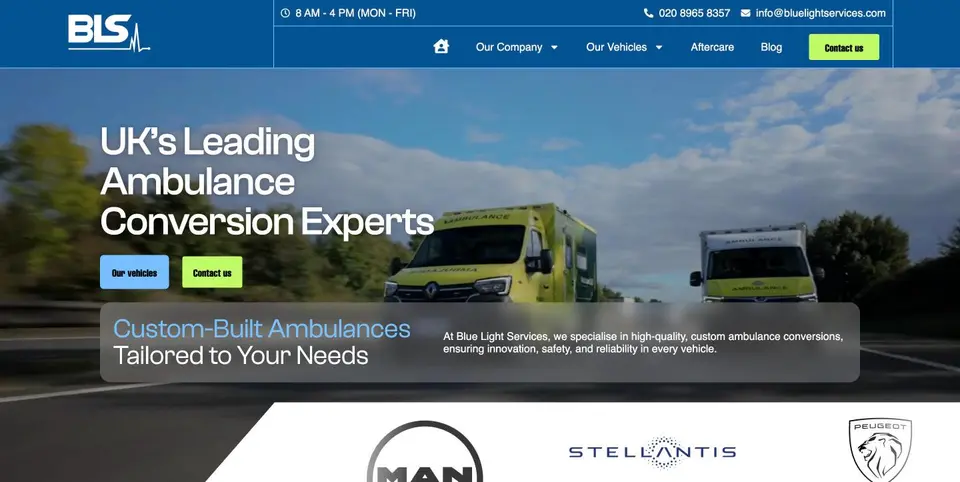
Turbo Snail, Boyana Brows, GoMo Garden Pods, Blue Light Services and Giant Jiu Jitsu are all brand and design projects with the website built alongside, and each has a case study on this site with the brief and the constraints set out. Our own rebrand is documented on this site too, including the three routes presented and why one was chosen, which is more than most agencies will show you.
Start ups and established companies want different things here. A start up needs an identity that can be produced cheaply and consistently by one person. An established business usually needs its existing recognition preserved while everything around it is tidied up.
What it costs
Set by scope: how many applications, whether print and packaging are included, whether the website is part of it. Starting prices are on the pricing page. A logo refresh and a full identity with packaging and signage are not the same purchase, so the figure moves with the scope.
What we will not do is a logo in isolation for a business that clearly needs the system. You can buy a logo for fifty pounds online and it will be worth exactly that, because the value was never in the drawing.
Services run month to month with 30 days’ notice, and one off projects are quoted as projects.
Every figure is published: A brand identity starts at £599, and the full rate card is on our pricing page, where you can tick what you need and see the total before you speak to anybody.
Start by showing us the four things
Website, recent social, a document you send customers, and a photograph of something physical. That comparison usually settles what the job is inside five minutes.
The free audit carries no obligation, and if the honest answer is that your brand is fine and the problem is elsewhere, that is what you will be told.