
 Black Steel Doors
 Woodstock Campers
 Phillips Joinery
Technology and SaaS · software products, apps, platforms Marketing by people who ship software
We built and run our own SaaS, so we know the difference between a feature and a benefit and how hard it is to explain either in fifteen seconds. Product films, launch content and websites for technology companies, from a team that has been on your side of the demo.
 From this sector
What we bring
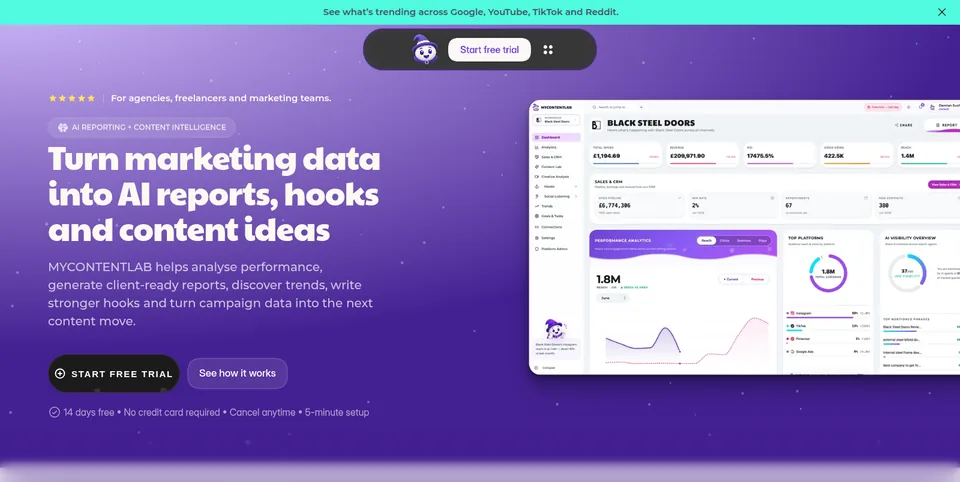
MyContentLab is the reporting platform we built for agencies; it connects ad accounts, social accounts, analytics and CRM into one dashboard and it powers every figure on this website. FitConnect is a mobile fitness app we designed and built for a client. So when a software company asks for a product film or a launch site, the brief is understood before the first call ends.
What technology companies need
A website that explains the product in the customer’s words and converts to a trial or a demo. Product films: short, specific, showing the thing solving the problem. Launch content for the channels your buyers actually use, which for B2B is usually LinkedIn and search. Case studies written like the ones on this site: with the working shown.
Positioning is usually the whole problem
Almost every software marketing brief that arrives is described as a lead generation problem and turns out to be a positioning problem. The product does something specific for somebody specific, and the website describes it in the language of the people who built it.
Fixing that costs a day of hard conversation and changes more than a quarter of advertising would. If a visitor cannot tell within ten seconds what the product does and who it is for, nothing downstream matters.
Product film that shows the software working
Screen recordings with a voiceover are the default, and they are usually too long and too feature led. What works is short, specific and framed around the problem: here is the mess, here is the thing that removes it, here is what it looks like afterwards.
Ninety seconds for the main film, then cut downs for the feature pages, the adverts and LinkedIn. One production block, used for months.
Where software buyers actually are
Search, for the categories people already know they need. LinkedIn, for the ones they do not. Communities and review sites, for the shortlist stage nobody controls.
Paid social to a cold audience rarely sells software directly. It builds the recognition that makes the search click happen later, which is worth doing and should be measured accordingly rather than on last click.
Measuring in demos, not downloads
A whitepaper download is not a sales conversation. Measuring on those makes the report look healthy and the pipeline look empty.
Demos booked, demos attended and the eventual conversion to paid are the numbers that matter, and they only exist if the marketing is wired into the CRM properly. That connection is usually the missing piece.
Course businesses and training providers sell the same way software does: a considered purchase, a buyer who researches quietly, and a decision made largely before you hear from them.
What we would do first
A positioning session, a ninety second product film, a rebuilt homepage that leads with the outcome. Then a LinkedIn and search plan measured in demos booked, tracked in your CRM.