
 Black Steel Doors
 Woodstock Campers
 Phillips Joinery
Search a location directory such as Film London, then contact the relevant Borough Film Service through FilmApp/Apply4 (or Royal Parks, for park shoots) to lodge a pre-application check. That’s the fastest route from brief to booked location in London.
Two things to do today: run a search on a location library or agency, and simultaneously get a permit query into the right authority so lead times start ticking in parallel, not in sequence.
The producers who move fastest aren’t the ones with the biggest contact book. They’re the ones who search and apply at the same time, instead of finding the perfect street and only then discovering it needs ten working days’ notice.
Start with these:
- Film London directory for council and private location mapping
- FilmApp/Apply4 to submit borough permit applications
- Location agencies (FilmFixer, Locations Direct and similar) for agent-managed bookings
- Royal Parks filming team, if your shortlist includes any of the eight Royal Parks
Key takeaways
Securing a London shooting location comes down to searching the right channel early and applying for permission in parallel, not after, you’ve settled on a spot.
| Point | Details |
|---|---|
| Search multiple channels | Check Film London’s directory, agencies like FilmFixer, and direct marketplaces before settling on one route. |
| Identify the right authority first | Borough Film Service, TfL, Royal Parks or a private owner all have different processes and fees. |
| Apply via FilmApp/Apply4 early | Most boroughs process permits through this platform, so submit alongside your search, not after. |
| Budget realistic lead times | Small shoots need 3 to 5 working days; larger or complex ones need 7 to 10 or more. |
| Get help with the admin | AMW Media coordinates location scouting, permit applications and shoot-day logistics as one point of contact. |
Where to search for shooting locations in London
Three routes get you to a bookable location: agencies, direct marketplaces, and council directories. Which one you pick depends on how much control you need and how fast you need it.
Location agencies and private location managers work best for complex or high-spec briefs, a period townhouse for a period drama, say, or a warehouse with specific ceiling height. They handle the recce, contract and insurance conversation for you, which costs more but saves you from chasing a homeowner by phone. FilmFixer is a well-known name here, managing relationships across multiple boroughs and private sites at once.
Direct host marketplaces suit smaller, faster shoots where you know roughly what you want and just need to book it. Locations Direct lists thousands of London properties searchable by style, and lets you go straight to the owner without an agent fee.
For council land, streets and public realm, go to the Film London directory first. It maps who owns what, which matters because London is full of spaces that look public but are actually privately managed.
- Agency route: best for complex briefs, period interiors, guaranteed exclusivity
- Direct marketplace: best for speed and smaller budgets
- Film London / Locations.london: best for mapping ownership before you commit to a street or square
- FilmFixer and similar managers: best when you need one contact across several boroughs
How do you get permission to film in London?
Work out who actually controls the ground first: the Borough Film Service, TfL, Royal Parks, the Port of London Authority, or a private owner. Then apply through FilmApp/Apply4 wherever the authority uses it, which most London boroughs now do.
- Optional pre-application consultation with the relevant Borough Film Service (BFS) to agree principles for larger or complex shoots
- Submit your application via FilmApp/Apply4 with dates, locations and a brief synopsis
- Receive a reference number and pay any applicable fees
- The council or authority reviews and issues conditions (parking, noise, timing)
- Notification goes to the Metropolitan Police Film Unit or TfL where the shoot affects roads or public order
Each borough runs its own Borough Film Service, which acts as the single point of contact for council land and liaises internally on your behalf. Private sites are different: you need direct sign-off from the owner or their agent, full stop, regardless of how public the location looks from the pavement.
The Film London Code of Practice is the standard everyone in the industry works to, covering lead times, insurance, and police liaison. Signatories agree to follow it to keep disruption to residents manageable, which is also why boroughs take a dim view of productions that skip the process.
Pro Tip: If your shoot spans more than a couple of sites or needs road closures, book a pre-application consultation with the BFS before you submit anything formal. It’s free, and it saves you resubmitting a permit application that got the traffic plan wrong the first time.
Which body manages each type of London location?
Getting the right contact on the first try saves days. Here’s the rough map:
- Public streets and squares: usually Borough Film Service, though some (Trafalgar Square, for instance) are privately managed despite looking public
- Council parks: Borough Film Service
- Royal Parks (Hyde Park, Regent’s Park, Richmond Park and the rest): the Royal Parks filming team directly
- Bridges and riverbanks: often the Port of London Authority for river frontage and water use
- Transport hubs and platforms: Transport for London (TfL)
- Rail locations: Network Rail
- Private interiors and studios: the property owner or a location agency acting on their behalf
A lot of the best-looking “public” spots in London aren’t public at all in permission terms. Westminster’s own guidance flags several well-known squares and buildings as privately managed, which catches out productions that assume council land covers everything.
Planning unit bases, closures, drones and insurance
Sort logistics early, because they’re what usually causes a permit to bounce back with queries. Cover:
- Unit base and parking: mark bays and suspensions on your site plan, agreed with the BFS in advance
- Traffic management: road closures need a formal process and, often, police sign-off
- Coning and vehicle placement: confirm exact positions rather than a vague “nearby”
- Public liability insurance: standard requirement across nearly all London permits
- Weapons or replicas: get a Film Weapon CAD reference from the Metropolitan Police Film Unit so armed response units don’t mistake your scene for a real incident
- Drones: CAA permissions apply, and many boroughs and parks ask for at least £10 million public liability cover for commercial drone work
Pro Tip: Submit your parking and unit base plan with the initial application, not as a follow-up. Councils process it faster the first time round, and you avoid a second round of fees for amended paperwork.
Searching by borough: London hotspots worth knowing
Each Borough Film Service sets its own charges, parking rules and lead times, so narrowing your search by borough early saves wasted enquiries.
- Westminster: detailed guidance on named streets, camera positions, and unit bases such as Lincoln’s Inn Fields; some sites (Old Palace Yard) need ten full working days’ notice
- South Bank: popular for river views, mixed council and private ownership
- Covent Garden: high footfall, expect crowd management conditions
- Canary Wharf: privately managed estate, separate application process
- Royal Parks: eight parks, one central filming team
Check the Film London production facilities map alongside each borough’s own BFS list before you commit to a hotspot.
What do shooting locations in London actually cost?
Expect variable fees rather than a fixed rate card. Some public street camera positions cost nothing beyond the admin process; council land, Royal Parks, and private venues all charge on top of that.
Lead times follow a pattern location managers repeat consistently: 3 to 5 working days for small shoots, 7 to 10 or more for larger or complex productions, according to guidance from FilmFixer and comparable location managers. High-security sites or anything touching the Parliamentary Estate can need considerably longer.
Budget for these line items:
- Location hire or council administration fee
- Traffic management and road closure costs
- Parking suspensions and unit base charges
- Security and cleaning
- Royal Parks fees, which vary by crew size and shoot type
- Specialist licences (drones, weapons, water use)
Location managers and FilmFixer consistently quote 3 to 5 working days for small shoots and 7 to 10+ for larger ones. Build that into your schedule before you promise a client a shoot date.
Our prices are on the website, not behind a form. The rate card starts at £99 for a logo and reaches £4,999 for an ecommerce build, and you can total up your own shortlist on the page.
What goes into a location application?
Councils and private owners both move faster when you hand them a complete package rather than a partial one.
- Site plan with marked camera positions and vehicle/unit base locations
- Full shoot schedule with day-by-day timings
- Cast and crew numbers
- Equipment and special effects details, including any weapons or replicas
- Public liability insurance certificate
- Risk assessment
- Waste and environmental management plan
For private locations, add booking terms, your recce date, and deposit expectations to the conversation early, before you’re both mid-negotiation on price.
| Checklist item | Why it matters |
|---|---|
| Site plan with camera positions | Lets councils and police assess the shoot without back-and-forth queries |
| Public liability insurance | Required by almost every borough, Royal Parks and private owner |
| Risk assessment | Standard requirement under the Film London Code of Practice |
| Weapon/replica details | Triggers a Film Weapon CAD reference from the Met Police Film Unit |
How AMW Media takes the location legwork off your plate
Running down agencies, chasing FilmApp reference numbers, and redrawing a site plan because the council queried your parking bays. It’s a lot of admin for a shoot that might last two hours. AMW Media handles the parts that eat production time: location scouting, permit coordination through FilmApp/Apply4 and the relevant borough, and shoot-day production management so you’ve got one point of contact instead of five.
We work across London and understand the practical side of borough permissions, from Westminster’s ten-day notice sites to Royal Parks licence conditions, so you’re not learning that mid-schedule. AMW Media can act as your principal production contact on the day, coordinating crew, council conditions and client liaison in one place. Once the footage is in the can, our content production team can also help you get more mileage from it through social media management that puts it in front of the right audience.
Got a shoot coming up? Get in touch for an initial scoping call and we’ll talk through locations, permits and timelines before you commit to a date.
A production lead’s note on London permits
Late parking changes used to be my biggest headache, until we started marking unit-base bays on the site plan and confirming them with the BFS before submitting anything else. One pre-application chat saved an entire reshoot week. If you would rather have this done for you, our Reading marketing page starts with what £12.50 a lead actually bought Woodstock Campers over thirteen months.
Sources
- Working with Boroughs | Film London
- Location Filming in London
- Filming and photography in Westminster
- Apply to film • FilmFixer
- Commercial filming and photography | The Royal Parks
FAQ
What films are currently shooting in London?
London runs a steady pipeline of feature, TV and commercial productions year-round, with exact schedules confirmed borough by borough. Check individual Borough Film Service notices or Film London’s resources for current activity in a specific area.
What are some famous shooting locations in London?
Westminster’s streets and squares, the South Bank, Covent Garden and the Royal Parks all appear repeatedly in film and TV work, largely because their permission routes are well established through the relevant BFS or Royal Parks team.
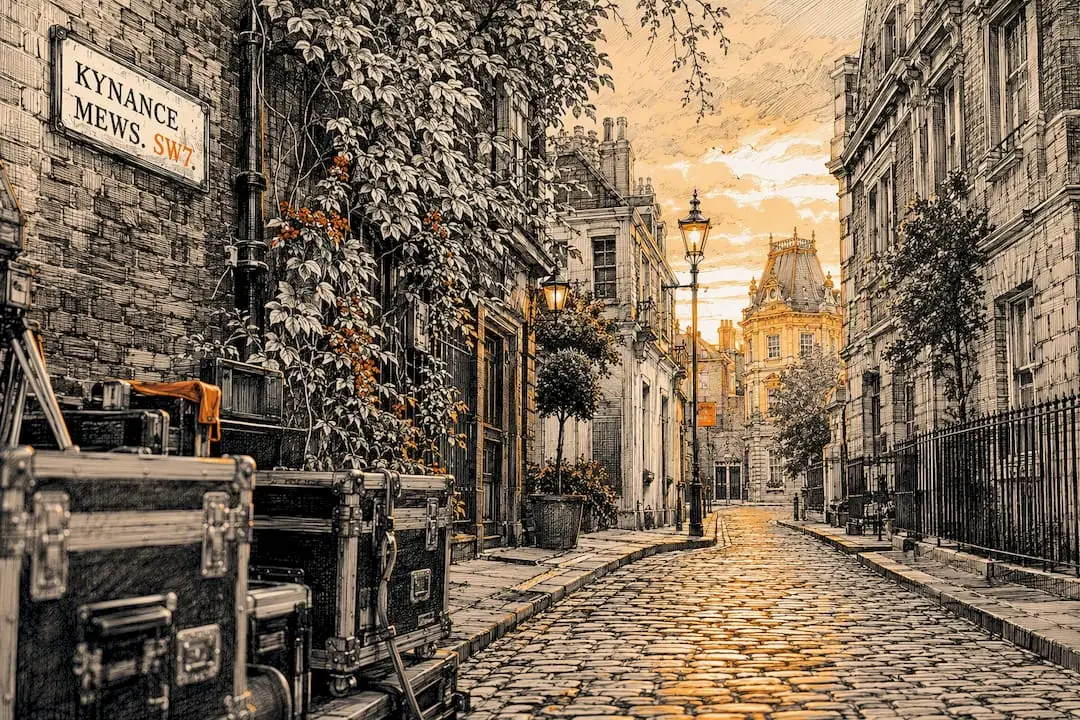
What are some unusual filming spots in London?
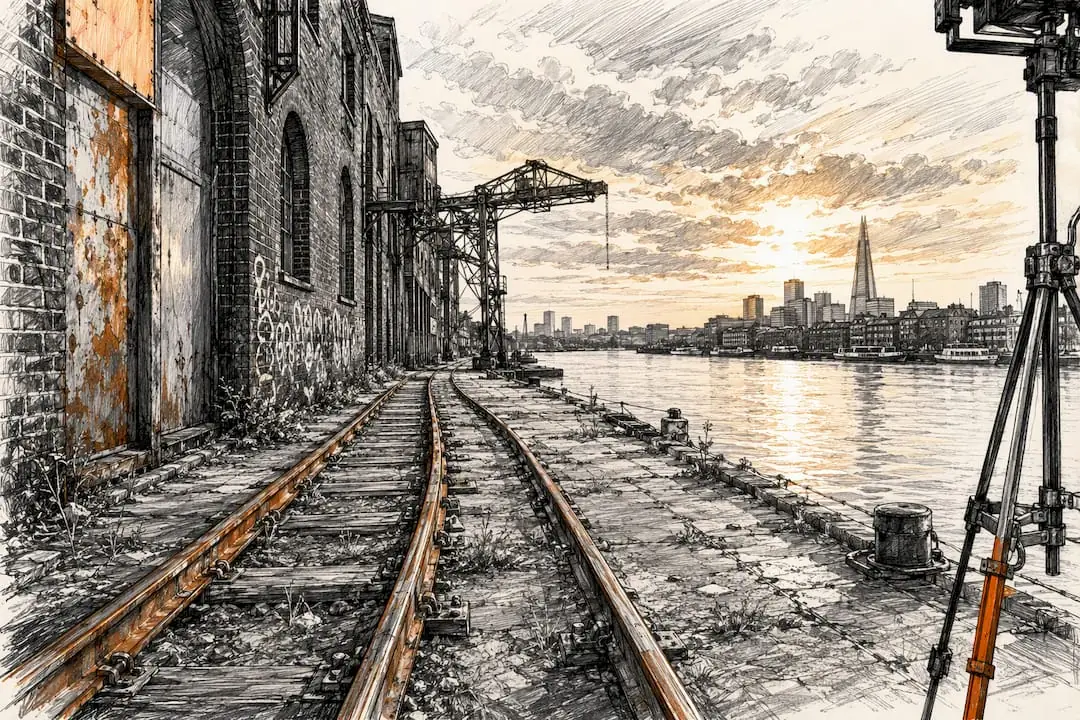
Beyond the obvious landmarks, many productions use privately managed spaces that look public, disused rail infrastructure via Network Rail, or riverside locations requiring Port of London Authority sign-off, options a location agency or Film London’s directory can help you find.
What are some famous filming locations across the UK more broadly?
Outside London, UK productions often use country estates, coastal towns and heritage sites managed by individual local authorities or private owners, each with its own permission process similar in principle to London’s Borough Film Service model.
How far in advance should I apply to film in London?
Plan for 3 to 5 working days’ notice on small shoots and 7 to 10 or more on larger or complex ones, with some high-security or Parliamentary Estate sites requiring considerably longer.
Recommended
- All Locations | AMW Media, Digital Marketing Agency UK
- Advertising companies in London: your shortlist guide | AMW Media
- Digital Marketing Agency London | AMW Media
- Digital Marketing Agency London
Our free marketing audit looks at your site, your ads and your content, and comes back with a 30 day plan. No pitch deck.
Founded AMW Media in 2024 and runs strategy, paid media and the CRM builds. The reason everything here is in house and measured in revenue. Meet the team.