
 Black Steel Doors
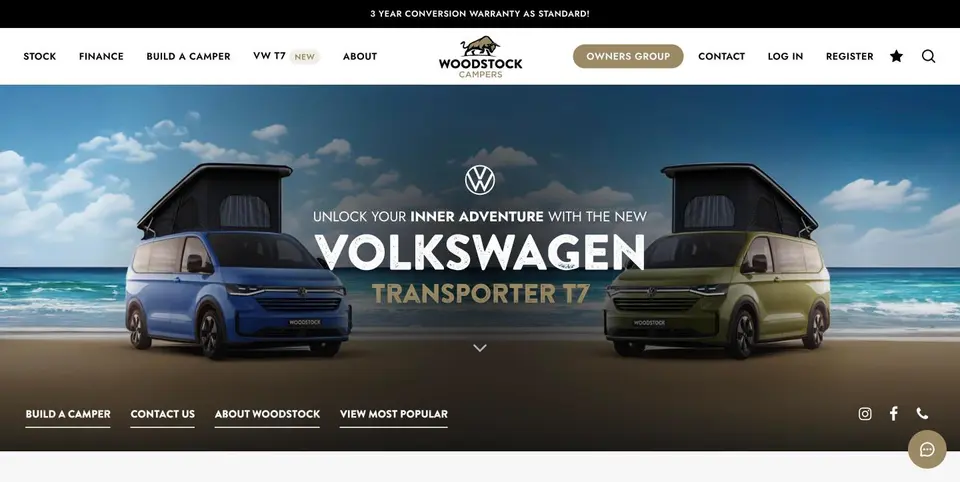 Woodstock Campers
 Phillips Joinery
TL;DR:
- Choosing the right marketing strategy requires aligning tactics with specific business goals, target audience, and available resources.
- Successful brands use a coordinated hybrid approach, combining traditional trust-building with digital targeting and measurement.
Picking the right marketing strategy can feel like standing in front of a vast menu with no nutritional information. There are dozens of channels, formats, and methodologies competing for your budget, your attention, and your team’s time. Get the choice wrong and you burn resources on tactics that attract the wrong audience or generate vanity metrics with no real commercial value. Get it right and you build a compounding engine that drives awareness, leads, and loyalty simultaneously. This article gives you a practical framework for choosing between strategies, explains every major type in plain terms, and shows you exactly when to deploy each one.
Key Takeaways
| Point | Details |
|---|---|
| Strategy fit matters | Selecting the right strategy depends on your specific business goals, budget, and target audience. |
| Know your options | Understanding the main types of marketing strategies helps avoid wasted spend and maximises returns. |
| Mix for maximum impact | Combining traditional and digital tactics often delivers the best results by balancing credibility and measurability. |
| Focus on fundamentals | Mastering proven strategies outperforms chasing every new marketing fad. |
How to choose the right marketing strategy: criteria for selection
Before you commit budget to any channel, you need a structured way to evaluate your options. Strategy selection is not about chasing whatever platform is currently trending. It is about matching tactics to your specific business situation with discipline and clarity.
Start with your objectives. Every marketing decision should trace back to a commercial goal. Are you trying to build awareness in a new market? Generate qualified leads for your sales team? Retain existing customers and increase their lifetime value? Different objectives demand fundamentally different approaches. Brand awareness campaigns lean heavily on reach and frequency, using broad channels like social media advertising, video, and even traditional broadcast. Lead generation requires precision targeting, compelling offers, and conversion-optimised landing pages. Retention strategies focus on personalised communication through email, loyalty programmes, and community building.
Know your audience in detail. Demographics alone are not enough. You need to understand where your audience spends time, what problems keep them awake at night, and how they prefer to receive information. A B2B audience of senior procurement managers might respond best to detailed whitepapers and LinkedIn campaigns. A B2C audience of fashion-conscious millennials might be far more reachable through Instagram Reels and influencer partnerships. Audience insight shapes every downstream tactical choice.
Be honest about your resources. Marketing strategy must fit your actual constraints, not your aspirational ones. Consider your available budget, the expertise within your team, and the time you can realistically commit to execution and measurement. SEO, for example, delivers exceptional long-term returns but demands sustained effort over months before results become visible. Pay-per-click advertising can generate leads within days but requires ongoing spend and skilled management. Choosing a strategy your team cannot execute properly is worse than choosing a simpler approach and executing it brilliantly.
Key selection criteria to work through before committing to any strategy:
- Measurability needs: Some strategies, particularly digital ones, offer granular real-time data. Others, such as print advertising or sponsorships, are harder to attribute directly to outcomes.
- Sales cycle length: Complex B2B sales with long decision periods benefit from content marketing and nurture sequences. Fast-moving consumer goods need high-frequency, high-visibility campaigns.
- Competitive landscape: If competitors dominate paid search, organic SEO or social media might offer better cost-per-acquisition. If they neglect email, that channel could be your edge.
- Brand maturity: Early-stage businesses need awareness-building tactics. Established brands can focus more on conversion and retention.
Pro Tip: When you optimise digital strategy systematically, you save significant budget by eliminating underperforming channels quickly rather than letting them drain resources for quarters at a time.
It is also worth noting that traditional marketing excels in broad awareness and trust-building through channels like TV and print, while digital marketing leads on targeted engagement and measurement. The smartest brands use both in a coordinated hybrid approach rather than treating them as competing philosophies. If you are building out your knowledge base, the digital marketing guide from AMW Media is a useful starting point for understanding how the major digital channels interconnect.
The main types of marketing strategies explained
Common digital marketing strategies include SEO, SEM and PPC, content marketing, social media marketing, email marketing, affiliate marketing, influencer marketing, video marketing, and mobile marketing, alongside the still-relevant world of traditional marketing. Here is what you need to know about each one.

1. Search engine optimisation (SEO) SEO improves your website’s visibility in organic search results. It encompasses technical site health, on-page content optimisation, and link building. The core advantage is sustainable, compounding traffic that does not require ongoing spend per click. The challenge is patience. Meaningful results often take three to six months to materialise, making it a poor short-term fix but an exceptional long-term investment. Particularly powerful for B2B businesses where buyers research solutions before contacting vendors.
2. Pay-per-click advertising (PPC) and search engine marketing (SEM) PPC places your ads in front of people actively searching for what you sell. You pay only when someone clicks. Google Ads is the dominant platform, though Bing and Amazon advertising serve important niches. The advantage is immediacy and control. You can test, pause, and optimise campaigns in real time. The risk is cost escalation if campaigns are poorly managed, particularly in competitive sectors where cost-per-click can reach eye-watering levels.
3. Content marketing Content marketing builds trust and authority by creating material that helps your audience. Blog articles, guides, case studies, podcasts, and tools all fall under this umbrella. Content marketing for growth works by positioning your brand as the most credible, useful voice in your niche, creating a pipeline of inbound interest over time. It works exceptionally well when paired with SEO. The challenge is that it requires consistent investment and editorial discipline. Many businesses start with enthusiasm and abandon it when results do not appear instantly.
4. Social media marketing Social media marketing spans both organic community building and paid social advertising. Platforms including Instagram, LinkedIn, TikTok, and Facebook each serve distinct audience segments. Organic social builds brand personality and loyalty. Paid social offers highly granular targeting by demographics, interests, and behaviours. For social media marketing tips that drive real engagement rather than hollow follower counts, the focus must be on content that resonates with your specific community.
5. Email marketing Email remains one of the highest-return channels available, consistently delivering strong ROI across industries. It excels at nurturing prospects through longer buying journeys and retaining existing customers. Segmentation and personalisation are what separate effective email programmes from spam. A well-structured welcome sequence, for instance, can transform cold leads into warm prospects before a salesperson ever makes contact.
6. Affiliate marketing Affiliate marketing pays third parties a commission for driving sales or leads on your behalf. It is particularly strong in e-commerce and financial services. The model is essentially performance-based, meaning you only pay for results. The challenge is finding quality affiliates who promote your brand responsibly, and managing the administrative overhead of a partner programme.
7. Influencer marketing Influencer marketing uses the trust audiences place in specific creators. It works best when the creator’s audience aligns with your target customer, and when the partnership feels authentic rather than transactional. Micro-influencers (those with audiences of ten thousand to one hundred thousand followers) often deliver better engagement rates and conversion than mega-influencers, particularly for niche products and services.
8. Video marketing Video is the most consumed format online. From short-form content on TikTok and Instagram Reels to long-form explainers on YouTube, video builds emotional connection at scale. It is particularly effective for demonstrating products, sharing customer testimonials, and communicating complex ideas simply. Production does not need to be expensive. Authenticity and value often outperform high production budgets in digital environments.
9. Mobile marketing Mobile marketing encompasses SMS campaigns, in-app advertising, push notifications, and mobile-optimised web experiences. With the majority of web traffic now coming from mobile devices, every marketing strategy has a mobile dimension. SMS in particular delivers remarkably high open rates compared to email, making it powerful for time-sensitive promotions and appointment reminders.
10. Traditional marketing Print advertising, direct mail, outdoor billboards, radio, and television still hold genuine value, particularly for local businesses and brands targeting older demographics. Traditional channels build credibility and physical presence in ways digital cannot fully replicate. A well-placed full-page advertisement in a respected trade publication signals authority to a B2B audience in a way a banner ad simply cannot.
Pro Tip: A strong content strategy foundation underpins almost every channel listed above. Before investing in distribution, ensure you have clarity on the core messages, formats, and audience segments you are serving.
Traditional versus digital marketing: side-by-side comparison
After detailing each strategy, an at-a-glance comparison between traditional and digital approaches clarifies practical distinctions that affect budget allocation and campaign planning.
| Feature | Traditional marketing | Digital marketing |
|---|---|---|
| Cost | Generally high, especially TV and print | Scalable from small budgets upward |
| Targeting | Broad demographic segments | Precise by interest, behaviour, and intent |
| Measurability | Difficult to attribute directly | Real-time analytics and conversion tracking |
| Reach | Wide, including offline audiences | Global, with geographic flexibility |
| Trust impact | High, particularly print and broadcast | Variable, depends heavily on brand presentation |
| Speed | Slow to produce and deploy | Fast to launch and adjust |
| Longevity | Physical formats have shelf life | Digital content can be updated or removed instantly |
| Engagement | One-directional broadcast | Two-way dialogue with audience |
The contrast is stark on measurability. Traditional marketing has high cost and is hard to measure, while digital delivers precise targeting with real-time analytics. This asymmetry means digital is almost always the right starting point for businesses that need to justify marketing spend with clear data.
That said, dismissing traditional marketing as obsolete is a strategic error many digitally-focused teams make. Consumer research consistently shows that physical advertising formats, particularly print and direct mail, generate higher trust signals than digital equivalents. This trust advantage is especially valuable in markets where credibility is a critical purchase factor, such as financial services, healthcare, legal services, and luxury goods.
“The brands that win long-term do not choose between traditional and digital. They orchestrate both deliberately, using digital to find and convert, and traditional to anchor credibility and reach audiences who are not yet in the digital funnel.” This perspective reflects what many experienced marketers observe when managing multi-channel campaigns across industries.
A practical way to think about hybrid allocation: use digital channels for conversion, testing, and measurement, and use traditional channels to build the brand authority that makes your digital campaigns more effective. A prospective customer who has seen your advertisement in a respected publication is more likely to click your Google ad and more likely to convert once they do. The channels reinforce each other when the brand message is consistent across both.
For a deeper look at how individual digital components fit together, the guide on digital marketing strategies for business growth walks through how to structure a coherent multi-channel approach.
When to use each marketing strategy: situational recommendations
To make strategic choices real, let’s link common business needs with the strategy mix that delivers results in practice.
| Business scenario | Recommended primary strategies | Supporting strategies |
|---|---|---|
| Startup building brand awareness | Social media, content marketing, PR | SEO, influencer partnerships |
| Established brand driving leads | PPC, email marketing, SEO | Content, retargeting |
| E-commerce scaling sales | PPC, social advertising, email | Affiliate, influencer, video |
| B2B complex sale | Content marketing, email nurture, LinkedIn | SEO, webinars, direct mail |
| Local service business | Local SEO, Google Ads, direct mail | Social media, outdoor advertising |
| Product launch | PPC, social advertising, influencer | PR, email to existing list |
| Reputation management | Content marketing, PR, SEO | Social listening, email |
| Retention and loyalty | Email, SMS, social community | Content, personalised offers |
Hybrid approaches maximise effectiveness in almost every scenario, particularly when a business is trying to achieve both short-term conversion and long-term brand equity simultaneously. The combinations in the table above are starting points, not rigid prescriptions.
Key principles for mixing and matching strategies effectively:
- If you need fast leads: Start with PPC and optimised landing pages. It is the fastest route from spend to lead, assuming your offer and targeting are well-defined.
- For brand trust: Prioritise long-form content, case studies, and PR. Trust takes time to build and cannot be bought with advertising alone.
- For complex B2B sales: Use content marketing to educate prospects during their research phase, then email nurture sequences to stay present through a lengthy decision cycle.
- For rapid awareness in a new market: Consider a burst of traditional advertising, such as outdoor or radio, combined with social media activity to build recognition quickly.
- For customer retention: Email and SMS are your highest-use tools. Personalised, timely communication to existing customers almost always outperforms equivalent spend trying to acquire new ones.
- For long-term organic growth: Invest in SEO and content consistently. The compounding effect becomes substantial after twelve to eighteen months of disciplined execution.
Sequential combinations also matter. Many successful brands run awareness campaigns first to prime an audience, then follow up with retargeting campaigns that convert the warmer prospects created by the initial awareness push. This approach is far more efficient than asking a cold audience to purchase immediately. When you are thinking about branding with social media as part of an awareness sequence, consistency of visual identity and messaging across every touchpoint is what determines whether the sequence actually builds recognition over time.
The single most common strategic mistake is treating these channels as competing budget lines when they are actually complementary parts of a single customer journey. Your customer does not experience your brand in isolated channel silos. They see your LinkedIn post, then your Google ad, then your case study, then your email. Each interaction should build on the last.
The real lesson: why mixing strategy beats chasing trends
Every year there is a new channel, a new format, or a new platform that promises to render everything before it obsolete. Short-form video was going to kill blogging. Podcasting was going to kill written content. Social media was going to kill email. None of these predictions came true because consumer behaviour is more complex and more habitual than trend forecasters acknowledge.
The brands that consistently outperform their competitors do not spend their energy chasing whatever is new. They invest deeply in understanding their customers, building genuine content and creative assets that serve them well, and distributing those assets across the channels where their audience actually exists. They measure what works with intellectual honesty, cut what does not, and double down on what does.
There is a real commercial cost to strategy fads. When a business lurches from channel to channel every eighteen months, they never build the domain authority, the audience, the creative expertise, or the institutional knowledge that creates durable competitive advantage. SEO takes time precisely because it reflects genuine quality signals accumulated over months and years. Email lists that have been cultivated thoughtfully for five years are extraordinarily valuable. These assets cannot be conjured overnight because a new platform appears exciting.
From our experience working with ambitious brands across multiple sectors, the single biggest differentiator between businesses that grow and those that plateau is execution consistency. The strategy does not need to be perfect. A moderately good strategy executed consistently and improved through regular measurement will outperform an exceptional strategy executed sporadically with no systematic optimisation.
The advice that is rarely given but always relevant: before adding a new channel, ask whether you are extracting full value from the channels you already run. Most businesses have enormous untapped potential in their existing email list, their website’s organic search performance, and their social media community before they ever need to add complexity. For businesses that want to build brand engagement with genuine staying power, the fundamentals done exceptionally well will always outperform gimmicks done spectacularly once.
The most productive marketing conversations we have are not about which new platform to trial. They are about how to deepen performance across existing channels, how to make the customer journey more coherent, and how to connect every tactic back to a measurable commercial outcome. That orientation is what separates strategically mature marketing functions from those that are perpetually distracted by the next shiny object.
Ready to build a winning marketing mix?
Knowing which strategies exist is only half the challenge. Executing them well, in a coordinated way that actually moves commercial metrics, requires expertise, creative quality, and disciplined measurement. That is where AMW Media comes in. Woodstock Campers, thirteen months and 2,215 leads at £12.50 each, is the case study on our Banbury marketing page.
At AMW Media, our team specialises in building specific strategy mixes that blend SEO services, content production, and social media management into coherent, measurable growth programmes. A fast-growth brand looking to dominate organic search, an e-commerce business scaling paid campaigns or an established company seeking to make your full marketing mix work harder: we have the expertise and creative capability to make it happen. Get in touch to discuss how we can help you build and execute a strategy designed around your specific goals.
Frequently asked questions
What is the difference between inbound and outbound marketing strategies?
Inbound pulls customers in through value-driven content and search, while outbound actively pushes messages via advertising and direct outreach. Inbound tends to attract more qualified prospects, while outbound generates faster initial volume.
Which marketing strategy is most cost-effective for small businesses?
Digital tactics like SEO, content, social media, and email are typically the most cost-effective for small businesses due to their scalability and targeting. Digital marketing’s precise targeting and real-time analytics allow small budgets to work considerably harder than equivalent traditional spend.
Can traditional marketing still compete with digital in 2026?
Yes, traditional marketing excels in broad awareness and trust-building, and remains highly effective when integrated alongside digital campaigns rather than deployed in isolation.
How do I know which marketing strategy is right for my business?
Define your goals, budget, and audience clearly before choosing any channel. The strategy most likely to succeed is the one that reaches your specific audience with the right message at the right point in their buying journey.
What is a hybrid marketing strategy?
A hybrid marketing strategy combines traditional and digital tactics to maximise effectiveness and adapt to changing market conditions. Hybrid approaches maximise effectiveness by allowing brands to capture the trust advantages of traditional media and the targeting precision of digital simultaneously.
Recommended
- Types of digital marketing: strategies for growth
- Key benefits of digital marketing for brand growth | AMW Media
- Open up digital growth with custom marketing strategies | AMW Media
- How to boost your online presence for lasting brand growth | AMW Media
Our free marketing audit looks at your site, your ads and your content, and comes back with a 30 day plan. No pitch deck.

Runs the content calendars and the community side of every social account, and keeps clients posted on what is going out and when. Meet the team.