
 Black Steel Doors
 Woodstock Campers
 Phillips Joinery
TL;DR:
- Graphic design is a vital strategic tool that boosts engagement, brand recognition, and trust in marketing campaigns.
- Treating design as an ongoing investment rather than an expense significantly enhances overall business growth and ROI.
Graphic design is not decoration. It is one of the most powerful commercial tools in your marketing arsenal, yet many brands still treat it as an afterthought, something to sort out once the “real” strategy is done. Consider this: posts with images generate 650% higher engagement than text-only posts, and consistent colour palettes can increase brand recognition by up to 80%. Those numbers do not describe a cosmetic concern. They describe a growth lever. This article covers why design is essential for modern marketing, how it builds brand identity, which tactics deliver the best results, how to adapt design for global audiences, and why the smartest brands treat it as a strategic investment.
Key Takeaways
| Point | Details |
|---|---|
| Design boosts engagement | Visual content drives much higher audience engagement and should be central to campaigns. |
| Consistent branding matters | A unified design approach increases brand recognition and customer trust. |
| Strategic investment pays off | Companies that prioritise graphic design outperform competitors in both visibility and revenue growth. |
| Design for global markets | Effective brands adapt their visual identity for different cultures and markets. |
Why graphic design is essential for modern marketing
Visual communication is not a preference. It is how the human brain is wired. Research consistently shows that people process images roughly 60,000 times faster than text, which means your audience forms an impression of your brand before they have read a single word. In a crowded digital landscape, that first impression is often the only one you get.
The data backs this up at every level. Posts with images generate 650% higher engagement than text-only content, which means every campaign you run without strong visual assets is leaving enormous potential on the table. For marketing professionals managing budgets and reporting on performance, that gap in engagement translates directly into wasted spend and missed conversions.
“Design is not just what it looks like and feels like. Design is how it works.”, Steve Jobs
Brand recall is another area where design earns its place at the strategy table. When your audience encounters your brand repeatedly across channels, consistent visual cues act as memory anchors. A coherent colour palette, a recognisable typeface, and a distinctive logo all work together to make your brand stick. Brands that maintain consistent colour palettes see recognition improve by up to 80%, which has a compounding effect on customer loyalty over time.
Poor design, on the other hand, actively destroys trust. A staggering 94% of website users abandon a site due to poor design. That is not a usability problem. It is a revenue problem. Every poorly laid-out landing page, every cluttered email template, and every low-resolution social graphic is a direct drain on your marketing ROI.
Here is what effective graphic design does for your campaigns:
- Increases click-through rates on paid and organic content
- Reduces bounce rates by creating a coherent, trustworthy visual environment
- Strengthens brand recall across touchpoints
- Supports storytelling by making complex information immediately legible
- Builds emotional connection through colour, composition, and imagery
The role of video content in modern marketing is a useful parallel here. Just as video combines motion and sound to create immersive brand experiences, strong static design creates instant visual authority. Both are forms of visual communication that outperform plain text at every stage of the funnel. Understanding digital content and engagement as a whole means recognising that design is the thread connecting every content format you produce.
How graphic design builds brand identity and differentiation
Understanding the “why” of design paves the way for examining how graphic design specifically strengthens brand identity and competitive advantage. The relationship between design and revenue is more direct than most marketing teams acknowledge.
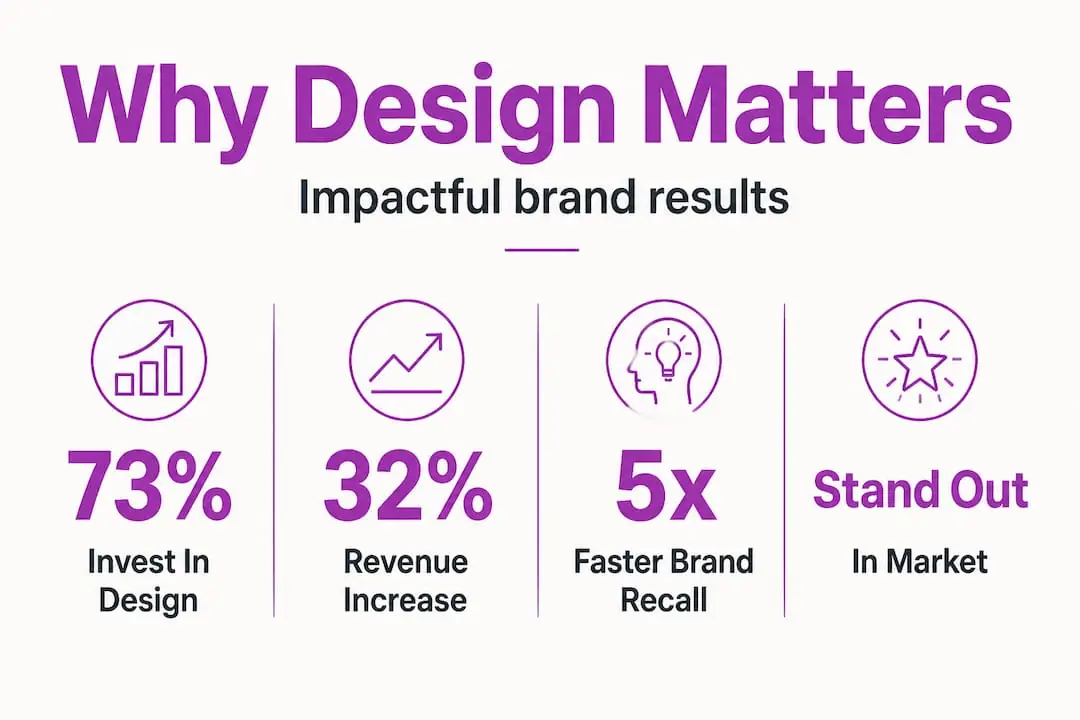
73% of companies invest in design specifically to stand out from their competition, and design-led companies report 32% higher revenue growth than their peers. These are not coincidences. They reflect the reality that brand distinctiveness, built largely through visual identity, reduces price sensitivity, improves customer retention, and lowers the cost of acquiring new customers.
Consider what a visual identity actually consists of:
| Element | What it communicates | Risk without it |
|---|---|---|
| Logo | Instant brand recognition | Forgettable or confused with competitors |
| Colour palette | Emotional tone and brand personality | Inconsistent perception across channels |
| Typography | Brand voice and professionalism | Mixed signals about quality and values |
| Imagery style | Audience alignment and aspiration | Disconnected or generic visual language |
| Layout system | Clarity and trustworthiness | Cluttered, hard-to-navigate content |
Each element works in isolation, but the real power comes from their combination. A brand that applies all five consistently across its website, social media, print materials, and advertising creates a visual ecosystem that audiences recognise and trust. A brand that treats each touchpoint as a separate design decision ends up looking fragmented, which erodes confidence.
Think about the difference between a challenger brand that has invested in graphic design services and a competitor that relies on stock templates and inconsistent visuals. The former feels premium, intentional, and trustworthy. The latter feels like a business that is not quite sure of itself. Customers notice, even when they cannot articulate why.
Pro Tip: Before briefing any design project, document your brand’s visual identity guidelines in a single reference document. Include approved colour codes, typefaces, logo usage rules, and imagery direction. This single step eliminates the most common cause of brand inconsistency: different team members and agencies making independent design decisions.
Strong design also plays a critical role in competitive brand growth. When your visual identity is distinctive, you occupy a clearer position in your audience’s mind, which makes every subsequent marketing activity more effective. Your paid ads perform better because the creative is recognisable. Your organic content earns more engagement because it looks like something worth stopping for. Your email campaigns achieve higher open rates because the sender is visually familiar.
Custom marketing strategies that integrate design thinking from the outset consistently outperform those that bolt design on at the end. This is because design decisions influence messaging, channel selection, and audience targeting just as much as they influence aesthetics.
Effective design tactics for maximising marketing results
With a strong brand presence in place, the next step is to master the concrete tactics that consistently drive marketing results. Knowing that design matters is one thing. Knowing precisely how to implement it across a live campaign is another.
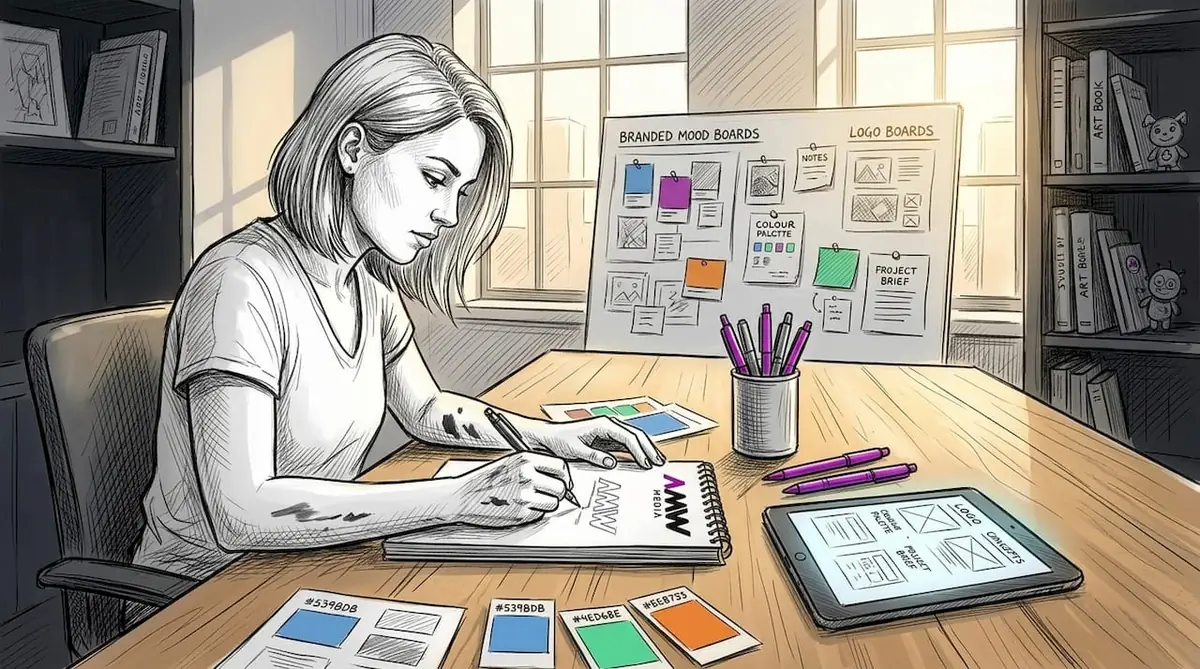
The foundation of effective design in marketing is a visual style guide. This is a document that defines every repeatable design decision your brand makes, from the exact hex codes of your colour palette to the tone of photography you use. Without it, even talented designers will produce inconsistent work, and inconsistency is the enemy of brand recognition. Remember: consistent colour palettes alone increase brand recognition by up to 80%, so the value of standardising your visual choices is enormous.
Here is a practical framework for building your visual style guide:
- Define your primary and secondary colour palette with exact hex codes, RGB values, and CMYK equivalents for print use.
- Select two to three typefaces and specify their hierarchy: one for headlines, one for body copy, and optionally one for accent use.
- Establish logo usage rules, including minimum sizes, clear space requirements, and approved background colours.
- Create an imagery direction document that describes the photographic style, illustration approach, and any visual metaphors central to your brand.
- Design a set of reusable templates for your most common formats: social posts, email headers, presentation slides, and digital ads.
- Document your iconography and graphic elements, including any custom icons, patterns, or decorative devices used in your visual language.
- Review and update the guide annually to ensure it evolves with your brand without losing continuity.
Adapting design elements across media is equally important. A graphic that works brilliantly as a full-page print ad will almost certainly fail as a mobile social post. The composition, hierarchy, and text sizing all need to shift. Brands that treat design as a single deliverable rather than a flexible system consistently underperform on digital channels.
| Format | Key design consideration | Common mistake |
|---|---|---|
| Social media (mobile) | Thumb-stopping visual in first 1 second | Too much text, small focal point |
| Email header | Clear brand identity above the fold | Generic stock imagery, no brand colour |
| Display advertising | Single clear message, strong CTA | Cluttered layout, weak contrast |
| Landing page | Visual hierarchy guiding to conversion | Competing focal points, inconsistent style |
| Print collateral | High-resolution assets, CMYK colour | RGB files, poor typography scaling |
Common pitfalls are worth addressing directly. Generic rebrands are a significant risk. When brands pursue minimalism purely as a trend, stripping away distinctive elements in favour of clean but characterless design, they often damage recognition. A rebrand should add distinctiveness, not subtract it. The goal is always to make your brand more recognisable, not less.
Lack of originality is the other major trap. Using the same stock photography as your competitors, applying the same template-driven layouts, and defaulting to the same colour trends as your industry peers makes you invisible. Working with a digital marketing agency that understands both design and strategy helps you avoid these pitfalls because the creative decisions are grounded in commercial objectives, not aesthetic fashion.
Pro Tip: When reviewing design work, always ask “does this look like us, or does this look like our industry?” If the answer is the latter, the design is not yet doing its job. Distinctiveness is the goal, not just quality.
Adapting graphic design for global and diverse markets
While consistent design matters, tailoring your visuals to local markets ensures campaigns resonate everywhere you operate. This is an area where even sophisticated brands make costly mistakes, often because they assume that good design is universal.
It is not. Colour carries profoundly different meanings across cultures. White is associated with purity and weddings in Western markets, but with mourning in several East Asian cultures. Red signals danger or urgency in some contexts, but luck and prosperity in others. Typography choices that feel modern and authoritative in one language can appear clumsy or illegible when applied to another script. Imagery that feels aspirational to one audience can feel alienating or irrelevant to another.
For global audiences, adapting graphics using cultural dimensions such as Hofstede’s framework helps brands avoid misinterpretation and ensures that visual communication lands as intended. Hofstede’s dimensions include factors like individualism versus collectivism, power distance, and uncertainty avoidance, all of which influence how audiences respond to visual cues, layout choices, and imagery.
“Designing for global markets is not about translating your existing visuals. It is about understanding what resonates, what offends, and what simply does not register in each market you serve.”
Here is what a solid localisation process for graphic design looks like in practice:
- Audit your existing visual assets for cultural assumptions, including colour choices, imagery, iconography, and layout conventions.
- Research your target market’s visual culture, including local competitors, popular media, and cultural symbols.
- Adapt rather than translate: do not simply swap text for a translated version. Reconsider the entire composition for the new audience.
- Work with local creative consultants who can identify risks that external teams might miss entirely.
- Test localised designs with representative audience samples before full campaign deployment.
- Build localisation into your design system so that future campaigns have a clear process for market-specific adaptation from the outset.
Global brands that get this right do not just avoid offence. They actively build stronger connections with local audiences because their visuals feel native rather than imported. This is a meaningful competitive advantage in markets where international competitors are perceived as distant or out of touch.
Optimising your digital strategy for different markets requires the same rigour applied to design. The brands that win globally are those that treat localisation as a strategic discipline, not a translation exercise.
Why design is a strategic investment, not just an expense
Most businesses still categorise graphic design as a marketing cost. It appears on the budget sheet alongside printing and software subscriptions, and it gets cut when margins tighten. This is one of the most expensive misconceptions in modern marketing.
The evidence is unambiguous. Design-led companies achieve 32% higher revenue growth than their peers. That is not a marginal improvement. That is a structural advantage that compounds over time, because every pound invested in strong design produces returns across every channel, every campaign, and every customer interaction.
The conventional wisdom in many organisations is that design is a “nice-to-have,” something you invest in when you can afford it. This gets the logic exactly backwards. Strong design is what makes your other marketing investments work harder. Your SEO investment produces better results when the landing pages it drives traffic to are visually compelling and easy to navigate. Your paid social spend performs better when the creative assets are distinctive and on-brand. Your email marketing achieves higher conversion when the design reinforces trust and clarity.
We have seen this pattern repeatedly at AMW Media. Brands that treat design as a strategic function, with dedicated resources, clear guidelines, and ongoing investment, consistently outperform those that treat it as a project-by-project expense. The difference is not just aesthetic. It shows up in cost per acquisition, customer lifetime value, and brand equity metrics.
There is also a compounding effect to consider. Every piece of well-designed content you produce adds to your brand’s visual library and strengthens audience recognition. Every poorly designed touchpoint, by contrast, creates cognitive friction that makes your audience work harder to trust you. Over time, the gap between design-led brands and those that treat design as an afterthought becomes very difficult to close.
Data-driven marketing and strong design are not in competition. They are complementary. The data tells you what your audience responds to. The design determines whether they respond at all. Brands that integrate both disciplines, using performance data to inform creative decisions and design quality to amplify campaign results, are the ones consistently pulling ahead of their competitors.
Investing in content creation is inseparable from investing in design. Content without strong visual execution underperforms. Design without strategic content direction lacks purpose. The brands winning in competitive markets are those that have stopped treating these as separate disciplines and started treating them as a single, integrated growth function.
Grow your brand with expert graphic design
If this article has reinforced what you already suspected, that design deserves a more central role in your marketing strategy, the next question is how to act on it effectively. Our Oxford page starts with a number, 157 leads at £4.59 each for Cotswold Gloss, because that is the only part of an agency page you can check.
At AMW Media, we specialise in translating brand strategy into visual systems that perform. Our graphic design services are built around commercial outcomes, not just creative execution, so every design decision is anchored to your growth objectives. Whether you need a full visual identity overhaul, campaign-specific creative assets, or ongoing design support, we bring strategic thinking to every brief. Alongside design, our social media management and web design solutions ensure your brand looks and performs consistently across every channel your audience uses.
Frequently asked questions
How does graphic design improve marketing ROI?
Effective graphics dramatically increase engagement and improve brand recall across every channel, directly raising the return on investment for campaigns. Posts with images generate 650% higher engagement than text-only content, making visual investment one of the highest-impact decisions in your marketing budget.
What are common mistakes in marketing design?
Ignoring design consistency and choosing generic or overly minimal styles can seriously harm brand recognition and increase customer acquisition costs. Poor design leads to 94% website abandonment, and minimalist rebrands that lack distinctiveness can raise acquisition costs significantly.
How should global brands approach graphic design?
They should adapt graphic elements to local cultural preferences and rigorously test their designs to ensure resonance and avoid misinterpretation. Adapting graphics using cultural dimensions such as Hofstede’s framework is a proven approach for brands operating across diverse international markets.
How much should companies invest in marketing design?
Most successful companies invest strategically and consistently, with 73% reporting design budgets specifically to differentiate from competitors, resulting in measurably higher revenue growth over time.
Recommended
- Creative Graphic Design Services London | AMW Media | AMW Media
- Open up digital growth with custom marketing strategies | AMW Media
- AMW Media, Digital Marketing Agency London
- Harness social media in branding for growth in 2026
- Your Vision, Our Craft: A Deep Dive into Designing Your Custom Document Cover | Honor U
Our free marketing audit looks at your site, your ads and your content, and comes back with a 30 day plan. No pitch deck.

Owns how everything looks and feels, from a brand identity to the grade on a reel, and makes the animated films such as Blue Light Services' Journey to Net Zero. Meet the team.