
 Black Steel Doors
 Woodstock Campers
 Phillips Joinery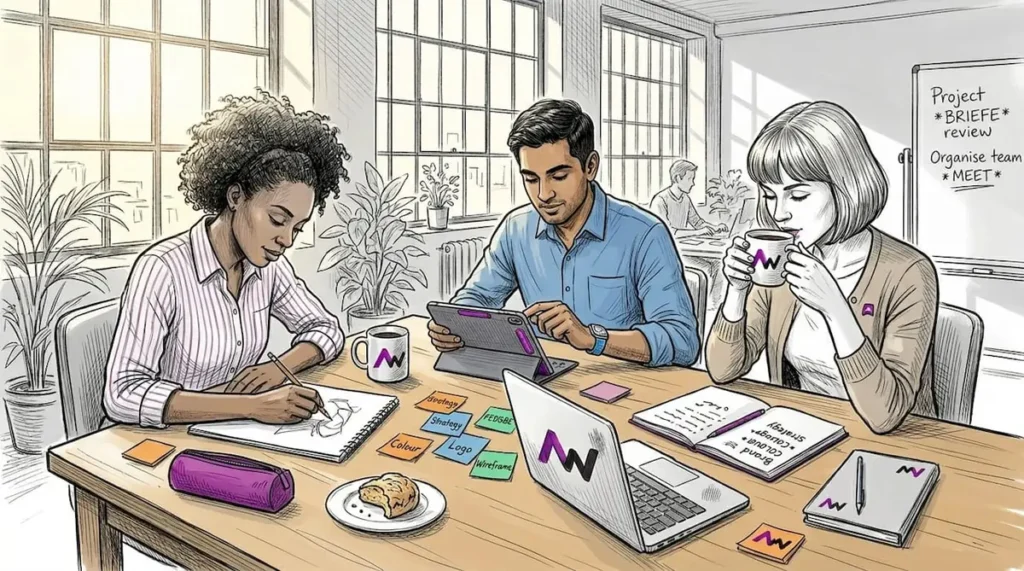
Most businesses treat creative agencies as production vendors. Brief them, receive the work, move on. But that framing misses something significant. 63% of CMOs rate creative agencies positively for brand impact, compared to just 56% for media-focused agencies. That gap is not a coincidence. It reflects a fundamental difference in how creative agencies operate, the strategic depth they bring, and the measurable outcomes they generate. If you are a marketing manager or business owner looking to sharpen your brand’s competitive edge, understanding what a creative agency actually does and how to work with one effectively could be the most valuable shift you make this year.
Key Takeaways
| Point | Details |
|---|---|
| Creative agencies outperform | Brands gain stronger strategy, creativity, and revenue impact from agency partnerships compared to other models. |
| Hybrid approach advantages | Combining agency expertise with in-house control often delivers the best blend of innovation and alignment. |
| Collaboration is key | Success with creative agencies relies on clear processes, frequent reviews, and setting mutual expectations from the outset. |
| Selection sets the tone | Careful agency selection and briefing are crucial for maximising value and achieving long-term growth. |
What defines a creative agency today?
A creative agency is not simply a design studio or a content factory. It is a strategic partner that combines brand thinking, visual communication, and digital execution to help businesses connect with their audiences in meaningful ways. The role has evolved considerably over the past decade. Where agencies once focused primarily on print campaigns and brand identities, today’s creative agencies are deeply embedded in digital channels, data-driven strategies, and cross-platform storytelling.
Core services now span branding and identity, campaign strategy, content production steps including video and photography, graphic design, web design, social media management, SEO, and paid advertising. The breadth is significant. Unlike a media agency, which focuses on where your message appears, a creative agency focuses on what that message is and why it resonates.
The distinction matters. In-house teams often know the brand deeply but can become too close to it, losing the external perspective that sparks fresh thinking. Media agencies optimise placement and spend but rarely shape the creative itself. Creative agencies sit in a different lane entirely.
“Creative agencies are rated more highly than media agencies across brand impact (63% vs 56%), revenue generation (57% vs 50%), and relationship management (68.6%), reflecting their strategic and relational value to CMOs.”
Modern creative agency services typically include:
- Brand strategy and identity development
- Campaign concepting and creative direction
- Video production and photography
- Social media content and community management
- Web design and digital experience
- SEO, PPC, and performance marketing
- Graphic design and visual communications
Exploring agency services for brand growth reveals just how broad and integrated this offering has become for ambitious brands.
Creative agencies vs media agencies vs in-house teams
Choosing the right model is one of the most consequential decisions a marketing leader makes. Each option carries distinct trade-offs across cost, capability, and control.
| Model | Annual cost (approx.) | Brand impact score | Relationship management |
|---|---|---|---|
| Creative agency | £50K to £240K | 63% positive | 68.6% positive |
| Media agency | £40K to £200K | 56% positive | Lower than creative |
| In-house team | £320K to £640K | Variable | High internal alignment |
| Hybrid model | £80K to £300K | High (combined) | Strongest overall |
Agency costs typically run between $60K and $300K annually, compared to $400K to $800K for a fully staffed in-house team. The financial case for agencies is strong, particularly for brands that need specialist expertise without the overhead of permanent headcount.
Here is how the four models break down:
- Creative agency: Brings external perspective, specialist skills, and strategic breadth. Best for brands wanting innovation and measurable outcomes without building large internal teams.
- Media agency: Focuses on channel planning, media buying, and campaign distribution. Strong for scale and reach but limited on creative development.
- In-house team: Offers deep brand knowledge and fast turnaround. Best for brands with high-volume, consistent content needs and strong internal leadership.
- Hybrid model: Combines an internal core team with agency partners for specialist work. 46% to 64% of companies now favour this approach, balancing control with creative expertise.
Pro Tip: If you are unsure which model fits, start with a hybrid. Keep brand strategy and client relationships in-house, and bring in a creative agency for campaign work, content production, and digital channels where specialist skills make the biggest difference.
For brands looking to invest in content creation, the agency model consistently delivers stronger returns than attempting to build every capability internally.
How creative agencies drive brand visibility and growth
The numbers tell a clear story. CMOs rate creative agencies at 63% for positive brand impact and 57% for revenue generation. These are not vanity metrics. They reflect the real-world outcomes that come from combining strategic thinking with strong creative execution.

Creative agencies drive visibility through several interconnected mechanisms. First, they bring consistency. A brand that looks, sounds, and feels the same across every touchpoint builds recognition faster. Agencies enforce this discipline because they work across all channels simultaneously, spotting inconsistencies that internal teams often miss.
Second, they bring fresh tactics. Retail and technology brands in particular benefit from agencies that stay ahead of platform changes, emerging formats, and audience behaviour shifts. An agency working across multiple clients sees what is working in the market before most in-house teams do.
“Brands that maintain consistent creative across channels see significantly stronger recall and purchase intent, reinforcing why integrated creative strategy outperforms siloed execution.”
Key ways creative agencies build brand visibility:
- Brand consistency: Unified visual and verbal identity across all digital and physical channels
- Cross-channel campaigns: Coordinated messaging across social, search, email, and paid media
- Innovative content formats: Short-form video, interactive content, and platform-native creative
- Performance-led creativity: Creative decisions informed by data, not just instinct
For technology brands, this might mean a product launch campaign that combines social media campaigns with targeted paid ads and SEO-optimised content. For retail brands, it could be a seasonal campaign that drives both online traffic and in-store footfall through consistent storytelling.
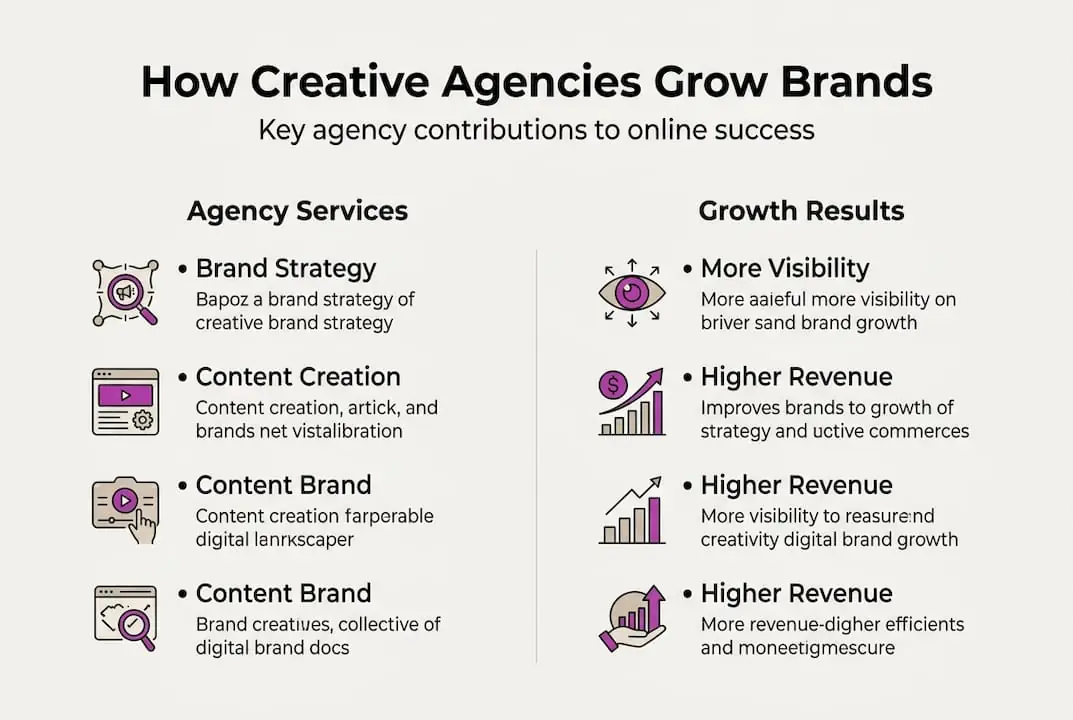
Collaboration frameworks: Making agency partnerships successful
Having the right agency is only half the equation. How you work together determines whether the partnership delivers or disappoints. Most agency relationships that underperform do so because of governance failures, not creative ones.
Effective creative content processes rely on clear structures. This means defining lanes (who owns what), establishing quality assurance checkpoints, and setting decision rights so that approvals do not become bottlenecks. A well-run agency relationship feels like an extension of your team, not a separate vendor relationship.
| Framework | Description | Typical outcome |
|---|---|---|
| Definition of Ready (DoR) | Briefs must meet set criteria before work begins | Fewer revisions, faster delivery |
| Champion-challenger testing | Run two creative variants simultaneously | Data-driven creative improvement |
| 90-day strategy cycles | Refresh campaigns and tactics quarterly | Sustained relevance and performance |
| Weekly check-ins | Short, structured progress reviews | Early issue identification |
Best practices for a productive agency partnership:
- Set clear KPIs before the first brief is written
- Establish a single point of contact on both sides
- Agree on revision limits and approval timelines upfront
- Schedule 90-day cycle reviews to assess strategy and refresh creative direction
- Use champion-challenger testing to make creative decisions based on evidence
- Document decisions and rationale to avoid repeated debates
Pro Tip: Treat your agency’s strategy refresh cycles seriously. Brands that run quarterly reviews and test new creative approaches consistently outperform those that set a campaign live and leave it running indefinitely.
How to choose and brief the right creative agency
With frameworks in hand, the next step is finding the right partner. CMOs consistently rank strong relationships and strategic input as the top qualities they value in creative agencies. That means your selection process should go well beyond reviewing a portfolio.
Steps to selecting and briefing the right creative agency:
- Define your needs clearly: Identify whether you need brand strategy, campaign execution, content production, or all three before approaching any agency.
- Assess sector experience: Look for agencies with demonstrable work in your industry or adjacent sectors where audience dynamics are similar.
- Evaluate cultural fit: Meet the team who will actually work on your account. Chemistry matters more than credentials.
- Review their process: Ask how they handle briefs, revisions, and strategy reviews. A good agency will have clear answers.
- Check references: Speak to existing or former clients about responsiveness, quality, and strategic value.
- Write a detailed brief: Include your objectives, target audience, budget range, timeline, and success metrics. Vague briefs produce vague work.
Must-have criteria when evaluating agencies:
- Proven track record in your sector or a closely related one
- Transparent pricing and clear scope management
- Cultural alignment with your brand values
- Genuine strategic capability, not just execution skills
- Strong communication and project management processes
Pro Tip: The brief is your most powerful tool. Before you choose an agency for your brand, invest time in writing a brief that clearly articulates what success looks like. Agencies that ask smart questions about your brief are the ones worth working with.
What goes wrong in creative agency partnerships
Most guides on agency partnerships focus on the upside. We want to be more honest than that.
The “creative dividend”, the idea that great creative automatically drives business results, is frequently overstated. Scepticism around this concept is well-founded. Creative quality matters, but without accountability structures, clear KPIs, and honest performance reviews, even brilliant creative can fail to shift the numbers.
Cultural fit is not a soft consideration. It is the single biggest predictor of whether an agency relationship will last. Brands that rush the selection process and prioritise price over alignment almost always regret it within six months.
Governance is unglamorous but essential. The agencies that consistently deliver are the ones with rigorous processes, not the ones with the most impressive showreel. And the brands that get the most from their agency partners are the ones that invest time in briefing, reviewing, and iterating.
The hybrid model solves much of the control versus innovation tension. Keeping strategic oversight in-house at AMW Media while bringing in specialist agency expertise for execution is not a compromise. It is often the smartest structure available to ambitious brands.
Amplify your brand growth with the right creative agency
The brands that grow fastest are not always the ones with the biggest budgets. They are the ones that make smart decisions about who they partner with and how they work together. The right creative agency brings strategic thinking, specialist skills, and fresh perspective that most in-house teams simply cannot replicate alone. Woodstock Campers, thirteen months and 2,215 leads at £12.50 each, is the case study on our Banbury marketing page.
At AMW Media, we work with retail and technology brands to deliver exactly that. From graphic design services and PPC management to full-scale social media management, our team combines creative excellence with measurable performance. If you are ready to build a brand presence that stands out and drives real growth, we would love to show you what the right partnership looks like.
Frequently asked questions
What is the main role of a creative agency?
A creative agency helps brands stand out by developing campaigns, content, and strategies built for digital growth. Their core capabilities span strategy, content production, and brand development across digital channels.
How do creative agencies compare to in-house teams?
Creative agencies typically offer more specialist expertise and strategic breadth at a significantly lower total annual cost. In-house teams cost between $400K and $800K annually, compared to $60K to $300K for an agency partnership.
What makes a collaboration with a creative agency successful?
Clear communication, defined processes, and mutual goals are the foundations of a productive agency relationship. Governance structures such as defined lanes, quality assurance checkpoints, and regular strategy reviews make the biggest practical difference.
How can I tell if an agency is right for my brand?
Look for cultural fit, proven sector experience, and clear alignment on objectives and strategy. CMOs consistently prefer agencies that demonstrate strong relationships and genuine strategic input over those that simply execute briefs.
Recommended
- Why use agency services to grow your brand in 2026
- The role of digital content in brand growth and engagement
- Why invest in content creation for competitive brand growth
- AMW Media, Digital Marketing Agency London
Our free marketing audit looks at your site, your ads and your content, and comes back with a 30 day plan. No pitch deck.

Owns how everything looks and feels, from a brand identity to the grade on a reel, and makes the animated films such as Blue Light Services' Journey to Net Zero. Meet the team.