
 Black Steel Doors
 Woodstock Campers
 Phillips Joinery
TL;DR:
- Effective project management in creative agencies involves structured processes, clear roles, and adaptable methodologies.
- Strong planning, resource allocation, and regular reviews help prevent delays, scope creep, and burnout.
- Balancing structure with flexibility enhances creativity and ensures consistent, high-quality results.
Most creative agencies are losing time, money, and client trust on projects that never quite land as planned. 97% of agencies faced major creative campaign challenges last year, yet many still treat project management as an afterthought. The assumption that creative teams thrive purely on freedom is a costly myth. In reality, the agencies producing the best work are also the most organised. This guide breaks down what effective project management looks like inside a creative agency, which methods actually work, where most teams go wrong, and how to build a workflow that protects both deadlines and creative quality.
Table of Contents
- What project management means in creative agencies
- Key stages of creative project management
- Core project management methodologies for creative teams
- Common pitfalls and how high-performing agencies overcome them
- Why effective project management is an agency’s creative advantage
- Transform your creative project results with expert support
- Frequently asked questions
Key Takeaways
| Point | Details |
|---|---|
| Structure supports creativity | Project management methods let creative teams deliver consistently without stifling innovation. |
| Hybrid methods excel | Combining frameworks like Agile and Waterfall tackles changing creative needs more effectively. |
| Clear briefs prevent delays | Thorough project scoping and communication are critical to staying on time and on budget. |
| Traffic managers reduce overload | Dedicated workflow managers help balance workloads and keep creativity flowing. |
What project management means in creative agencies
Creative agency project management is not the same as managing a construction timeline or a software release. The difference is not just cultural. It is structural. Creative agency PM involves structured techniques to manage projects from ideation to delivery, while still leaving room for the iterative, often unpredictable nature of creative work.
In traditional industries, project management is largely about control: fixed scope, fixed budget, fixed timeline. In a creative agency, the brief can shift mid-campaign, a client can change direction after three rounds of revisions, and inspiration does not always arrive on schedule. Effective PM in this environment means building systems that absorb that unpredictability without letting it derail the entire project.
The core ingredients of strong creative PM include:
- Workflow consistency: Standardised processes for briefing, reviewing, and approving work so nothing falls through the cracks.
- Resource allocation: Knowing who is working on what, and at what capacity, at any given moment.
- Tool use: Platforms like Asana, Monday.com, or ClickUp that give the whole team visibility over project status.
- Clear roles: Defined responsibilities for project managers, traffic managers, and creative leads.
One of the most important distinctions in agency PM is the separation of traffic management from creative direction. Traffic managers handle task scheduling and workload distribution. Creative leads focus on the quality and direction of the work itself. When these roles blur, you get creative directors drowning in admin and project timelines managed by gut feel.
“The agencies that consistently deliver great work are not the ones with the most creative freedom. They are the ones with the clearest processes.”
Pro Tip: Assign a dedicated traffic manager before your team hits capacity, not after. Reactive resourcing is one of the fastest ways to burn out your best people.
Understanding how agency structures support digital brand growth also helps frame why getting PM right matters beyond internal efficiency. It directly shapes the quality of what clients receive.
Key stages of creative project management
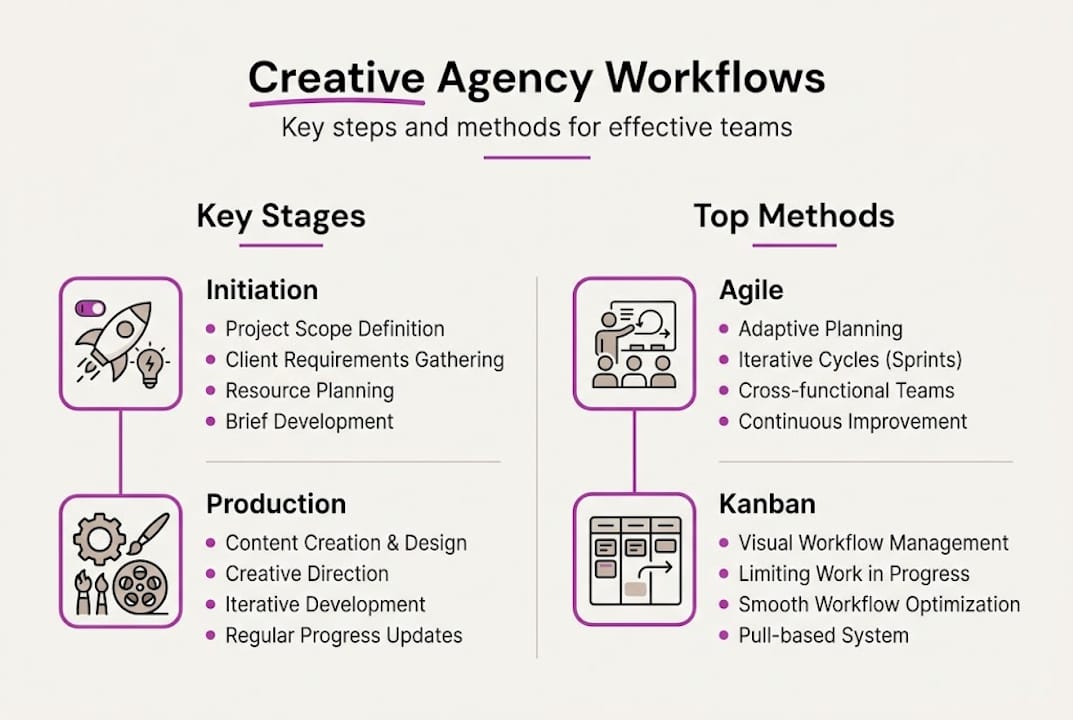
Every creative project, regardless of size or type, moves through a predictable set of stages. Key phases include initiation, planning, execution and monitoring, and closure. Understanding what should happen at each stage prevents the most common source of project failure: assumptions left unchecked.
- Initiation: This is where the brief is written, objectives are agreed, and scope is defined. A strong initiation stage answers the questions: What are we making? For whom? By when? With what budget? Skipping this or treating it as a formality is where most project problems begin.
- Planning: Tasks are broken down, schedules are built, and resources are allocated. This stage produces the project plan, the timeline, and any dependency maps that show which tasks must be completed before others can begin.
- Execution and monitoring: The team does the work, but the project manager tracks progress, manages feedback loops, handles client reviews, and escalates issues before they become crises. This stage is where most of the day-to-day PM activity lives.
- Closure: Deliverables are handed over, final approvals are gathered, and the team conducts a retrospective to capture lessons learned. Closure is often skipped under time pressure, but it is the stage that makes every subsequent project run better.
Pro Tip: Define scope in writing during the initiation stage and get client sign-off before any creative work begins. This single habit eliminates the vast majority of scope creep disputes before they start.
Here is a quick reference for what each stage typically produces:
| Stage | Key deliverable | Common mistake |
|---|---|---|
| Initiation | Creative brief, scope document | Vague objectives, no sign-off |
| Planning | Project plan, resource schedule | Underestimating task dependencies |
| Execution | Reviewed drafts, status reports | Skipping regular check-ins |
| Closure | Final assets, retrospective notes | Rushing handover, no lessons captured |
For a closer look at how these stages play out in content production specifically, the creative content production steps guide offers a practical walkthrough of each phase in action.
Core project management methodologies for creative teams
Once project stages are clear, choosing the right methodology becomes crucial to ensure smooth progress and creative freedom. There is no single framework that works for every agency or every project type. The key is knowing what each approach offers and when to apply it.
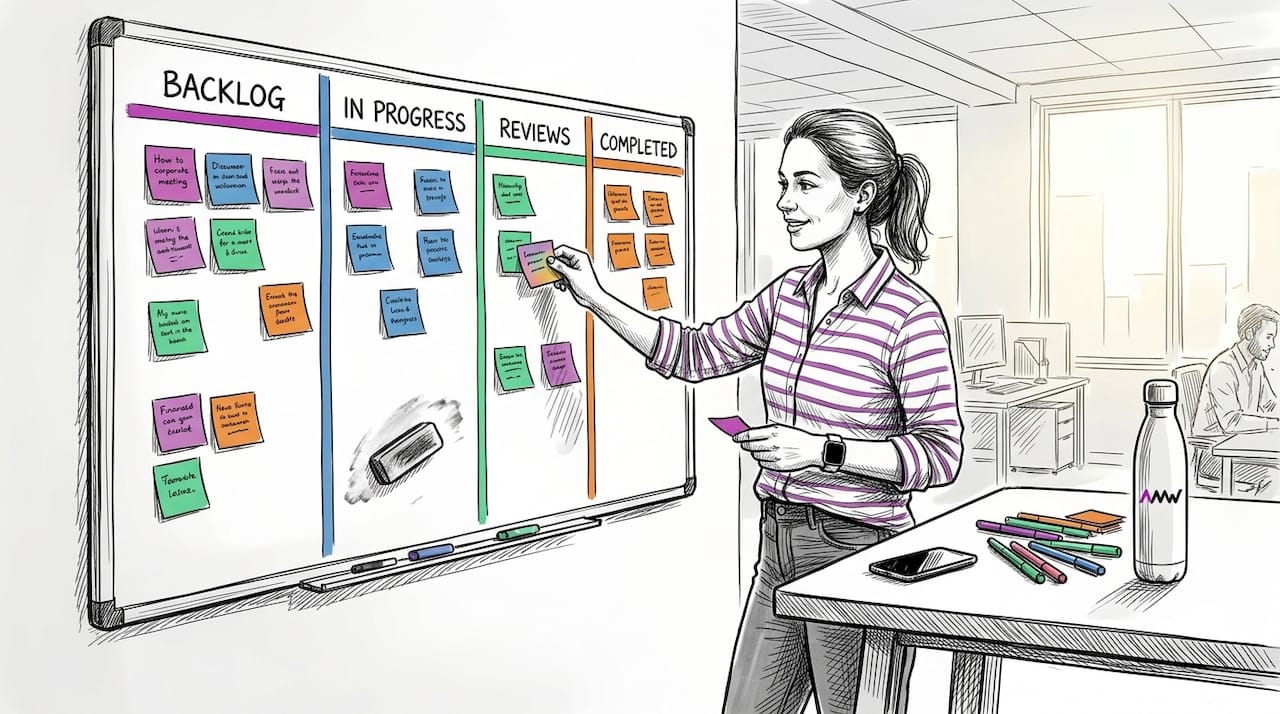
Agile and Scrum are built around short, iterative cycles called sprints, typically one to two weeks long. They work well for projects with frequent client feedback, evolving requirements, or complex digital deliverables. The risk is that without discipline, Agile can become an excuse for endless revisions with no clear endpoint.
Kanban uses a visual board to track tasks moving through stages such as to do, in progress, and done. It is excellent for ongoing retainer work or content production pipelines where tasks flow continuously rather than in defined project bursts.
Waterfall is a linear approach where each phase must be completed before the next begins. It suits projects with fixed scope and clear specifications, such as a brand identity package with agreed deliverables and no room for mid-project pivots.
Lean focuses on eliminating waste, whether that is unnecessary meetings, redundant approval steps, or duplicated effort. It is particularly useful for agencies looking to scale without proportionally increasing headcount.
Common methodologies including Agile, Kanban, Waterfall, Lean, and hybrid approaches each serve different project types, and the most effective agencies rarely commit to just one.
“Hybrid approaches that blend Agile flexibility with Waterfall structure tend to outperform single-methodology teams in creative environments.”
Here is how the main methodologies compare for creative agency use:
| Methodology | Best for | Main strength | Main risk |
|---|---|---|---|
| Agile/Scrum | Iterative, feedback-heavy projects | Adaptability | Scope drift |
| Kanban | Ongoing retainer or content work | Visual clarity | No fixed deadlines |
| Waterfall | Fixed-scope deliverables | Predictability | Inflexibility |
| Lean | Efficiency-focused teams | Waste reduction | Can limit creative exploration |
| Hybrid | Most agency environments | Balance of structure and flexibility | Requires strong PM discipline |
For a detailed Agile vs Waterfall comparison, the differences in practice are more nuanced than the theory suggests. Pairing methodology choice with the right marketing strategy frameworks ensures that PM decisions support wider business objectives, not just internal process preferences.
Common pitfalls and how high-performing agencies overcome them
Adopting a strong methodology is not enough. Real-world creative environments expose common stumbling blocks, and the best agencies address them systematically rather than reactively.
The numbers are sobering. Only 63% of agencies finish most projects on time, and just 51% deliver within budget. The main barriers are consistently the same: poor planning, scope creep, and client-side delays. These are not random misfortunes. They are predictable failures with known solutions.
The root causes typically cluster around three areas:
- Poor briefs: When the initial brief is vague or incomplete, every subsequent stage is built on unstable ground. Teams make assumptions, clients have different expectations, and the gap only widens as the project progresses.
- Unclear scope: Without a defined scope, clients naturally request additions that feel small individually but accumulate into significant unplanned work.
- Resource overloading: Assigning the same senior designer to six concurrent projects does not produce six great outcomes. It produces six mediocre ones, delivered late.
Traffic managers help mitigate resource burnout and multi-client overload by maintaining a real-time view of team capacity and flagging conflicts before they become crises. This role is often the difference between an agency that scales well and one that grows itself into chaos.
High-performing agencies protect themselves through a combination of structural habits:
- Structured briefing templates that require client sign-off before work begins
- Weekly resource reviews to catch overloading before it affects output quality
- Clear approval workflows with defined turnaround times for client feedback
- Regular retrospectives that feed lessons from each project into the next
The agencies that consistently hit their targets are not necessarily working harder. They are working inside systems that remove the friction and ambiguity that slow everyone else down. Understanding why agency services drive brand growth is partly about recognising that operational excellence and creative excellence are not in tension. They reinforce each other. Mastering the marketing process at an agency level means treating PM as a strategic function, not an administrative one.
Why effective project management is an agency’s creative advantage
Here is a perspective that most project management guides will not give you: the agencies that treat PM as a constraint on creativity are the ones producing the most forgettable work.
The common misconception is that structure kills creative flow. In practice, the opposite is true. When your team knows exactly what is expected, when it is due, and who is responsible for each decision, they stop spending mental energy on logistics. That freed-up cognitive space is where genuine creative thinking happens.
Effective project management balances structure with creativity, using tools and workflows to handle unpredictability rather than pretending it does not exist. A predictive schedule does not box creatives in. It gives them a protected window to do their best work without the background noise of unclear priorities and shifting deadlines.
At AMW Media, we have seen this play out repeatedly. The projects that produce the most innovative outcomes are rarely the ones with the loosest briefs. They are the ones where the brief is sharp, the timeline is realistic, and the approval process is clear. Structure, applied thoughtfully, is what makes creative ambition deliverable. Integrating strategy and workflow thinking from the outset is how you turn creative potential into consistent results.
Transform your creative project results with expert support
Putting these project management principles into practice requires more than good intentions. It requires the right team, the right tools, and a clear operational framework built for creative work.
At AMW Media, we combine strategic project management with hands-on creative production to help agencies and brands deliver work that is on time, on brief, and genuinely effective. Whether you need support with graphic design, content production, or a full review of how your creative projects are structured, our team is built to help ambitious brands raise their output quality. Explore our full range of creative services and find out how we can support your next project.
Frequently asked questions
What makes project management different in creative agencies compared to other industries?
Creative agencies require PM that balances structure with flexibility, preserving space for innovation while keeping projects on time, within budget, and to the required quality standard.
Which project management methodologies work best for agency creative projects?
Hybrid approaches that blend Agile, Kanban, and Waterfall tend to work best, as they adapt to fast-changing requirements without sacrificing the structure that keeps projects on track. Agile vs Waterfall comparisons show that neither alone suits the full range of agency work.
How can agencies avoid project delays and going over budget?
Clear briefs, realistic resource planning, and dedicated traffic management are the most effective tools. Only 63% of agencies currently hit their time and budget targets, and the gap almost always traces back to weak planning at the initiation stage.
What role does a traffic manager play in agency project management?
A traffic manager allocates tasks across the team, monitors workload capacity, and prevents resource overload. Traffic managers help protect creative output quality by ensuring no individual is stretched across too many concurrent projects at once.
Recommended
- The role of creative agencies in digital brand growth
- Creative content production steps for marketing success in 2026
- Why use agency services to grow your brand in 2026
- Effective content production strategies for brand growth
- Adward
Our free marketing audit looks at your site, your ads and your content, and comes back with a 30 day plan. No pitch deck.

Owns how everything looks and feels, from a brand identity to the grade on a reel, and makes the animated films such as Blue Light Services' Journey to Net Zero. Meet the team.